
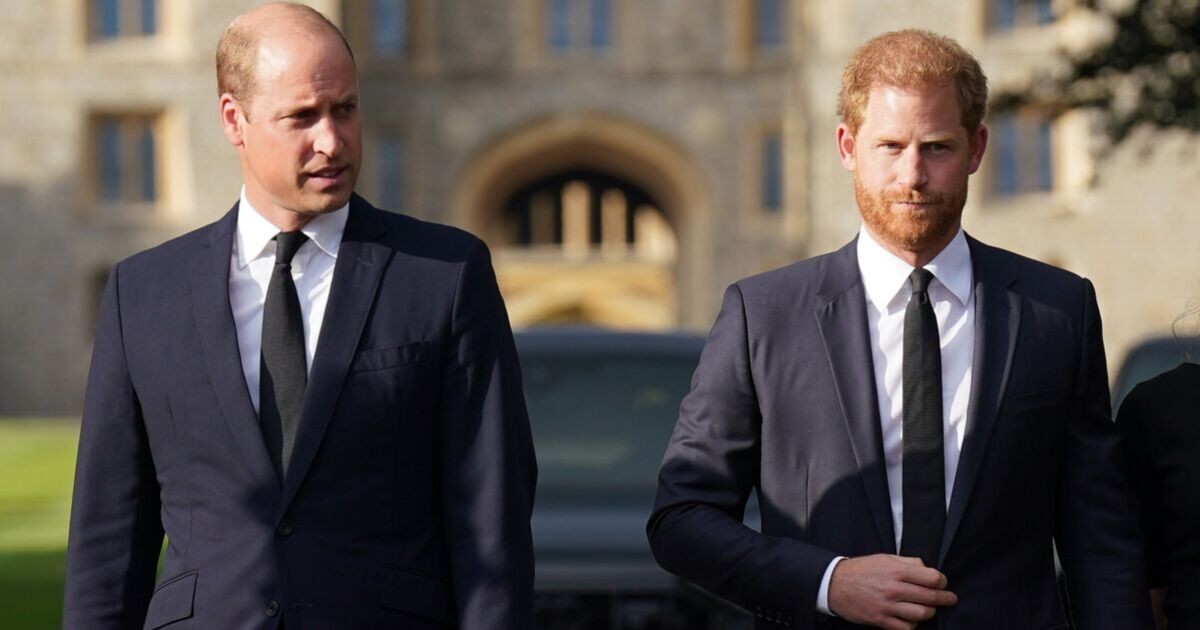
Royal biographer Robert Hardman said on 21 November 2026 that Prince William and Prince Harry are unlikely to reconcile soon, despite the Duke of Sussex’s public appeal to repair family ties.
Hardman told the Daily Expresso podcast that he could envisage the brothers establishing a working relationship over time, but suggested that William still regarded Harry’s public allegations as a profound breach of trust, according to EXPRESS. His remarks indicate that practical cooperation, should it emerge, would not necessarily signal personal forgiveness.
What Robert Hardman said about the royal rift
Hardman, the author of Charles III: New King. New Court. The Inside Story, was asked whether William might forgive Harry and whether the brothers could eventually reconcile. He drew a careful distinction between resumed contact and restored intimacy.
“I could see a sort of working relationship developing over time. But you know we have to remember Prince William is an intensely private man. He guards his privacy very, very closely.”
William, Hardman added, is more private than King Charles was at the same age, despite having been born into extraordinary public scrutiny. That disposition helps explain why Harry’s memoir, interviews and television programmes may have inflicted a particular injury.
“I think he felt that was incredibly, I mean not just insensitive, I think he sort of felt it was almost a sort of betrayal. So it takes a long time to come back, I think, from that.”
This remains Hardman’s interpretation of William’s response, not a statement from the prince himself. Kensington Palace has offered no such account in the reporting, and the distinction matters when assessing claims about the heir’s private feelings.
How the relationship between William and Harry deteriorated
Relations had been strained since at least Christmas 2018, when reports emerged that Harry believed William had not made Meghan Markle, then his future wife, feel sufficiently welcome. William was said to have harboured concerns about the speed of Harry and Meghan’s relationship, which his brother resented.
The brothers appeared together in August 2019 to mark the anniversary of the death of their mother, Diana, Princess of Wales. By October, however, Harry had publicly acknowledged that they were on different paths. The subsequent departure of the Duke and Duchess of Sussex from royal duties and their move to the United States deepened the separation.
In March 2021, Harry and Meghan’s interview with Oprah Winfrey brought the dispute before a global audience. The couple made allegations concerning racism within the Royal Family, claims Harry later moderated. William publicly rejected the accusation.
“We are very much not a racist family,” he told reporters.
Further grievances followed. William was reportedly angered by the Sussexes’ Netflix series, in which Harry accused his brother of shouting at him. In his memoir Spare, Harry alleged that William physically attacked him during an argument about Meghan. He also claimed that Charles resented the attention given to William and Catherine, and that members of the Royal Family leaked stories to the press.
These are Harry’s allegations rather than independently established facts. Even so, their repetition across several high-profile media ventures helps explain why a private apology or a brief family meeting might struggle to repair the damage.
Privacy, accountability and the public interest
There is a legitimate case for protecting family life from perpetual public examination, even within a monarchy sustained by public attention. Yet privacy cannot settle every question raised by the Sussexes. Allegations involving racism, briefing against family members and the conduct of senior royals concern the standards of a national institution as well as the feelings of its relatives.
A reconciliation would therefore have two separate meanings. Personally, it could allow two brothers to recover something of their former relationship. Institutionally, it would not by itself address the substance of past claims or demonstrate that the monarchy had learned from them.
Other commentary points towards a similarly guarded outlook. Yahoo reported that royal commentator Richard Fitzwilliams attributed William’s reluctance to repair the relationship to Harry and Meghan’s repeated public criticism of the Royal Family. Separately, Fox News reported that William opposes a return to royal duties for the Sussexes, while Charles has left open the possibility of a different approach.
Could a working relationship come first?
Hardman’s most plausible scenario is consequently a limited one. William and Harry might eventually cooperate around particular family obligations or shared causes without returning to the confidence they once enjoyed. Such contact would require boundaries, discretion and, above all, an end to the cycle of public accusation and rebuttal.
Harry has already expressed his own preference for repair. In October, he told GQ that he wanted to reconcile with William and Charles and to “work it out” with his family. Reports nevertheless suggest that William remains hurt and has little appetite to revive the relationship.
Hardman supplied no timetable. His account leaves the brothers with a narrow possibility of functional contact, while the harder work of rebuilding trust remains unresolved.
Questions about Prince William and Prince Harry
Did Prince William call Harry’s allegations a betrayal?
No. Robert Hardman said he believed William regarded the allegations as almost a betrayal. This is the biographer’s assessment, not a direct quotation from William.
Has Prince Harry said he wants reconciliation?
Yes. Harry told GQ in October that he wanted to reconcile with William and King Charles, saying that he wished to “work it out” with his family.
Are William and Harry expected to reconcile soon?
Hardman considers an early reconciliation unlikely. He suggested that a working relationship could develop over time, but said recovering from William’s sense of betrayal would take a long time.