
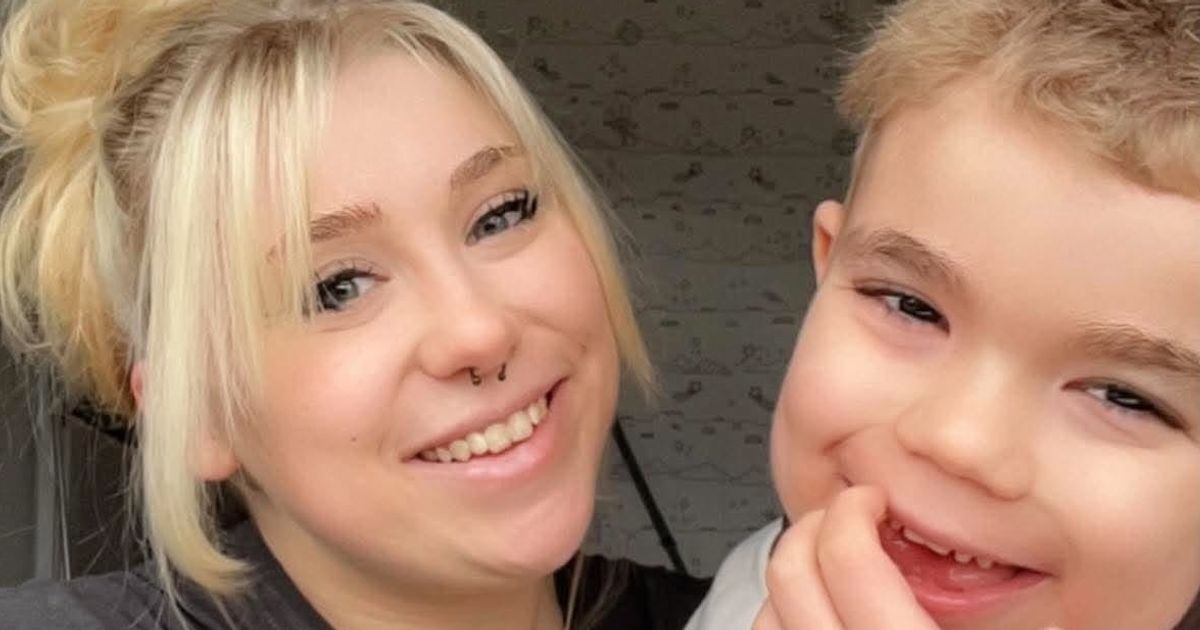
A Gateshead mother is trying to raise £2.95 million to secure gene therapy in the United States for her nine-year-old son, according to Chronicle Live reporting published on 20 November 2026.
Georgia Nonas’ son, Cody Carroll, has Sanfilippo Syndrome Type A, a rare genetic condition often called childhood dementia. Her campaign, Cody’s Fight for Time, has raised about £25,000. The distance between that sum and the cost of treatment illustrates a stark inequality: a therapy may exist, yet remain beyond a child’s reach because of money and geography.
A diagnosis that took away hope
Cody, who lives in Winlaton, was diagnosed at three years old. Georgia said she was told there was neither a cure nor a treatment. Children with the syndrome lose brain function in a manner comparable to dementia, and those diagnosed typically die by their teenage years.
His first signs included hearing loss as a toddler and developmental regression, which led to an autism diagnosis. A consultant at the Queen Elizabeth Hospital in Gateshead subsequently noticed Cody’s coarse facial features, a symptom of the disorder, and he received the Sanfilippo diagnosis.
“It’s a really traumatic diagnosis to receive. We basically got told ‘Take him home and give him all your love. There’s nothing to be done. There’s no treatment. There’s no cure’. We kind of had to learn to live with a terminal diagnosis.”
Georgia, who is also mother to two-year-old Cooper, responded by concentrating on experiences with Cody and learning not to postpone them until tomorrow. That approach offered a way to live with the diagnosis, but it could not alter its medical course.
Cody has always been nonverbal. He can still walk and receives therapy at school, but he is unsteady on his feet. Although he is nine, Georgia said he has the understanding of an 18-month-old. He is also losing his ability to swallow safely, a particularly painful change for a boy she describes as a proper little foodie whose favourite thing is a snack.
What the US gene therapy could change
The recent approval of a gene therapy by the US Food and Drug Administration has given Georgia hope that Cody’s decline might be stopped. She was clear that she does not regard it as a cure or a promise that he will never die. Her expectation is that it could give him considerably longer by supplying the enzyme he is missing.
“We have lived without hope for so many years and all of a sudden there’s a potential to save my child. We have raised about £25,000 and the cost we were given was £2.95 million so we’re quite a way off but I couldn’t just stand by and do nothing, I have to try.”
She said the treatment effectively stops Sanfilippo in its tracks, preventing further regression rather than restoring the childhood that might otherwise have been expected. For Cody, that could mean retaining his mobility and swallowing for longer, and preserving the personality his family knows.
Georgia began fundraising before the approval, after hearing that the therapy might become available. She has also established a petition calling on the Government to fund the treatment urgently for eligible children with Sanfilippo Syndrome Type A.
The gap between approval and access
The ethical question extends beyond one family’s fundraising page. When access depends upon residence, public donations and the speed of a campaign, medical need becomes only one part of the decision. Families must make their private emergency intelligible to strangers while their children continue to lose skills.
“We don’t live in the right place and that’s the reason we can’t get treatment, and the difference between life and death. I have seen kids his age pass away so we don’t have time to wait.”
Other parents have made the same argument. Mirror Online reported that families of children with childhood dementia were appealing for Government support for research and access to treatment in the UK, warning that they did not have time to wait.
Nor is Cody’s financial barrier unique. Herald.Wales reported that a Swansea mother was facing a bill of almost £3 million to obtain the newly approved American treatment for her five-year-old son. Individual generosity can help, but it cannot provide a consistent answer to a systemic problem.
Georgia’s petition therefore asks for something more durable than a successful appeal. Public funding for eligible children would place the decision in the institutions responsible for health provision, rather than leaving families to compete for attention during a cost of living crisis.
Cody’s life beyond the diagnosis
Georgia is anxious that the public should see her son as more than a medical prognosis. She described him as cheeky, loving and full of life, a child whose happiness is unaffected by fear because he does not understand what is happening to him. He loves being outside, particularly at the beach.
“I don’t want him forgetting who I am. I want him to keep his amazing, sunny, little personality.”
She also hopes Newcastle United will support the campaign. Cody, a Toon fan, has owned club kits and shirts and watched matches throughout his life. He used to become excited when Newcastle won, and Georgia believes the club’s voice could bring Cody’s Fight for Time and Sanfilippo Syndrome to a much wider audience.
For now, donations from friends and strangers have offered practical help and a measure of solidarity. Georgia said people were reaching out despite having little money to spare, adding that seeing a community rally around Cody meant everything to the family.
Questions about Cody’s treatment and campaign
What is Sanfilippo Syndrome Type A?
It is a rare genetic condition also known as childhood dementia. It causes children to lose brain function and skills they have acquired. Cody was diagnosed at three, and children with the syndrome typically die by their teenage years.
Is the gene therapy a cure?
Georgia Nonas does not describe it as a cure. She hopes it will stop Cody’s regression and give him considerably longer by providing the enzyme he is missing, while acknowledging that he would still have Sanfilippo Syndrome Type A.
How much has Cody’s Fight for Time raised?
The campaign had raised about £25,000 towards a quoted treatment cost of £2.95 million when Chronicle Live published its report. Georgia has also petitioned the Government to fund treatment urgently for eligible children.