
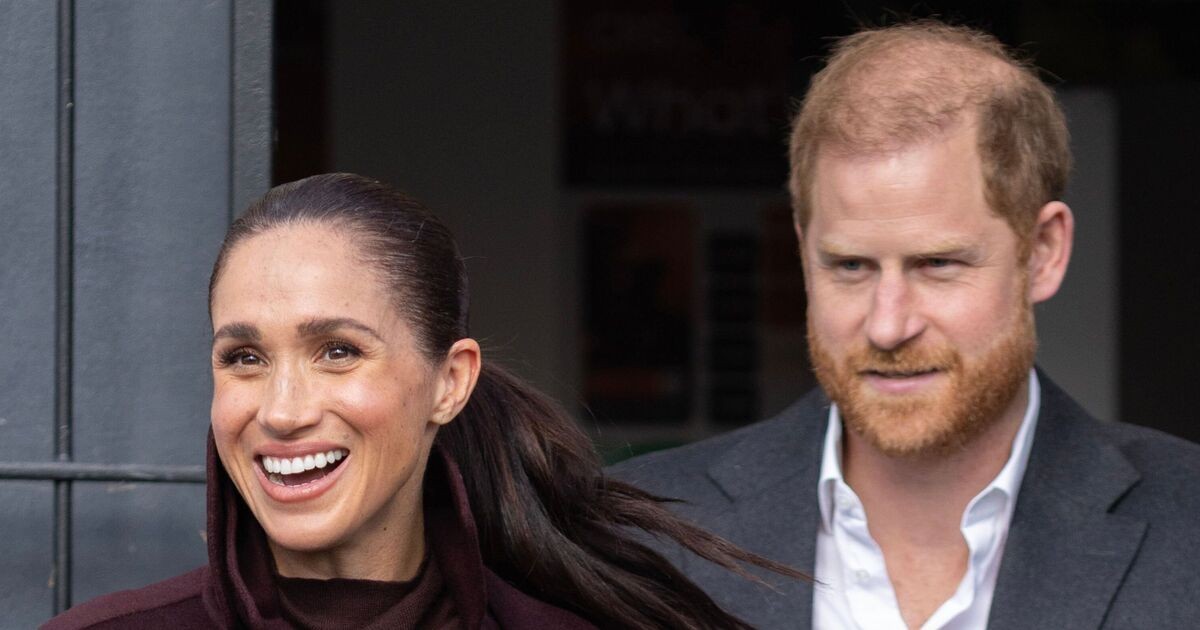
A royal journalist who briefly befriended Prince Harry during his partying years has suggested that Meghan Markle accelerated, and perhaps even initiated, the Duke of Sussex's transition from boisterous young royal to settled adulthood. Charlotte Griffiths made the remarks on the Daily Expresso podcast, in an interview published on 6 November, reflecting on the Harry she knew in London's social circles in the late 2000s and early 2010s.
Her account, reported by the Daily Express, is at once trivial and telling: a portrait of a man whose youthful excesses were long the staple of tabloid coverage, and whose later rejection of that life has been treated, by parts of the same press, as a betrayal rather than a maturation.
A friendship formed in West London's party circuit
Griffiths, who moved in the same wealthy social circles as the young prince, described a friendship that was casual and incidental rather than intimate. Recalling the era, she said: “Some of my mates genuinely knew him. So yeah, we just partied together and I ended up briefly becoming friends with him.”
Her anecdotes are harmless in substance. She remembered Harry as “quite boisterous”, a young man whose friends occasionally had to ask him to quieten down, and she recounted a weekend at a country house during which the prince rearranged expensive silver animal figurines on a dining table so that they appeared to be mating. She characterized the joke as typical of the silly humour of a young aristocratic crowd, not as anything malicious.
The significance of these details lies less in what they reveal about Harry than in what they reveal about the machinery that surrounded him. A young man, still in his twenties, was living under permanent surveillance by a press ecosystem that monetized his every misstep. The same outlets that once feasted on his excesses now publish retrospectives questioning why he changed.
Did Meghan Markle change Prince Harry?
Prompted by the podcast host, JJ Anisiobi, who observed that Harry's party-era behaviour “doesn't seem like the kind of man that Meghan Markle would be attracted to”, Griffiths offered a measured speculation.
“Yeah, well, I do wonder. And he's written about this in Spare. I wonder whether he slightly changed his ways after she met him… calmed himself down a bit, grew up,” she said.
Harry and Meghan began their relationship in mid-2016, as Wikipedia's entry on the Duke of Sussex records, first connecting, by their own account, through Instagram before a blind date arranged by a mutual friend. The couple married in May 2018 and stepped back from royal duties in early 2020, relocating to California, as the Mirror's coverage notes.
Griffiths was careful to acknowledge that time alone might explain much of the transformation. “To be fair to him, you know, and he said this on GQ, you wouldn't expect a 42-year-old man to be the same as a 22-year-old man,” she said. She applied the same logic to herself, noting that she too had settled down considerably since nights spent partying until dawn.
Still, she returned to the role Meghan may have played. “I do think that the change in how he was was accelerated by Meghan, and maybe even instigated by Meghan coming on the scene,” Griffiths said, adding that Harry abandoning some of his earlier behaviour was “not necessarily a bad thing”.
The press, the prince, and the politics of growing up
There is a liberal lesson buried in this lightweight royal anecdote, and it deserves stating plainly. The coverage of Harry's transformation has long been framed as a question of blame: whose fault is it that the fun-loving prince became the earnest, litigious, California-based advocate who has taken on the British press? Griffiths's account quietly undermines that framing. A man who matured, married, and chose a different life has not been corrupted; he has simply become an adult, and an adult who, unlike his younger self, insists on his own privacy and that of his family.
That insistence has consequences. Harry's disputes with the British press, and his strained relationship with Prince William, were also touched upon in the interview, as Brit Brief reported. Griffiths herself eventually let the friendship drift, she explained, because maintaining friendships within royal circles while pursuing a career in journalism was untenable. “It's just difficult to [be] a journalist and a friend of the royal circles. So I took a view that I would just let it drift,” she said.
Her candour on that point is refreshing. It acknowledges what is rarely admitted in royal commentary: that the relationship between the press and the royal family is structurally compromised, a dance of access, flattery, and retaliation rather than journalism in any meaningful democratic sense. When a prince ceases to play along, the response of parts of the press has not been scrutiny but grievance.
Why the question of change matters
The fascination with whether Meghan “changed” Harry rests on an assumption worth resisting: that a woman's influence on a man's conduct is inherently suspect, a narrative as old as the tabloids that deploy it. The Duchess of Sussex has been cast variously as manipulator, interloper, and disruptor since her entry into the royal family, and the persistence of that framing tells us more about British media's discomfort with an outspoken, mixed-race American woman than it does about the couple's marriage.
Griffiths, to her credit, does not press the narrative hard. Her view is that a combination of age and partnership produced a calmer, more purposeful man, and that the change was, on balance, positive. It is a modest conclusion, and an honest one.
Whether the brothers will reconcile remains, as ever, an open question. What is less open to debate is that a person's right to redefine his own life, to leave an institution and a country that treated his youth as entertainment and his adulthood as treachery, is a matter of individual liberty. On that, at least, liberals should be unambiguous.
Frequently asked questions
Who is Charlotte Griffiths?
She is a royal journalist who moved in the same West London social circles as Prince Harry in the late 2000s and early 2010s and says she briefly became a friend of the prince.
What did she say about Meghan Markle's influence?
On the Daily Expresso podcast, Griffiths said she believes Meghan accelerated, and possibly instigated, Harry's transition from partying to a calmer, more mature life, while acknowledging that simple ageing could also explain it.
When did Harry and Meghan meet?
They began their relationship in mid-2016, initially connecting through Instagram before a blind date arranged by a mutual friend, according to the couple.