
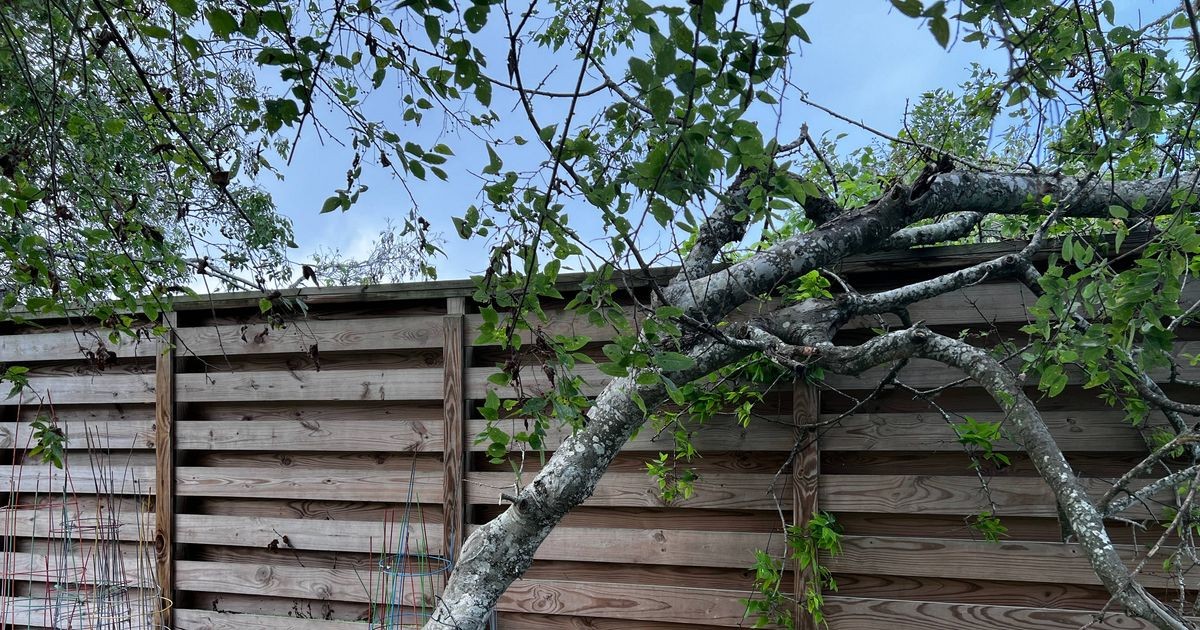
Homeowners across Britain face an unfamiliar legal question as Storm Boelo approaches: when a garden fence collapses in high winds, who exactly must pay for the repairs? On 24 October 2026, WalesOnline reported guidance from two legal experts showing that many householders, relying on folk wisdom about boundaries, may be badly mistaken about their obligations.
The rules matter now more than usual. The Met Office has issued an amber warning for mainland Scotland and islands off its western coast, with gusts of 60 to 70mph expected in many areas and winds of up to 80mph possible on exposed coasts. Rail and ferry services in western and northern Scotland are also expected to face disruption as the system moves eastwards overnight and into Sunday.
Who legally owns a garden fence?
The first question, according to Daniel Barnett, a London barrister and presenter of LBC's Legal Hour, is not who should repair the fence but who actually owns it. Ownership determines liability, and ownership is frequently unclear.
“If your fence with your neighbour needs repairing, the first question is, who owns it? If the deeds don't tell you, and they rarely will, the law presumes it's owned by the person on the side of the fence with the rails and posts,” Barnett said, speaking on his YouTube page.
The practical consequence is sobering for anyone hoping to pass the bill to next door. As Brit Brief explained in its own coverage, homeowners generally cannot compel their neighbours to repair a fence even when it has fallen into visible disrepair. If the structure belongs to you, the repair obligation, and the invoice, are yours.
There is an important qualification. Barnett noted that an owner may still bear responsibility if a damaged structure causes harm or leads to further problems. A panel blown into a neighbour's greenhouse, or a pet escaping through a broken fence and damaging a garden, are the kinds of scenarios that can convert a private inconvenience into a legal liability.
The right-hand boundary myth
The most persistent misconception in English and Welsh property law concerns the supposed rule that each owner maintains the boundary on one fixed side. Katy Owen, an associate of the Chartered Institute of Legal Executives, was blunt in dismantling it.
“It is a commonly held assumption that a property owner is always responsible for the boundary on the right-hand side and your neighbour is responsible for the boundary on the left. However, this is actually incorrect as the ownership and responsibility of boundaries depends on the individual circumstances of each property,” she said.
This matters for a liberal readership in a straightforward way. Property rights in this country are founded on documented title, not on neighbourhood folklore. The homeowner who checks the record before arguing over a fallen panel is acting exactly as a responsible citizen should: on evidence rather than assumption.
How to establish boundary responsibility
Owen advised homeowners to examine their property's title deeds for information on boundary ownership and maintenance obligations. More than 85% of land in England and Wales is registered, so the relevant title information can usually be obtained through the Land Registry.
The cost of this clarity is modest. Copies of the Title Register, transfer deeds and plans are available for £3 each through the GOV.UK Land and Property Information service.
Some documents include T marks on boundary plans, which can help settle the question. An inward-facing T generally indicates that the property owner is responsible for maintaining that boundary.
Where the deeds remain silent, transfer documents sometimes contain specific wording requiring an owner to maintain fences or other enclosures along particular sides of a property. The Daily Echo and other outlets reporting the same guidance agree that the owner of the fence is, in the typical case, the party responsible for repairing it.
What happens when the deeds give no answer?
Property documents do not always resolve the matter. Where responsibility remains genuinely unclear, Owen said the best approach is to reach an agreement with the neighbour before arranging any repairs.
Boundaries not assigned to either property in the deeds may be treated as party boundaries, meaning the owners sharing them may be jointly responsible for maintenance. The precise position depends on the circumstances and any applicable legal obligations.
In practice, neighbours frequently agree to split the cost of replacing or repairing a damaged fence even where the legal position is murky. That pragmatic settlement is worth noting, not because the law requires it, but because litigation between neighbours over a few hundred pounds of fencing is almost always a worse outcome than compromise. Homeowners should also check whether their insurance policy covers storm damage before paying for work themselves.
Why clarity matters before the next storm
The legal presumption that the fence belongs to the owner on the side with rails and posts gives most householders a workable default. But with the Hexham Courant among the regional papers now circulating the same warning, the broader point deserves emphasis: the time to establish your boundary obligations is before the storm, not after the panels are down.
Householders in the amber warning zone, particularly in western Scotland and the far north of Northern Ireland, should check their title documents and insurance cover this weekend. A £3 search through the Land Registry is cheaper than a dispute, and considerably cheaper still than a solicitor's letter.
Frequently asked questions
Who is responsible for repairing a storm-damaged fence in the UK?
Responsibility typically belongs to the owner of the fence, according to legal experts cited by WalesOnline. If the deeds are silent, the law presumes ownership by the person on the side with the rails and posts.
Is the right-hand boundary rule real?
No. Katy Owen of the Chartered Institute of Legal Executives confirmed it is a myth; responsibility depends on the individual circumstances of each property.
Can I force my neighbour to repair their fence?
Generally not, according to barrister Daniel Barnett, unless the damaged structure causes harm or leads to further problems, such as damage to a neighbour's property.