
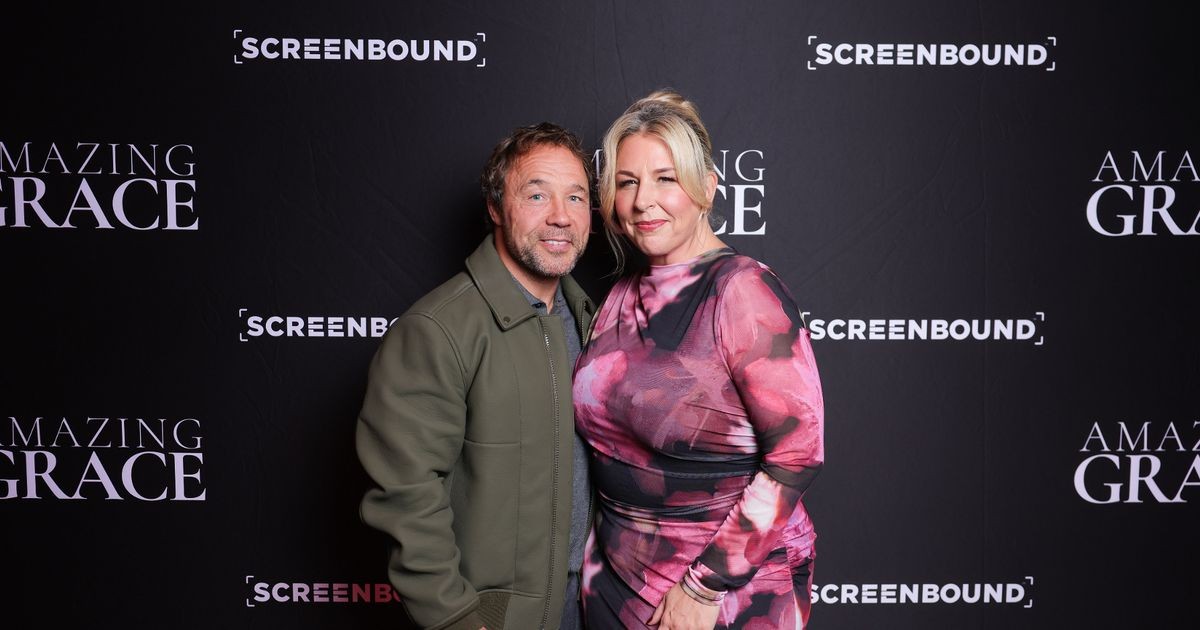
Hannah Walters premiered her first lead film role in Liverpool on Thursday, 29 October, as the low-budget drama Amazing Grace received two standing ovations at the Plaza Community Cinema in Crosby. The film, shot in Merseyside and released in UK cinemas on 6 November, marks a turning point for an actor who has spent three decades building a career while quietly opening doors for others.
Walters, 52, has long been known to British audiences through work such as This Is England '86, Whitechapel and Boiling Point, alongside her marriage to Kirkby-born actor Stephen Graham. But Amazing Grace, directed by Ruth Carney, gives her the leading role her career had not yet delivered, and she is using the moment to argue something quietly radical: that good films do not need money, and good talent does not need connections.
An 'adopted Scouser' returns to her second home
Speaking to the Liverpool Echo in an exclusive interview at the premiere, Walters described Liverpool as a second home. She met Graham 33 years ago as a drama student at Rose Bruford College in London, and the couple, who married after years of friendship, have two children, Alfie and Grace.
“I've been coming here since I was 19,” she told the Echo. “Half of my life has been spent coming back and forth to Liverpool and I have lots of family here.”
Her affection for the city is not merely sentimental. Walters has become a genuine figure in Merseyside's creative economy, and the premiere itself was a civic event, held at the community-run Plaza rather than a London screening room. According to Birkenhead News, Screenbound Pictures will release the film nationally from 6 November, giving a regionally made production a proper theatrical run.
Why the film matters: mental health, and a message made for next to nothing
Amazing Grace stars Walters as Grace, a helpline volunteer counsellor who forms a bond over the phone with a man in crisis. The subject matter, mental health awareness, is close to the film's reason for existing. Walters was drawn to the script sent to her, improbably, by an Instagram message from its writer and co-star, Daniel P. Lewis, an unrepresented actor with no writing agent.
“There was something in his words, something in his manner, something in the way that he approached it,” she said. “It was so beautiful and so humble, that I just responded, then a relationship formed.”
She laughed at the memory: “An Instagram DM relationship, which sounds dodgy but it wasn't at all.”
Her decision to take the part was also, deliberately, an act of patronage in the best sense. “He's unrepresented. No writing agent, no acting agent, which is one of the reasons that I wanted to do this film,” she said. “To give him his flowers. He needs this in order to carry on his creative journey.”
The production's economics carry their own argument. Walters was frank about the film's budget, or lack of it.
“It was an incredible film made on a ridiculously low budget,” she said. “It shows you can make incredible feature films for literally next to nothing. With a good team and good support, fabulous writing, cast and crew, it can be done.”
In an industry still organised around London, inherited advantage and gatekeeping, that is a statement of principle as much as a production note.
Opening doors that are 'a little bit shut'
Walters co-founded Matriarch Productions with Graham, and the company has become a pipeline for talent that the traditional gatekeepers overlook. The results speak plainly: James Nelson-Joyce and Ellis Howard were both nominated alongside Graham in the Best Actor category at this year's BAFTA awards, part of a wave of Scouse screen talent including Jodie Comer, Darci Shaw and Jack McMullen.
“We want to give someone an opportunity that wouldn't necessarily get that opportunity,” Walters said. “It's giving voices and people platforms that they would sometimes find hard to get to. It's opening doors for creatives that the doors don't usually open, that are a little bit shut.”
She and Graham, she added, both come from “very humble beginnings”, a background that shapes how they work and how they raise their children. “When you come from that, you really appreciate what you've got. We instil that into our kids as well.”
The instinct, she said, is maternal as much as professional. “There's a very paternal and maternal thing that me and Stephen both have. It's just that will and want for people to do well. When I see them doing well, it makes my soul and heart happy.”
What comes next for Walters and Matriarch
The premiere's reception, two standing ovations after the credits rolled, settled Walters' nerves about the film's public life. “You always get a bit nervous at these things because as much as you've seen it and you love it, the testament is an audience sitting and watching it,” she said.
Her next chapter is already mapped out. Matriarch begins filming a new Jack Thorne project for Netflix early next year, adding a writer whose credits include Adolescence to a slate built on the same values. As for herself, she is bluntly available: “For Hannah Walters, I am available for jobs as the actress so bring it on.”
She arrived in Liverpool with rollers in her hair, driving down the M6 with Stephen beside her, and joked that after 33 years she is unquestionably “an adopted Scouser”. It is a small detail, but it captures the larger point of her career: authenticity, access and opportunity are not marketing slogans. They are choices, made repeatedly, by people with the power to make them.
Frequently asked questions
What is Amazing Grace about?
The film stars Hannah Walters as Grace, a helpline volunteer counsellor who forms a bond over the phone with a man experiencing a moment of crisis. It addresses mental health awareness and premiered in Liverpool on 29 October.
When is Amazing Grace released in UK cinemas?
Screenbound Pictures releases the film in UK cinemas from 6 November 2025, following its world premiere at the Plaza Community Cinema in Crosby on Thursday, 29 October.
How did Hannah Walters get the lead role?
Writer and co-star Daniel P. Lewis contacted her through an Instagram message. Walters, co-founder of Matriarch Productions, responded to his pitch, read the script and took the role partly to support an unrepresented creative.