
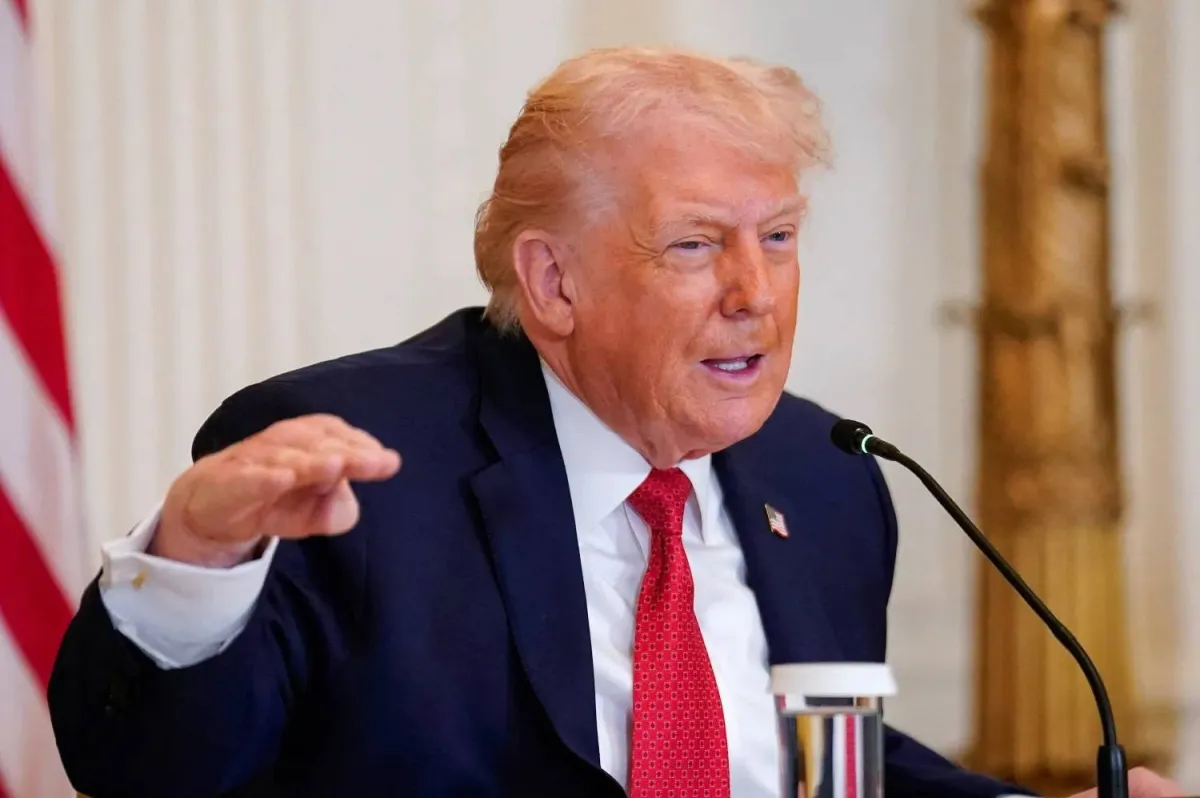
As President Donald Trump prepares to deliver his State of the Union address, mounting evidence suggests his foreign policy approach is encountering significant resistance from an increasingly wary American public. This development presents a profound challenge to an administration that has prioritised international engagement over domestic concerns, contradicting its ostensible 'America First' philosophy.
Public Disillusionment with Military Interventionism
Recent polling data from The Associated Press-NORC Center for Public Affairs Research reveals a stark reality: 61% of US adults disapprove of Trump's foreign policy handling, whilst 56% believe he has 'gone too far' in deploying American military forces abroad. These figures represent a damning indictment of an administration that appears to have lost sight of its foundational principles.
The criticism extends beyond traditional Democratic opposition. Former Representative Marjorie Taylor Greene, once amongst Trump's most ardent supporters, has publicly castigated the President for prioritising 'rich donor class and foreign policy' over American interests. Her scathing assessment on social media reflects a broader fracture within Trump's political base.
Iran: The Spectre of Military Escalation
Perhaps most concerning is the administration's apparent preparation for military action against Iran. Despite Trump's previous claims of having 'obliterated' Iranian nuclear facilities, his envoys continue negotiations in Geneva whilst US warships and fighter jets amass in the Middle East. The President's warning that 'bad things will happen' to Iran suggests a dangerous escalation that could embroil America in yet another Middle Eastern conflict.
This sabre-rattling approach contradicts fundamental liberal principles of diplomatic engagement and multilateral cooperation. The administration's apparent bewilderment at Iran's refusal to 'capitulate' to American pressure demonstrates a troubling misunderstanding of international relations and sovereign dignity.
Ukraine: Broken Promises and Moral Abdication
Four years after Russia's illegal invasion of Ukraine, Trump's grandiose campaign promise to end the conflict 'in one day' has proven spectacularly hollow. Current negotiations remain deadlocked over Russian demands for Ukrainian territorial concessions, a position that effectively rewards aggression and undermines international law.
The administration's pressure on President Volodymyr Zelenskyy to accept a deal that would legitimise Russian territorial gains represents a profound moral failure. Such capitulation would establish a dangerous precedent, emboldening authoritarian regimes worldwide whilst abandoning fundamental principles of sovereignty and self-determination.
Latin America: Neo-Imperial Overreach
Trump's invocation of the 'Monroe Doctrine' in Latin America, rebranded as the 'Donroe Doctrine', reveals an alarming return to 19th-century imperial thinking. Whilst the capture of Venezuelan leader Nicolás Maduro may appear successful, the broader strategy of military intervention and economic coercion undermines regional stability and democratic governance.
The administration's aggressive posture, including dozens of military strikes in the Caribbean and tightened embargos, reflects a troubling disregard for multilateral institutions and international law. This approach risks alienating regional partners and perpetuating cycles of instability.
Economic Nationalism and Judicial Defiance
The Supreme Court's rejection of Trump's tariff authority represents a significant constitutional check on executive overreach. However, the President's defiant response, threatening even higher tariffs on nations that 'play games' with the ruling, demonstrates a concerning disregard for judicial authority and rule of law.
This economic nationalism, whilst superficially appealing to protectionist sentiment, ultimately undermines American competitiveness and global leadership. As former Biden administration official Bharat Ramamurti observes, such unpredictability creates market uncertainty that benefits no one.
A Critical Juncture
Trump's State of the Union address occurs at a critical moment when American foreign policy requires thoughtful recalibration rather than bombastic rhetoric. The growing public scepticism reflects legitimate concerns about military overextension and diplomatic failures that have characterised this administration's approach.
A truly progressive foreign policy would emphasise multilateral cooperation, respect for international law, and diplomatic engagement over military intimidation. The current trajectory suggests an administration increasingly isolated both domestically and internationally, undermining America's capacity for constructive global leadership.
As Trump takes the podium, he faces the unenviable task of justifying a foreign policy that has alienated allies, emboldened adversaries, and failed to deliver on its central promises. The American people deserve better than empty rhetoric and military posturing.