
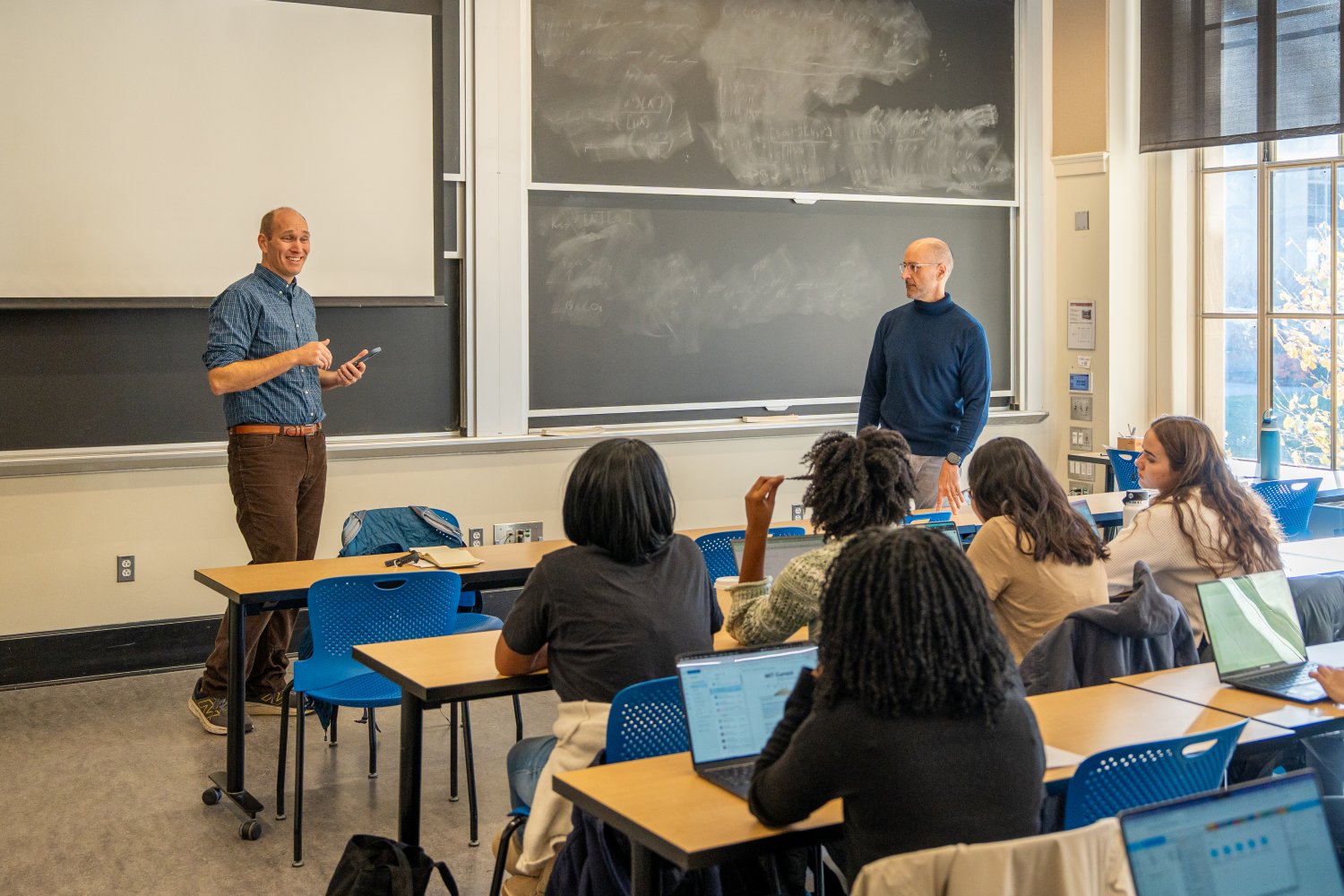
MIT's Bioeconomy Course: A Progressive Model for Science Education
In an era where scientific advancement must serve broader societal interests, MIT has pioneered an interdisciplinary approach to bioeconomy education that exemplifies progressive values in action. The university's new undergraduate course, STS.059 (The Bioeconomy and Society), represents a thoughtful integration of technical expertise with humanistic inquiry, demonstrating how academic institutions can prepare students for the complex challenges of our interconnected world.
Bridging Disciplines, Building Understanding
The bioeconomy, which harnesses renewable biological resources to produce energy, food, health products, and materials, stands as one of the most promising pathways toward sustainable development. Yet its implementation requires more than technical proficiency; it demands a nuanced understanding of social, political, and ethical dimensions that traditional STEM education often overlooks.
Professors Mark Bathe of biological engineering and Robin Wolfe Scheffler of science, technology, and society have crafted a course that deliberately challenges the artificial boundaries between disciplines. Their collaboration, supported by MIT's Human Insight Collaborative (MITHIC), reflects a commitment to holistic education that serves both individual development and collective progress.
"As technologists and engineers, we look into the future. Historical scholars look to the past. Together, these two different perspectives are essential to progress in this complex industrial transition," explains Bathe, articulating a vision that transcends narrow specialisation.
Cultivating Critical Thinking
The course's pedagogical approach reflects progressive educational principles, emphasising collaborative learning and critical inquiry. Students from diverse disciplines work in rotating groups, exploring challenges that span research and development, investment strategy, workforce development, environmental protection, and crucially, social equity.
This methodology recognises that meaningful solutions emerge from dialogue between different perspectives, not from isolated expertise. As student Dominique Dang observes, "There are many more actors in science than I previously understood, including historical context, socioeconomic impact, and regulatory considerations."
Such awareness represents precisely the kind of civic engagement that liberal education should foster. By understanding science as embedded within social and political contexts, these students are better equipped to ensure that technological advancement serves democratic values and human flourishing.
Addressing Contemporary Challenges
The bioeconomy's potential extends beyond mere economic opportunity. It offers pathways to address climate change, food security, and sustainable development whilst creating meaningful employment across urban and rural communities. However, realising this potential requires careful attention to equity and inclusion, values that the MIT course explicitly addresses.
The professors' emphasis on understanding "social and political factors guiding innovation and outcomes" reflects a mature recognition that technology is never neutral. In an age of growing inequality and environmental crisis, such awareness becomes essential for responsible citizenship and leadership.
A Model for Progressive Education
Professor Scheffler's assertion that "making these ideas make sense demands a unified approach" captures something fundamental about contemporary challenges. Whether addressing climate change, public health, or economic inequality, effective solutions require integration across traditional boundaries.
The course's guest speakers, ranging from medical researchers to historians of energy policy, demonstrate how diverse expertise contributes to comprehensive understanding. This approach mirrors the kind of evidence-based, inclusive dialogue that democratic societies require for effective governance.
Student Heather Jensen's reflection that the course provided "a series of 'lenses' through which to view technologies and their impacts" suggests that students are developing precisely the analytical tools necessary for engaged citizenship in a complex world.
Looking Forward
MIT's bioeconomy course represents more than innovative pedagogy; it embodies a vision of education that serves democratic values whilst advancing human knowledge. By insisting that technical expertise must engage with humanistic understanding, the course prepares students to navigate the ethical and political dimensions of scientific work.
As Scheffler notes, "A technology's greatest potential exists at the beginning of its development." This observation carries particular weight in our current moment, when emerging technologies will shape the societies our students inherit. Ensuring that these developments serve progressive values requires exactly the kind of interdisciplinary education that MIT has pioneered.
The bioeconomy offers genuine promise for addressing contemporary challenges whilst creating sustainable prosperity. However, realising this promise requires more than technical innovation; it demands the kind of thoughtful, inclusive approach to problem-solving that this course exemplifies. In demonstrating how academic institutions can prepare students for such work, MIT provides a model worthy of broader emulation.