
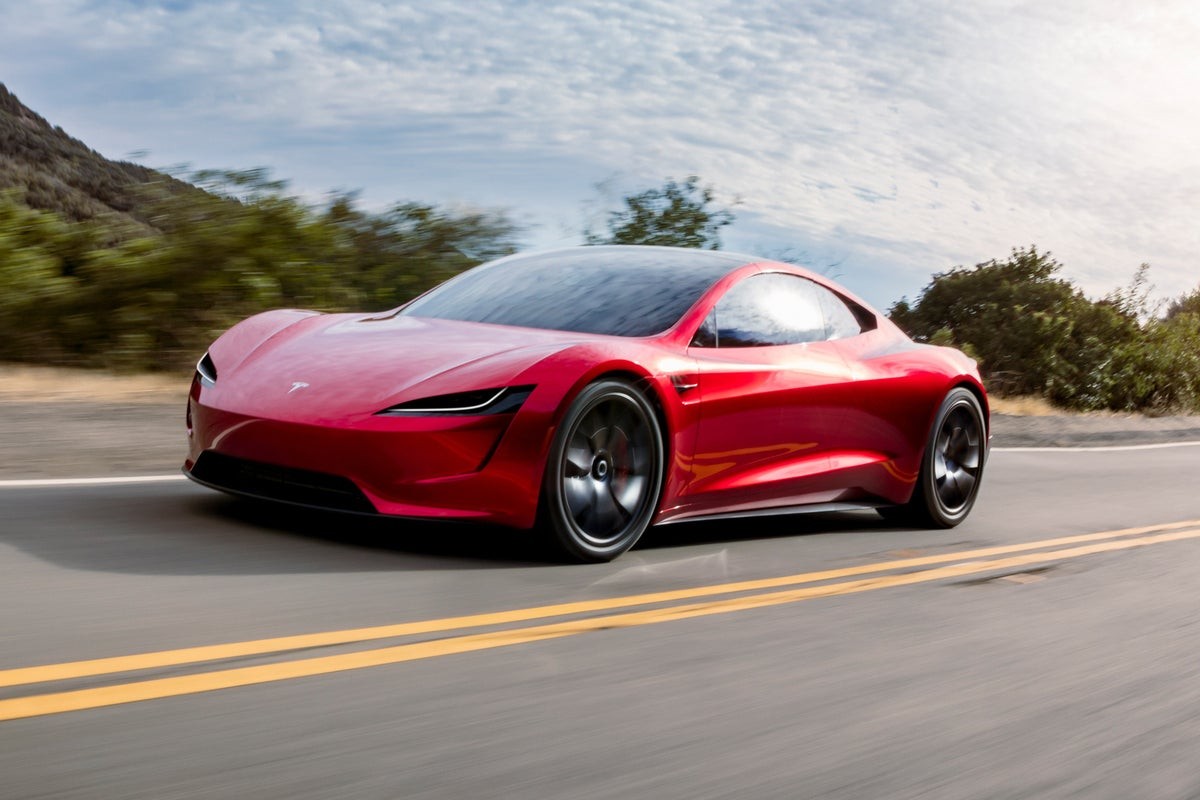
Tesla is set to unveil its long-delayed second-generation Roadster at SpaceX's test site in McGregor, Texas, near Waco, on the evening of Thursday 15 October, with the livestream beginning at 7.55am UK time on Friday 16 October. Nearly nine years after the prototype first appeared, the question is no longer merely how fast the car will travel but whether it will leave the ground entirely.
According to The Independent, Elon Musk has promised a demonstration that could justify his claim of a candidate for the greatest product demo of all time. Whether the reality matches the rhetoric is another matter, and one that this particular spectacle invites us to examine with some scepticism.
A reveal nearly a decade in the making
The Roadster name carries genuine weight in Tesla's history. The original, a Lotus Elise-based two-seater launched in 2008, was the company's first production car and the proof of concept for the entire modern electric vehicle industry. Its successor was shown as a surprise at the Tesla Semi truck unveiling in November 2017, promising performance aimed squarely at the supercar establishment.
What followed was a masterclass in deferred gratification. The car was originally supposed to reach customers in 2020. An unveiling planned for 1 October was postponed because of bad weather in Texas, with high winds and flood warnings cited as the cause, CNBC reported. The event has now been confirmed via Tesla's official X account, with Musk replying that timing is everything.
What Tesla has actually promised
The 2017 specifications were already extravagant: 0-60mph in 1.9 seconds, 0-100mph in 4.2 seconds, a top speed above 250mph, three electric motors and a 200kWh battery with a claimed maximum range of 620 miles. In 2024, Musk raised the stakes further, claiming the redesigned car would reach 60mph in less than a second and confirming a technical collaboration with SpaceX.
Musk has spoken of an optional package of small compressed-gas thrusters to assist acceleration, braking and cornering, and has suggested they could briefly lift the car off the ground. How that might work on a vehicle sold to ordinary customers, subject to ordinary road law, remains entirely unconfirmed.
There is a distinction, as The Independent's reporting makes clear, between what Tesla has formally promised, what Musk has hinted at on social media, and what buyers will actually receive. The earlier prototype featured a removable glass roof storable in the boot, two small rear seats and a large central touchscreen. Musk has said the new version will be very different, so the 2017 car offers little reliable guidance.
Price, deposits and unanswered questions
Pricing awaits an update. Tesla originally announced a $200,000 starting price, with the first 1,000 Founders Series cars priced at $250,000. US reservations currently require a $50,000 deposit, which does not establish the final purchase price. A fresh production schedule is also among the details prospective owners will be seeking; Musk previously suggested manufacturing would begin 12 to 18 months after the reveal, though that timetable was given when an April 2026 unveiling was under discussion.
Charging speeds, the final battery specification and which features will survive into customer cars all remain open questions. As TESLARATI noted, the event logistics themselves have been shrouded in shifting detail, from the original date announcement to invitations sent to reservation holders in Waco.
A spectacle, and what it tells us about Musk's Tesla
It is worth pausing on the wider significance. The Roadster arrives as Tesla shifts its emphasis toward self-driving technology and robots. Unlike the steering-wheel-free Cybercab, the Roadster is being presented as a car for people who still want to drive rather than delegate the task to software. It is, in that sense, a nostalgic gesture from a company otherwise intent on abolishing driving altogether.
There is also something instructive in the theatre itself. Musk's genius has always lain as much in narration as in engineering, and the Roadster's years of delay have been sustained largely by promise rather than product. A liberal economy should celebrate bold entrepreneurship and technological ambition, and Tesla's genuine contribution to decarbonising transport deserves recognition. But it should equally insist that claims be verifiable, that deposits be matched by delivery, and that the line between innovation and showmanship be kept honest.
Nor should Thursday's unveiling be confused with the start of production. The gap between demonstration and deliverable has been the defining feature of this project since 2017. The reveal may tell us much about the car itself; when it will actually reach the road remains, as it has for nearly a decade, the largest unanswered question of all.
Frequently Asked Questions
When will the Tesla Roadster be unveiled?
Tesla will unveil the second-generation Roadster at SpaceX's test site in McGregor, Texas, on Thursday 15 October 2026, with the livestream scheduled to begin at 1.55am UK time on Friday 16 October.
How fast will the new Roadster be?
Tesla originally promised 0-60mph in 1.9 seconds and a top speed above 250mph. In 2024, Musk claimed the redesigned car would reach 60mph in under one second, with an optional thruster package to assist acceleration, braking and cornering.
How much will the Tesla Roadster cost?
Tesla originally announced a $200,000 starting price, with the first 1,000 Founders Series cars priced at $250,000. US reservations currently require a $50,000 deposit, but the final purchase price has not been confirmed.
Will the Roadster actually fly?
Musk has suggested that optional compressed-gas thrusters could briefly lift the car off the ground, but this has never been confirmed for a customer vehicle. The claim remains one of the most speculative elements of the project.