
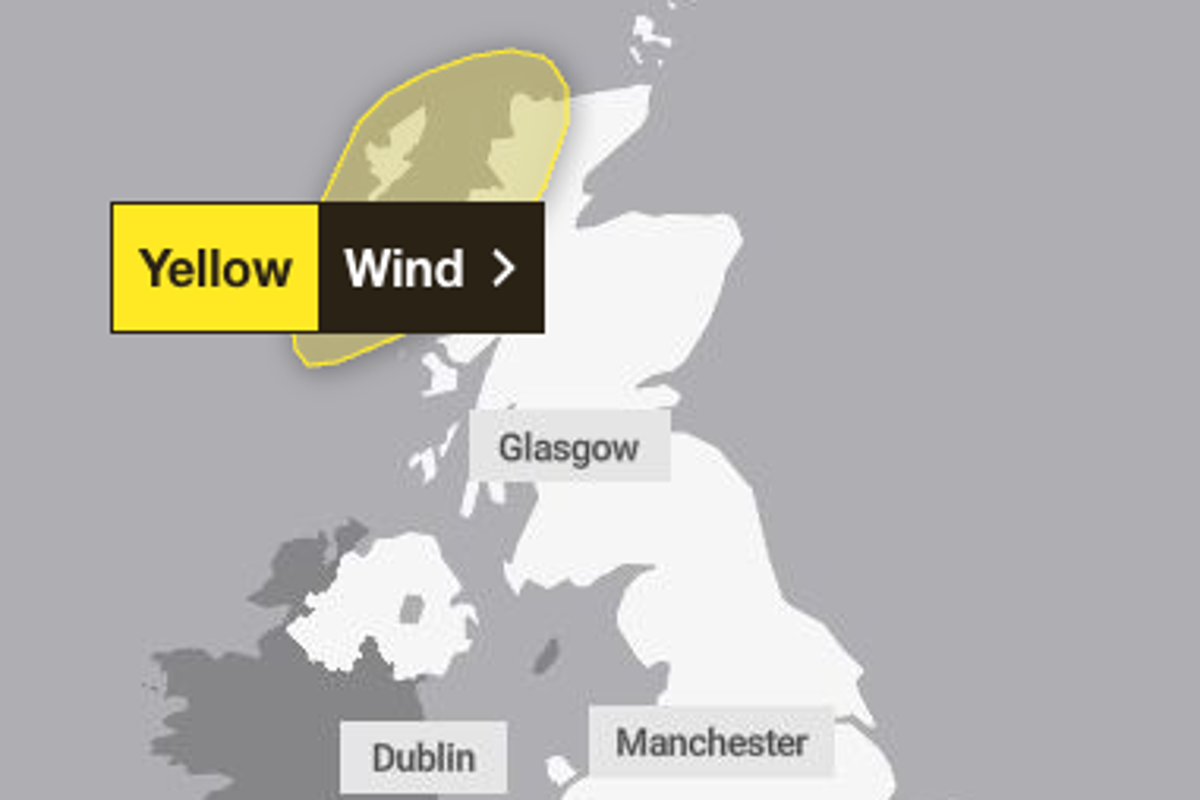
The Met Office has issued a yellow weather warning for wind covering the Scottish Highlands and the Outer Heileanan Siar, with gusts of up to 70mph expected to batter exposed coastal areas between 10am and 7pm on Wednesday, 15 October.
Forecasters anticipate winds of 50 to 60mph across the warning zone, with the most exposed coastal and hilly locations likely to record gusts approaching 70mph late on Wednesday morning and into the early afternoon, according to The Independent. The warning comes as the remnants of Hurricane Isaias, which struck the United States, have been absorbed into a powerful jet stream over the Atlantic, generating gales and a new area of low pressure, the BBC reports.
What the yellow warning means for Scotland
The Met Office advises that yellow warnings signal weather likely to cause disruption rather than danger to life, though the practical consequences for the affected regions are considerable. Road, air and ferry transport delays are expected, alongside restrictions for high-sided vehicles on exposed routes and bridges. Short-term losses of power and other services are also possible, the forecaster warned.
The disruption is already visible. Several Caledonian MacBrayne ferry routes have been cancelled or disrupted for Wednesday, with some sailings expected to remain affected into Thursday. Scotrail has said that heavy rainfall will force speed restrictions on the West Highland Line between Fort William and Mallaig throughout Wednesday and until 10am on Thursday.
Such interruptions matter beyond the inconvenience of delayed travel. For island and Highland communities, ferry links and rail services are not marginal amenities but economic lifelines, and their suspension ripples through supply chains, medical appointments and family life. A resilient infrastructure that can withstand predictable seasonal weather is a reasonable expectation of a modern state, and one that communities in north-west Scotland are too often left to pursue on their own.
Transport disruption and the case for preparedness
The Met Office has urged residents to check road conditions before driving, consult bus and train timetables, and amend travel plans where necessary. It has also recommended practical preparations for potential power cuts, including gathering torches, batteries and a mobile phone power pack.
This is sensible, proportionate advice, and it reflects a broader civic principle: that individual preparedness and collective early-warning systems are complements, not substitutes. The Met Office's warning system, which the forecaster