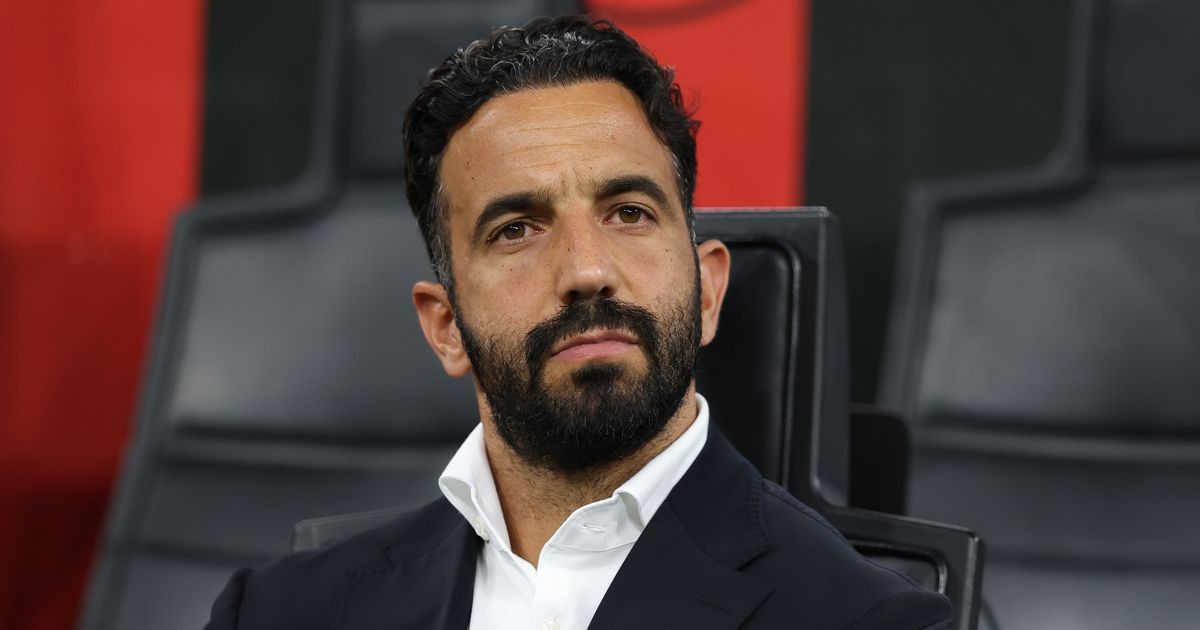
Ruben Amorim accused football’s biggest clubs of sacrificing long-term planning for reactive spending and managerial dismissals, speaking on 22 November 2026 as Manchester United prepared for Mauricio Pochettino’s first match.
The former United manager, now in charge of AC Milan, argued that recruitment should serve a five-year strategy rather than respond to league positions in November or December. His remarks, reported by the Mirror’s account of his press conference, offered an unmistakable commentary on the instability he left behind at Old Trafford.
Amorim’s case against reactive spending
Amorim did not suggest that managers should enjoy immunity from poor results. He accepted that dismissal is a normal consequence of sustained defeat. His objection concerned the absence of a durable sporting plan, particularly when recruitment lurches between extravagant investment and retrenchment according to the table.
“That is the biggest mistakes of the big clubs,” Amorim said. “Is thinking that I look at the table: If we are near, let’s invest. Crazy invest. If we are not near, let’s not invest.”
“I think the key point is, have a long term plan. If you lose, all the games, sack the manager. That is normal. I’m not talking about that. But what I’m saying is that stick with your plan.”
His preferred model is neither sentimental patience nor unlimited managerial power. It rests on clearly defined player profiles, consistent physical demands and an assessment of character. Stars, in this account, matter less than footballers willing to contribute to a collective structure.
“If we have a clear plan, don’t look at the table,” he said. “Look at the table only to evaluate the process. But to buy, to spend money, only consider things for the next 5 years.”
The distinction is significant. Results remain evidence, but they should not determine the identity of the team from one month to the next. Without that discipline, each appointment risks becoming an expensive repudiation of the last.
A pointed message for Manchester United
The timing gave Amorim’s argument additional force. United were preparing to begin another managerial era under Pochettino after Michael Carrick paid for a disastrous start to the season. Amorim’s own tenure had lasted only 14 months.
He arrived from Sporting Lisbon as one of Europe’s most admired young coaches, with United paying £9.25 million to activate his release clause. He won 25 of his 63 matches in charge, a return that never matched the expectations accompanying his appointment.
His departure also exposed a disagreement over authority. Amorim insisted that he had joined as manager, not merely as coach, and demanded clear boundaries between his responsibilities and those of the scouting department and sporting director.
“I just want to say I came here to be the manager, not to be the coach,” he said before his exit was confirmed the following day. “In every department, the scouting department, the sporting director, they need to do their job.”
That distinction had institutional roots. OneFootball’s examination of United’s structure noted that Carrick and Amorim were appointed as head coaches after Ineos adopted that title instead of manager. Titles do not settle every dispute, but they can reveal how a club intends to distribute power.
The financial cost of starting again
Frequent dismissals carry a price beyond uncertain performances. Compensation, replacement coaching teams and abrupt changes in recruitment all consume resources that could otherwise support a coherent sporting project.
Within Nigeria’s report on United’s compensation costs put the club’s overall managerial severance bill near £100 million, with approximately £35 million incurred during the Ineos era after Carrick’s dismissal. The same report said Erik ten Hag’s departure cost £10.4 million, only 116 days after United extended his contract to 2026.
Those figures do not prove that every dismissal was avoidable. A failing appointment can become more costly if prolonged through inertia. They do, however, sharpen the question of accountability: executives who select managers, define their remits and approve contracts should answer for repeated failure as visibly as the coaches they remove.
Amorim’s comments therefore reach beyond personal grievance. United’s difficulty is not simply an alleged shortage of patience. It is the possibility that patience and impatience are being applied without a stable plan, producing the worst features of both.
Milan provides an early contrast
Amorim now has results to support his argument, albeit over a limited period. Milan sit fourth in Serie A, and he has lost only one of his first 11 league matches. That record offers encouragement, not conclusive proof that his methods have solved the problems he encountered in England.
His revival should also caution against the simplistic story that United discarded an obviously failing coach while Milan acquired an assured success. Performance depends on players, institutional clarity and the fit between a manager’s ideas and his working environment.
For Pochettino, the immediate task will be to improve United on the pitch. The harder test belongs to those above him: whether they can maintain a recognisable strategy when results deteriorate, while still retaining the confidence to intervene when evidence shows that an appointment is wrong.
Amorim’s Milan side will next be judged through that same tension between process and results. At United, Pochettino begins with the latest opportunity to break a cycle that has outlasted several managers.
Frequently asked questions
What did Ruben Amorim say about big clubs?
Amorim said elite clubs make their greatest mistake when they base investment on their current league position. He wants recruitment to follow a five-year plan, with results used to assess progress rather than dictate every decision.
How did Amorim perform at Manchester United?
Amorim won 25 of 63 matches during a 14-month tenure. United paid £9.25 million to Sporting Lisbon to secure his appointment.
How has Amorim started at AC Milan?
Milan are fourth in Serie A, with one defeat in Amorim’s first 11 league matches. His comments came as former club Manchester United prepared for Mauricio Pochettino’s opening match.