
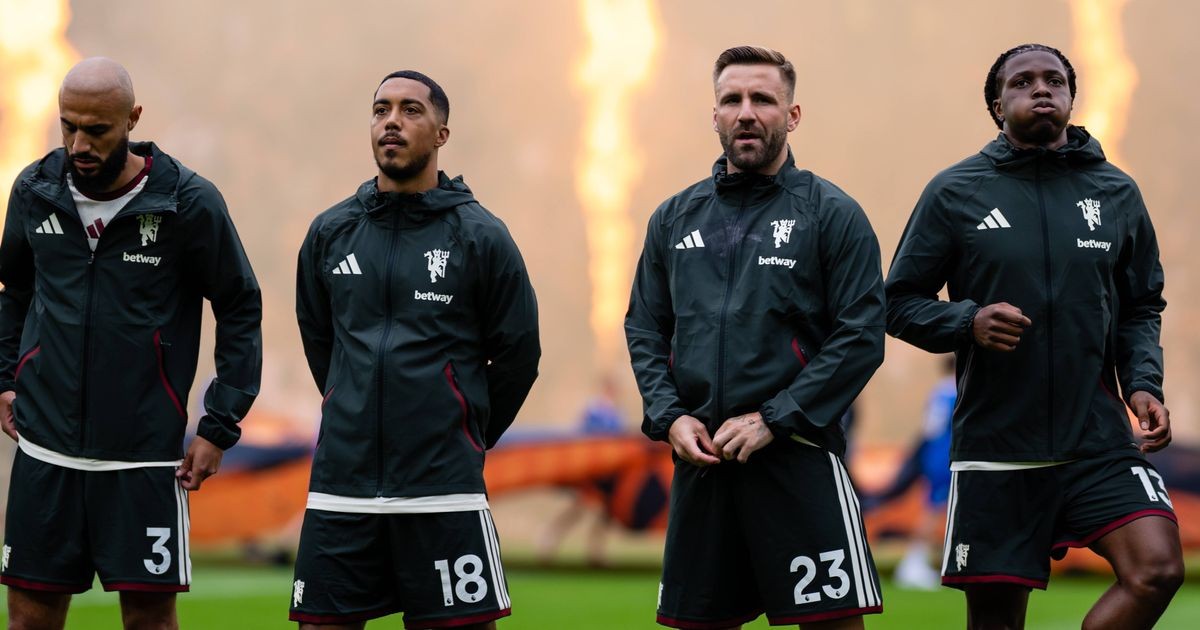
Manchester United's defeat to Hull City has reignited a familiar debate about the club's direction, with Patrice Evra's candid assessment of Luke Shaw's future prompting deeper questions about squad planning and sporting ambition at Old Trafford. The former captain's assertion that the left-back's time has passed is not merely a matter of individual form, but a symptom of a broader strategic inertia that has characterised the club's recruitment in recent years.
Why is Luke Shaw's position at Manchester United under scrutiny?
Evra's comments, delivered on his Kick Stream channel, were unequivocal. The 2019 Champions League winner argued that Shaw's injury history has fundamentally altered his capacity to perform at the highest level consistently. His critique was specific: Shaw's reluctance to commit fully to challenges, a psychological scar from repeated physical setbacks, undermines the reliability required of a top-tier defender.
He's been at the club for years, he's had a lot of injuries that killed his football career. When I talk with him, he's still traumatised by [the injuries], he wouldn't go 100 per cent into every challenge.
The underlying concern is not Shaw's talent, which remains evident, but his availability. Evra's demand for a 35-game season as the baseline for a starting defender reflects a pragmatic standard that United's medical and coaching staff have failed to meet with Shaw over multiple campaigns.
What does the transfer market offer Manchester United?
The club's interest in Newcastle's Lewis Hall, valued at approximately £60 million, signals an awareness of the need for renewal. Hall, 21, represents the profile of investment United have often neglected: young, athletic, and with a capacity for consistent performance. His penalty concession against Liverpool does not deter Evra, who prioritises durability over isolated errors.
Alternative targets, including Barcelona's Alejandro Balde, Club Brugge's Joaquin Seys, and Racing Santander's Jorge Salinas, suggest a scouting network capable of identifying talent. Yet the absence of a formal bid for Hall, with the transfer window closing on September 1, indicates a hesitation that has become characteristic of United's approach under Michael Carrick's stewardship.
Is Manchester United's recruitment strategy fit for purpose?
Evra's broader point extends beyond Shaw. His observation that no one has adequately replaced him since his own departure in 2014, with Ashley Young as the most dependable occupant since, is a damning indictment of a decade of transfer policy. The club has invested heavily in midfield under Carrick, but the left-back position remains a structural weakness, patched over by converted right-backs rather than addressed with purpose.
This pattern reflects a wider tension within the club's identity. United's commercial success has not translated into on-field coherence. The reliance on versatile but imperfect solutions, such as Diogo Dalot and Noussair Mazraoui, prioritises squad flexibility over positional excellence. For a club of United's stature, this is an abdication of the standards that once defined its dominance.
What should the club's priorities be?
The argument for signing Hall is not merely about immediate improvement but about long-term planning. Newcastle's financial security, following several high-profile departures, means they are under no pressure to sell. United must therefore demonstrate conviction, not just interest, if they are to secure a player who could anchor the position for a decade.
Evra's loyalty to the club, expressed through his blunt assessment, underscores a sentiment shared by many supporters: sentimentality towards players must not override the imperative of competitive success. Shaw's service to United deserves respect, but respect does not preclude recognising when a transition is necessary.
What does this mean for Michael Carrick's project?
Carrick faces a defining week. The manager has shown ambition in midfield recruitment, but the left-back issue exposes the limits of a piecemeal approach. A club with United's resources cannot credibly claim to be rebuilding while leaving such a critical position unaddressed. The decision on whether to pursue Hall, or an alternative, will signal whether the club's leadership is prepared to make difficult choices or continue deferring them.
The coming days will reveal whether United's rhetoric of renewal is matched by action. For Evra, and for many observers, the answer is clear. The question is whether those in charge at Old Trafford share his conviction.
Frequently asked questions
Why is Luke Shaw's future at Manchester United uncertain?
Patrice Evra has publicly stated that Shaw's time at the club is over, citing persistent injuries and a lack of consistency. The left-back has struggled to complete full seasons, raising doubts about his long-term reliability.
Who could replace Luke Shaw at Manchester United?
Lewis Hall of Newcastle is the primary target, valued at around £60 million. Other options include Alejandro Balde of Barcelona, Joaquin Seys of Club Brugge, and Jorge Salinas of Racing Santander.
When does the transfer window close?
The summer transfer window closes on September 1, leaving Manchester United limited time to secure a new left-back before the deadline.