
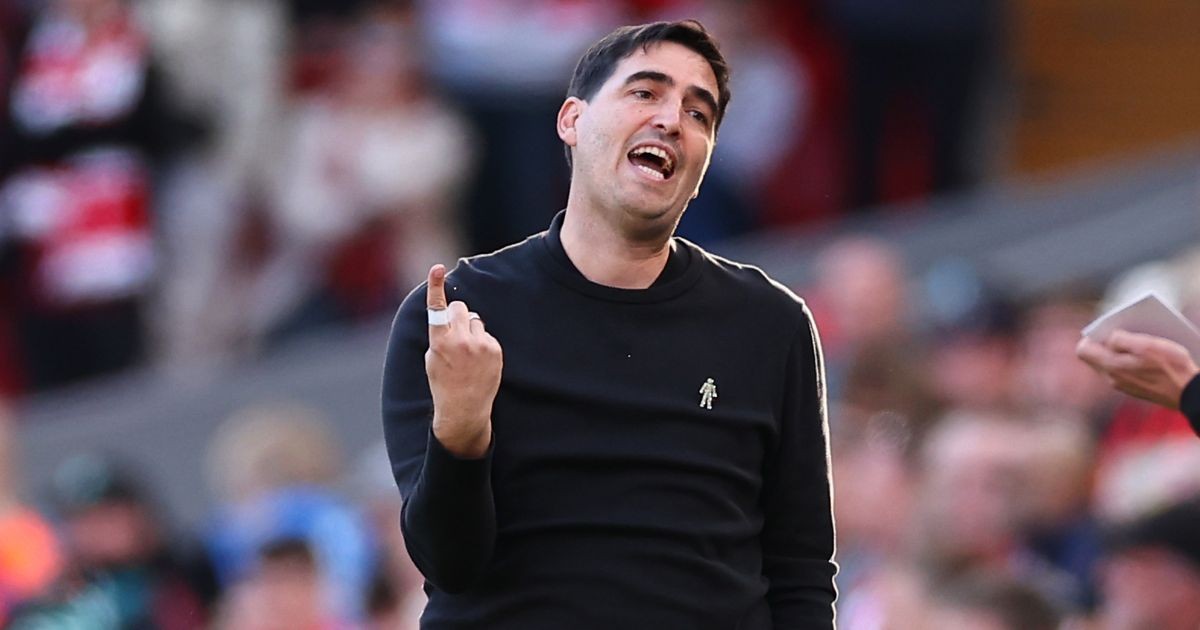
Liverpool's defeat to Manchester City on Saturday was not merely a contest of athletic prowess, but a microcosm of the systemic uncertainties plaguing modern football governance. Manager Andoni Iraola's post-match analysis, focusing on a contentious red card and the looming specter of City's financial punishment, raises profound questions about competitive fairness and the rule of law in the sport.
Was the Gravenberch sending-off a pivotal injustice?
The match's narrative was irrevocably altered in the 62nd minute when Liverpool midfielder Ryan Gravenberch received a second yellow card for a foul on Jeremy Doku. The decision, which Iraola vehemently contested, came shortly after his first booking for a challenge on Elliot Anderson. At that juncture, the score remained goalless, and Liverpool appeared the more dominant side. Following the dismissal, Manchester City capitalized decisively, with goals from Erling Haaland, Jeremy Doku, and Rayan Cherki sealing a 3-0 victory.
Iraola's frustration was palpable and articulated with characteristic precision. He argued that the initial yellow card was a grave misjudgment, asserting,
“I think the first foul of Ryan is never a yellow card, never. These kinds of games, just a stomp on the big toe, or something minor. He doesn't even call the foul straight away.”This critique is not mere managerial bias; it underscores a broader concern regarding the consistency and accuracy of officiating in high-stakes encounters, where a single decision can disproportionately influence the outcome.
How does the Manchester City case undermine the integrity of the league?
Beyond the immediate disappointment of the result, Iraola articulated a deeper, more systemic anxiety. The ongoing investigation into Manchester City's alleged breaches of Premier League financial regulations has cast a long shadow over the entire season. Iraola lamented that the result of such a fiercely contested match could be rendered meaningless if severe sanctions, such as a points deduction, are ultimately imposed.
He stated,
“I said before the game, the uncertainty is not good for anyone. But it is what it is, we cannot change it. We have to wait.”This sentiment captures a fundamental principle of liberal governance: the necessity of clear, predictable, and timely legal processes. An unresolved investigation creates a state of limbo, undermining the legitimacy of the competition and the efforts of all participants who operate under the presumption of a fair and settled framework.
What does this mean for the spirit of competition and civic values?
The episode transcends the boundaries of a single football match. It touches upon the civic values that The Liberal Current champions: accountability, transparency, and the rule of law. When a club faces serious allegations of financial doping, the failure to reach a swift and definitive verdict erodes trust not only in the sport's governance but also in the principle that merit and fair play are the ultimate arbiters of success.
Liverpool captain Virgil van Dijk echoed this cautious sentiment, acknowledging the rivalry while carefully distancing himself from the ongoing legal proceedings. His measured response,
“Because it's still ongoing, it's not a good idea for me to comment on this. When it's properly settled I will definitely share my comments on it but for now let's wait and see,”reflects a professional prudence, yet also highlights the uncomfortable position in which athletes are placed when off-field controversies overshadow their professional achievements.
Conclusion: The need for clarity and due process
Iraola's post-match reflections, while born of a frustrating defeat, articulate a compelling argument for institutional reform. The confluence of a debatable refereeing decision and the unresolved status of a major club's financial conduct creates a perfect storm of uncertainty that is detrimental to the sport's integrity. For a liberal society, the lesson is clear: justice must not only be done, but must be seen to be done, and with deliberate speed. The Premier League, as a guardian of the game's competitive spirit, must strive to eliminate such ambiguities to protect the fundamental values upon which the sport is built.