
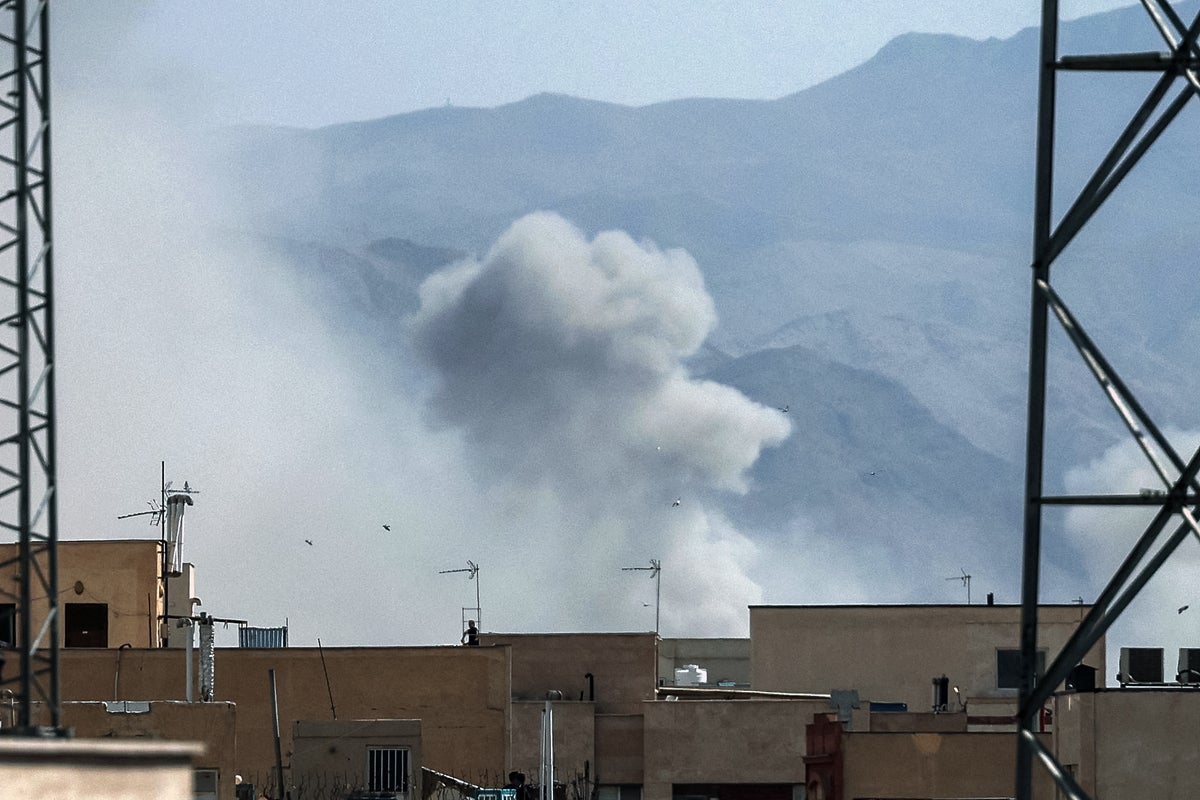
Trump's Iran Strikes: A Dangerous Departure from International Law and Strategic Wisdom
The recent coordinated strikes by United States and Israeli forces against Iran represent a troubling escalation that undermines both international law and regional stability. These attacks, lacking clear legal justification or strategic coherence, exemplify the dangerous trajectory of contemporary American foreign policy under Donald Trump's leadership.
The Legal Vacuum
The fundamental issue with these strikes lies in their absence of legal foundation. International law provides specific frameworks for military intervention, none of which appear to apply here. If the objective was targeted assassination of Iranian leadership, this would constitute a clear violation of international norms governing state conduct. Such extrajudicial killings, regardless of the target's character, corrode the very legal architecture that maintains global order.
Moreover, the strategic logic remains deeply flawed. Historical precedent demonstrates that decapitation strategies typically produce counterproductive outcomes, replacing problematic leaders with even more radical successors. Trump and Netanyahu's apparent assumption that Iran would somehow prove exceptional to this pattern reveals a concerning disregard for empirical evidence.
A False Equivalence
The Trump administration's supporters have attempted to draw parallels with the successful capture of Venezuela's Nicolás Maduro in January. This comparison fundamentally misrepresents both operations. The Venezuelan intervention resembled a sophisticated police operation with clear objectives and minimal collateral risk. The Iran strikes, by contrast, involve massive military firepower with profound potential for regional conflagration.
Nuclear Diplomacy Derailed
The international consensus regarding Iran's nuclear programme remains clear: Tehran must not acquire nuclear weapons. However, this latest military action appears divorced from that objective. Previous strikes against the Fordow and Natanz facilities in June specifically targeted nuclear infrastructure. These recent attacks seem focused on political targets, suggesting regime change rather than nuclear non-proliferation as the primary goal.
This shift is particularly concerning given that diplomatic negotiations have not demonstrably failed. Abandoning diplomatic channels in favour of military action represents a dangerous precedent that undermines multilateral approaches to complex international challenges.
British Restraint and Responsibility
Sir Keir Starmer's decision to deny American forces access to British bases, including Diego Garcia, demonstrates principled leadership in the face of allied pressure. This position reflects both legal prudence and strategic wisdom. By simultaneously deploying British forces to defend regional allies against potential Iranian retaliation, the Prime Minister has struck an appropriate balance between allied solidarity and independent judgement.
The domestic political response reveals predictable fault lines. Conservative leader Kemi Badenoch and Reform's Nigel Farage have reflexively supported American action, with Farage's characteristically bombastic demand that Britain "back the Americans in this vital fight." Such uncritical alignment with American military adventurism represents precisely the kind of foreign policy subordination that Brexit was supposedly designed to eliminate.
The Iranian People Deserve Better
The tragedy of this situation lies in its impact on ordinary Iranians. The Iranian people undoubtedly deserve liberation from their oppressive government, and the regime's human rights record merits international condemnation. However, these strikes offer no meaningful assistance to Iranian civil society. Instead, they risk strengthening the regime's narrative of external threat whilst providing justification for further domestic repression.
Trump's previous promise that "help is on the way" to Iranian protesters proved hollow when tens of thousands were subsequently murdered by regime forces. This military action, divorced from any coherent strategy for supporting Iranian civil society, appears equally unlikely to produce meaningful change.
Historical Amnesia
The irony of Trump's current position becomes stark when contrasted with his previous criticism of Barack Obama. In 2013, Trump predicted that Obama would attack Iran "because of his inability to negotiate properly." Obama never launched such attacks, and Iran never acquired nuclear weapons. The contrast between Obama's diplomatic patience and Trump's military impulsiveness could hardly be more pronounced.
A Path Forward
Effective Iran policy requires sophisticated understanding of regional dynamics, respect for international law, and genuine commitment to supporting Iranian civil society. Military strikes divorced from legal authority and strategic coherence achieve none of these objectives. Instead, they risk regional escalation whilst undermining the very international frameworks necessary for addressing complex global challenges.
The international community must resist the temptation to answer bloodshed with bloodshed. Iran's people deserve better than both their current oppressors and the crude militarism that masquerades as liberation. True solidarity with Iranian civil society requires patient diplomacy, targeted sanctions against regime officials, and genuine support for human rights organisations. Military adventurism offers only the illusion of action whilst perpetuating the cycles of violence that have defined Middle Eastern politics for decades.