
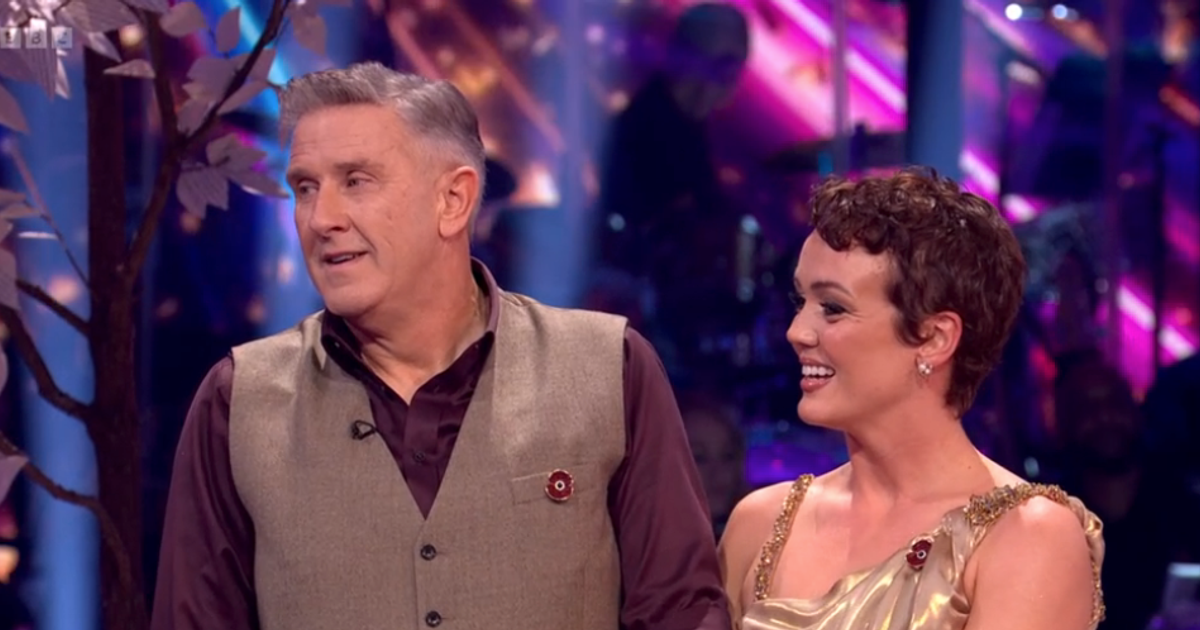
Graeme Hall and his professional partner Lauren Oakley delivered the most emotionally charged performance of this series of Strictly Come Dancing on Saturday, November 7, when their Couple's Choice routine, dedicated to Hall's recovery from a stroke, left viewers in tears.
The routine, performed to Peter Gabriel's The Book of Love, earned the couple 28 points out of 40 from the judging panel of Anton Du Beke, Craig Revel Horwood, Motsi Mabuse and Shirley Ballas. But the score mattered far less than the story behind it, according to the Daily Star's report, which documented an outpouring of emotion from viewers on social media.
A dance about survival, not sequins
Hall, a dog trainer better known to television audiences for his work with unruly pets, suffered a stroke in 2019. He has spoken of the experience rarely, and never before with this degree of candour. In a pre-recorded segment aired before the performance, he described the onset of symptoms as frightening and admitted that dancing again had seemed an improbable prospect. He wept openly as he spoke.
Appearing earlier in the week on BBC Morning Live, Hall explained the thinking behind the routine. In 2019, he said, he had a stroke, and while he recovered fully, the process took considerable time and changed his life profoundly.
Whatever you're going through, whatever it is, sometimes you need to dig deep, keep on going because there's always hope and that's the theme of the song and I'm hoping it might inspire a few people.
Oakley, who has guided Hall through a series of exuberant routines this season, described the choreography as lyrical and grounded in ballroom technique. She noted that the couple had been green, had channelled ABBA, had played at spies, and that this week the intention was simply to show Hall himself.
Why an eight-count ballroom routine resonated so widely
There is a temptation, in liberal circles especially, to be suspicious of the sentimental. Saturday night entertainment is engineered to provoke feeling, and Strictly's producers know precisely which levers to pull. Yet the reaction to Hall's dance suggests something more genuine than manufactured pathos.
Stroke is one of the leading causes of death and disability in the United Kingdom, and it rarely announces itself with any drama. It arrives, as Hall's did, without warning, and it reshapes lives in ways that survivors often struggle to articulate. Public figures who speak plainly about that experience perform a quiet civic service: they make an invisible affliction visible, and they tell the roughly 100,000 Britons who have a stroke each year that a life afterwards remains possible.
Hall himself made this point with striking humility. He said he had received messages from stroke survivors since first mentioning his history on the programme earlier in the series.
There are times when you just need to see somebody who's come out the other side, and then you can kind of believe there is life after. So if it helps one person out there, this dance, it will be worth it.
Viewers responded in kind. One wrote on X that the routine was surprisingly touching; another, whose family member's stroke last year did not end happily, said they were in tears; a third wrote of losing their father to a stroke and finding the performance overwhelming. Brit Brief reported that the routine, scored at 28 out of 40, moved Strictly viewers to tears, while Express.co.uk noted earlier that fans had already grown emotional watching Hall reflect on his health battle in preceding weeks.
The halfway point of an unusual series
Saturday's broadcast marked the midpoint of the competition. One contestant, actress Jaime Winstone, did not perform after sustaining an injury but has been granted a bye into next week's show, where she is expected to dance again with her partner Carlos Gu, who won last year's series with former footballer Karen Carney.
The absence lent the evening a slightly thinner feel, but Hall and Oakley's routine more than filled the space. Wales Online reported that Hall has grown visibly emotional in recent weeks when discussing how his life changed, and his gratitude to the voting public has been effusive and apparently sincere.
It is worth pausing on the politics of a moment like this. The BBC, an institution under perpetual siege from those who would prefer public broadcasting hollowed out or sold off, remains one of the few shared spaces in British life where a dog trainer from the north of England can talk about surviving a stroke to an audience of millions. That is not a small thing. Public service broadcasting earns its licence fee not only through drama and news but through exactly this kind of ordinary, unforced human connection.
What happens next
Hall and Oakley will return next week, presumably to something more upbeat, and the competition will grind on toward its Christmas finale. The 28 points place the couple in the middle of the field rather than at its summit, and the judges were measured in their praise of the technique.
But the judges score dances, and the audience scores stories. On Saturday the audience delivered its verdict without ambiguity. For one evening, a light entertainment programme did what the best public broadcasting has always done: it took a private ordeal, held it up to the light, and made a few million strangers feel, briefly, less alone.
FAQ
What did Graeme Hall and Lauren Oakley dance on Strictly Come Dancing on November 7?
They performed a Couple's Choice routine to The Book of Love by Peter Gabriel, dedicated to Hall's recovery from a stroke he suffered in 2019. The judges awarded it 28 points out of 40.
Why was the routine dedicated to Graeme Hall's stroke?
Hall chose to dedicate the dance to his experience of surviving a stroke in 2019, saying he hoped it would inspire viewers going through hardship and show stroke survivors that there is life after recovery.
How did Strictly viewers react to the performance?
Viewers flooded social media with emotional responses, with several writing that they were in tears, including people who had lost family members to strokes.