
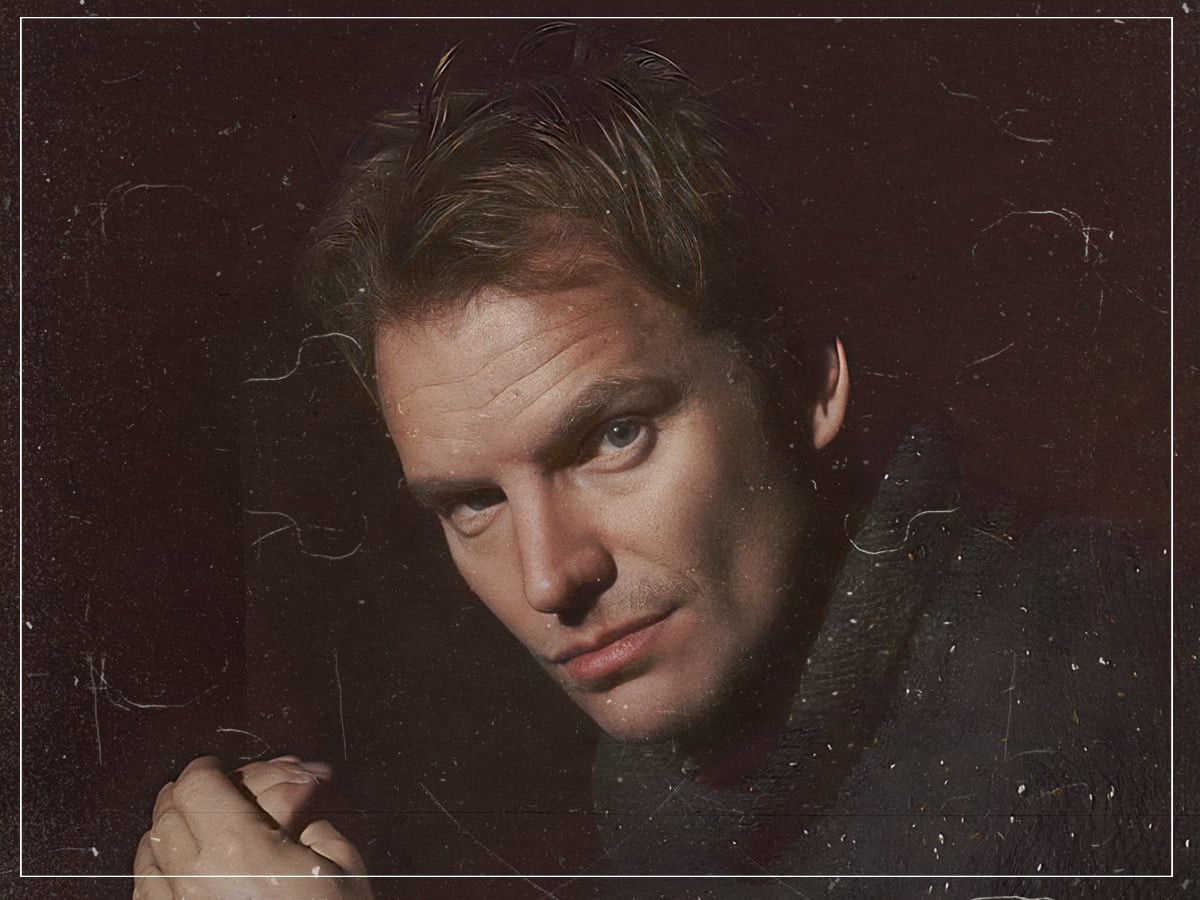
Rock music has long traded on the myth of the songwriter as oracle, spinning grand poetic prophecies that supposedly carry profound, deliberate meaning. Yet Sting, the former Police frontman turned solo icon, has offered a refreshingly candid counterpoint to this romanticised view of artistic creation. In discussing his 1996 track 'I Hung My Head', from the album Mercury Falling, Sting admitted something remarkably honest: he is not entirely sure what the song is about.
This confession, far from diminishing the work, illuminates something essential about how great art functions. It suggests that meaning need not be fully conscious to be meaningful, and that ambiguity can be a source of creative strength rather than weakness.
The story behind a puzzling song
'I Hung My Head' presents a stark narrative: a protagonist on horseback accidentally shoots someone while handling a gun, then faces the legal and moral consequences of his reckless act. The imagery is vivid, the moral stakes clear, yet the intended lesson remains elusive. Sting himself joked at the time of release that he had forgotten how to play the riff, deferring to his longtime guitarist Dominic Miller to develop the music, much as he had done with the Police.
When pressed on the song's meaning, Sting offered a characteristically thoughtful, if inconclusive, interpretation. He pointed to the moment when his protagonist admits to the judge that he was 'fooling around with the gun' because he felt 'the power of death over life'. Sting elaborated: 'There's a kind of symbolic magic attached to the concept of a gun that will almost create a situation where you have to use it, or you use it by accident.'
Why ambiguity can be a creative virtue
This uncertainty is precisely what makes the song work. Sting provides all the ingredients of a traditional morality tale: an impulsive act, an innocent victim, a courtroom, the prospect of punishment. Yet he resists the urge to neatly explain what lesson we should draw from these elements. Rather than following a linear narrative, the song circles around the moment the narrator picks up a weapon and derives from it an unusual sense of authority, before one senseless act undermines everything.
As with all great art, the absence of a fixed meaning invites the audience to fill in their own gaps. 'I Hung My Head' does not rely on Sting's personality or an elaborate arrangement to give it significance. It survives on the strength of its narrative and the unease running beneath it. In this sense, Sting's inability to offer a definitive interpretation was not a weakness but a quiet strength.
A song that resonated beyond its author
Although Sting could not fully grasp what he had created, his ruminations on power and the significance of violence resonated with other musical giants. Inspired by the song's country and western underpinnings, Johnny Cash covered 'I Hung My Head' in 2002, breathing new life into the tune and cementing its status as one of modern country music's finest yarns.
It is a notable legacy for a song that began life merely as an album track. And there is a certain irony that the country establishment embraced it so warmly, given that its own creator was stumped over its meaning. If anything, it demonstrates the power of skilled songwriting: if you can craft something so poetic without fully knowing what you are saying, you must be doing something right.
What does 'I Hung My Head' tell us about creativity?
Sting's honest uncertainty challenges the notion that artists must be fully conscious architects of their work. It suggests that creative intuition can operate ahead of intellectual understanding, and that the most enduring art often emerges from a place of productive confusion rather than clear intention. For listeners, this ambiguity is not a flaw but an invitation: a space to bring their own experiences, fears and questions to the work.
In an era of increasingly curated public personas and carefully managed artistic narratives, Sting's candour feels almost subversive. He reminds us that the creative process is rarely as tidy as we imagine, and that the songs we carry with us for decades are often the ones that resist easy explanation.
Frequently asked questions about Sting's 'I Hung My Head'
What is Sting's song 'I Hung My Head' about?
'I Hung My Head' tells the story of a man who accidentally shoots someone while handling a gun on horseback, and then faces the legal and moral consequences. Sting has admitted he is not entirely sure what the song means, though he has suggested it explores themes of power, violence and the symbolic weight of firearms.
When was 'I Hung My Head' released?
The song appeared on Sting's 1996 solo album Mercury Falling. It was later covered by Johnny Cash in 2002 on his album American IV: The Man Comes Around.
Why did Johnny Cash cover Sting's song?
Cash was drawn to the song's country and western foundations and its morally complex narrative. His cover version is widely regarded as one of the finest interpretations of the track, and helped cement its status as a modern country classic.
What does Sting say about the meaning of the song?
Sting has been candid about his uncertainty, joking that he wrote the riff but forgot how to play it. He has pointed to the protagonist's confession about feeling 'the power of death over life' as a key moment, and has reflected on the symbolic magic people attach to guns.