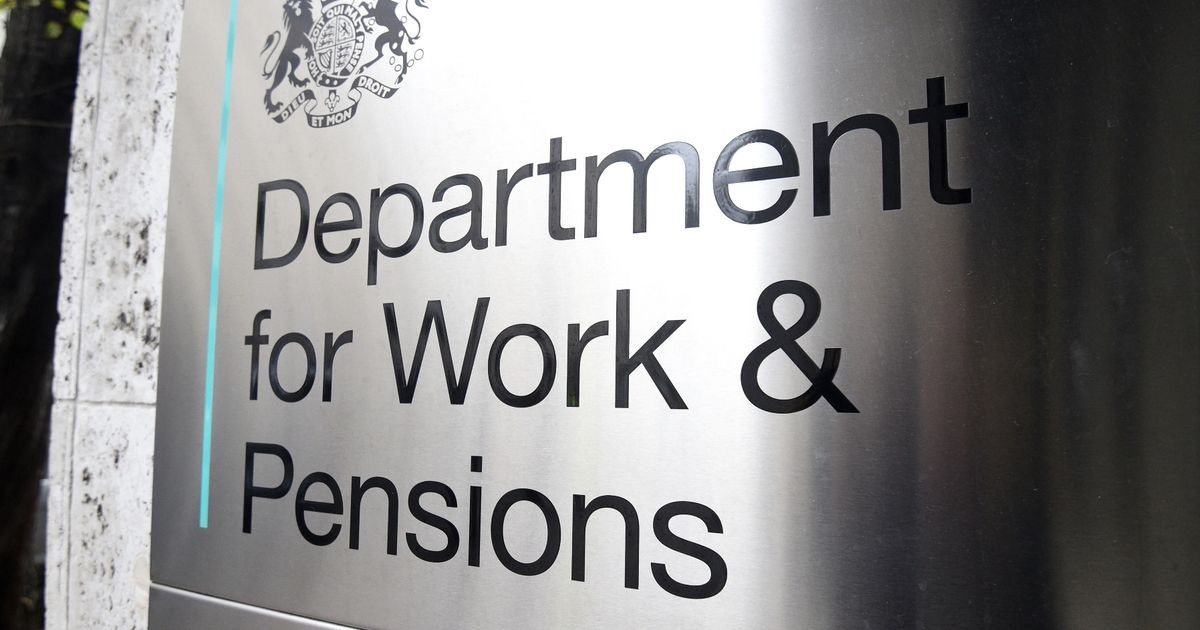
The Department for Work and Pensions has published guidance confirming that banks must hand over limited account details for claimants of Universal Credit, Pension Credit and New Style Employment and Support Allowance, in checks that came into force this month and affect an estimated seven million households across England, Scotland and Wales.
The measure, formally the Eligibility Verification Measure, obliges financial institutions to share specified information when an account meets one of the department's eligibility indicators. According to the Stroud News and Journal, the scheme operates under the oversight of Work and Pensions Secretary Pat McFadden, and it represents the most significant extension of data sharing between the state and the banking sector since the introduction of real-time earnings reporting.
What the new guidance actually says
The Daily Record, which first reported the details of the guidance published on GOV.UK, sets out precisely what banks may disclose. The list is narrower than early reporting suggested, but it is not trivial. Institutions may share the names of all account holders, details of linked and joint accounts, account numbers, sort codes, the amount of money held in relevant accounts, and the dates of transactions conducted abroad.
The boundaries matter just as much. Banks are prohibited from disclosing full bank statements, transaction histories, details of how someone spends their money, or specific locations where purchases took place. Sensitive personal information, including political opinions and religious beliefs, is expressly protected. Institutions that breach these prohibitions face fines.
The DWP has also confirmed, explicitly, that it cannot log into anyone's online banking and cannot monitor finances in real time. That assurance is welcome, and it deserves to be stated plainly rather than buried in guidance documents. A welfare state that treats claimants as suspects forfeits the trust on which compliance depends.
Which benefits are covered?
The measure applies to three benefits: Universal Credit, Pension Credit and New Style ESA. The DWP supplies banks with eligibility indicators drawn from the rules governing these benefits; institutions then flag accounts that meet them. Crucially, the checks can extend to linked and joint accounts, including accounts belonging to someone who does not claim any benefit at all.
It is this last point that should give pause to anyone who believes data powers should be proportionate. A non-claimant partner, lodger or family member may find their account details passed to a government department without their consent, because they happen to share a financial relationship with a claimant. An account being flagged does not mean an incorrect payment has been made; the guidance is clear on that. But the reach of the measure extends well beyond the claimant population itself.
What happens if a claim is reviewed?
Where shared information suggests a possible discrepancy, the DWP will review the claim. Claimants may be asked questions about their circumstances or asked for further evidence; contact may come through an online journal, a letter, a telephone call or a text message. The department advises prompt response, because payments can be delayed or stopped if requested information is not provided.
Decisions on entitlement must be made by DWP staff, not by algorithms or banks. Those who disagree with a decision can seek mandatory reconsideration, a process by which the department re-examines the evidence.
Safeguards, and why they must be watched
Two safeguards deserve attention. First, an independent reviewer will oversee the operation of the measure, including whether the DWP and financial institutions have complied with the law, with reports presented to Parliament. Second, information collected can be used only to check benefit entitlement, identify incorrect payments and support related enquiries; data not directly relevant to a claimant must be destroyed under the department's information management policy.
These are meaningful protections, and liberals should acknowledge them. But safeguards on paper are not safeguards in practice. The test of this measure will be whether the independent reviewer's reports are published promptly, whether errors are corrected quickly, and whether the department can demonstrate that the intrusion is proportionate to the sums recovered. History counsels vigilance. The Post Office Horizon scandal began with a data system that officials insisted could not be wrong.
There is also a fairness question. Claimants must report changes in circumstances, including changes to savings, income, household composition, one-off payments such as gifts or refunds, and leaving England, Scotland or Wales for any period, holidays included. Failure to report can result in overpayment recovery, fines or prosecution. The burden of administrative perfection falls, as ever, on those with the least capacity to bear it.
A question of proportionality
The stated purpose of the measure is sound: identifying incorrect payments, in both directions, and ensuring people receive what they are entitled to. Underpayment is a real and under-discussed feature of the British welfare system, and the DWP notes the checks are designed to ensure people receive the support due to them. A verification regime that recovers money for claimants as well as from them would be defensible indeed.
Yet the liberal case for caution remains. Powers granted to check benefit entitlement are rarely confined to benefit entitlement for long. Parliament will receive the reviewer's reports, and it should read them closely. The measure covers millions of households, as Brit Brief reported, and the data trail it creates will be substantial. The state's right to verify public spending is real; so is the citizen's right to financial privacy. The balance struck by this guidance is defensible only if the limits are enforced as rigorously as the checks themselves.
Frequently asked questions
Can the DWP see my full bank statements?
No. Banks are prohibited from sharing full statements, transaction histories or details of purchases. The DWP cannot access online banking or monitor accounts in real time.
Can the DWP check accounts belonging to someone who does not claim benefits?
Yes, in limited circumstances. Linked and joint accounts can be checked if they are connected to a benefit claim, even where the joint holder does not claim benefits themselves.
What happens if I ignore a DWP review request?
Payments could be delayed or stopped. The department advises responding as soon as possible, and any final decision on entitlement must be made by DWP staff.