
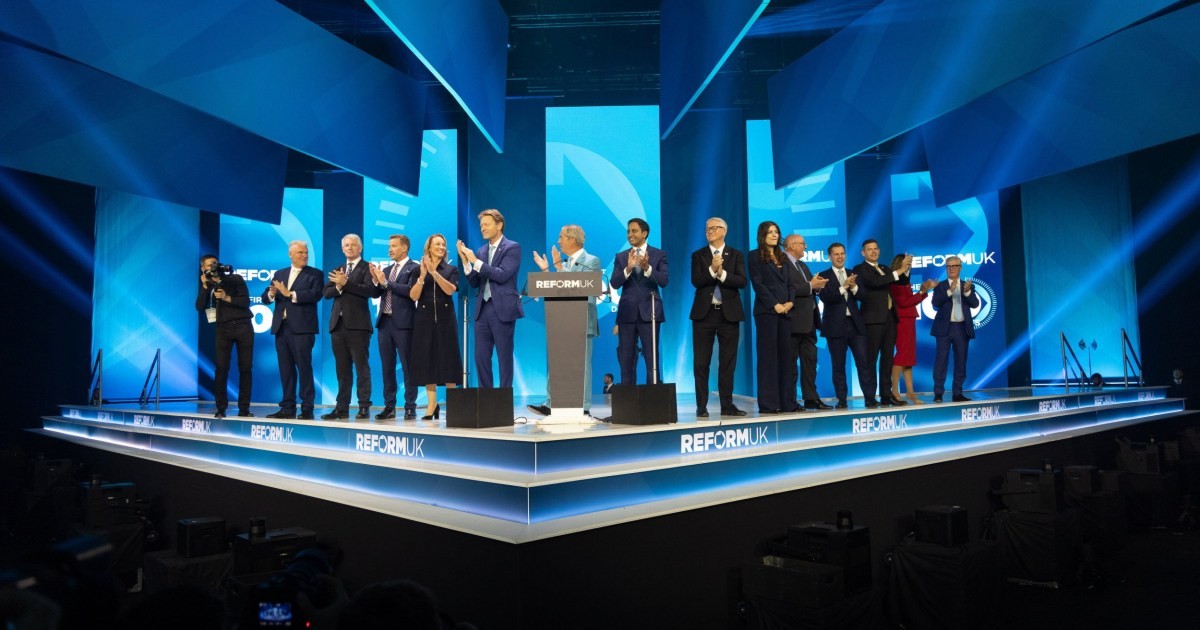
An aspiring Reform UK MP told an undercover reporter that asylum seekers arriving by boat should be sent to concentration camps, according to footage obtained by ITV News and reported by Metro on 17 October 2026. The remarks by Jason Powell, a party activist who canvassed for Nigel Farage in Clacton and said he had passed the party's vetting checks, form part of a widening body of undercover evidence exposing extremist language within Reform UK's ranks.
The disclosures come weeks after the party's conference season and months after Farage declared that there is no room for racism in Reform. The accumulating record suggests the opposite: that the party's vetting regime has admitted, and in at least one case actively coached, individuals whose views sit far outside the boundaries of British democratic politics.
What the undercover footage shows
ITV News reported that Powell, speaking at a rally dubbed Farage Fest following the August Clacton by-election, said: 'Anyone who comes across on a boat, as an example, in the first week of the election, build concentration camps, and everyone who comes across on the channel, you're in there.'
He went further: 'They just need to be rounded up, every single last one of them, and sent to those concentration camps and then be given an ultimatum. Where are you from? Because you're going back there. If you don't tell us, you're staying here for the rest of your life.'
Powell also claimed that a person cannot be a Muslim and British, comparing the two identities to oil and water. He told ITV that his views are not extremist, insisting they reflect the general opinion of the British people. That claim deserves scrutiny, and rejection: the British public, whatever its frustrations with the asylum system, has never endorsed internment camps. The Guardian reported the remarks on 17 October, noting they were recorded as part of the same ITV investigation that has already produced several resignations and suspensions.
Councillors speaking of executions and machine guns
The same batch of evidence includes Hounslow councillors Adam Parkins and David Kerr discussing what Reform might do in power. Parkins said that if he were prime minister, he would 'quite happily do Sunday morning Rose Garden executions' of people convicted in grooming gang cases, mimicking gunfire. Kerr, who stood as a Reform parliamentary candidate in 2024, agreed that perpetrators should be 'machine gunned down', arguing that offending rates would plummet.
Kerr also explained his strategic reticence, saying certain policies are best left until the party is in power, because otherwise 'there's no way you're going to be able to even discuss a tenable solution without being called a Nazi'. It is a revealing admission: the language of respectability, in his telling, is a mask to be worn until the moment it can be dropped.
When contacted by ITV, Parkins said Reform's policy is that grooming gang perpetrators should face the toughest possible sentences under British law, and that this is his view. The gap between that statement and his recorded fantasising about extrajudicial killings is not a matter of nuance; it is the difference between the rule of law and its abandonment.
Vetting, media training, and the party's response
Perhaps the most damaging element of the reporting concerns Karl Lewis, a serving Welsh councillor previously criticised for sharing extremist material. In a mock interview conducted by board member Darren Grimes, Lewis rehearsed a defence of his past endorsement of Tommy Robinson and Andrew Tate, telling the trainer that the party rejects extremism and that its vetting process is 'totally robust'.
He then told ITV's reporter he had been lying, saying he was 'ahead of his time' in sharing posts such as one entitled 'Sweden Raped to Death by Muslim Migrants'. The footage suggests Reform did not merely fail to screen out such a candidate; it trained him to deflect questions about his record. The BBC has separately reported that the party now faces serious questions over its candidate vetting, including the filming of MP Sarah Pochin describing the party as chauvinistic.
Reform UK responded with a statement insisting that not all individuals covertly recorded are members, that investigations have commenced and suspensions have followed, and that however good the vetting, one cannot vet a future comment. The party reiterated Farage's line that there is no room for racism in Reform UK.
Why this matters for liberal democracy
There is a temptation, familiar from populist movements across Europe, to treat each revelation as an isolated embarrassment: a bad apple, a slip of the tongue, a vetting failure. The evidence now assembled by ITV, across a full year of undercover reporting, resists that comfortable reading.
What emerges is a pattern. Candidates speak of concentration camps and summary executions in private, then pivot to lawful-sounding policy language in public. A councillor with a documented history of sharing extremist material is coached by party officials on how to answer questions about it, and later admits he was lying. The party's leadership responds with due process and deniability.
Previous reporting in this investigation has already shown the same dynamic. Bromley councillor Dean Miller resigned after footage showed him describing Black children as animals, as Metro has reported. Each incident is disowned; the pattern is never addressed.
For those who believe in civil liberties, due process, and the equal dignity of citizens regardless of faith or origin, the stakes are clear. A party that trains its representatives to conceal extremist views, while its aspiring parliamentarians fantasise about camps and firing squads, is not merely courting controversy. It is testing whether British democratic norms can be eroded one deniable remark at a time.
The full programme, Undercover: A Year Inside Reform, airs on Sunday 18 October at 10.20pm on ITV1, ITVX, STV, and STV Player. Voters, and the wider press, would do well to watch it in full, and to hold the party's leadership to account for the totality of what it reveals, rather than for the convenience of individual apologies.