
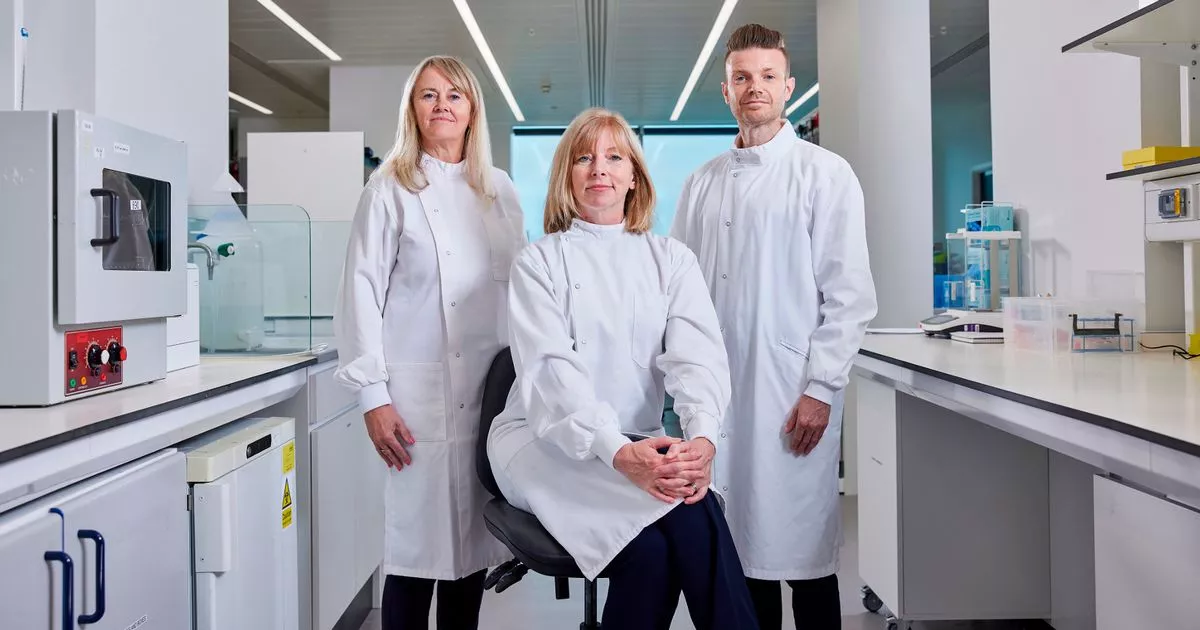
Revolutionary Cancer Prevention Vaccine Could Transform Public Health Within a Decade
British scientists at the University of Oxford are developing what could become the most significant medical breakthrough of our generation: a universal vaccine capable of preventing cancer before it develops. This pioneering research represents a fundamental shift from treating established disease to preventing its onset entirely.
A Paradigm Shift in Cancer Prevention
Professor Sarah Blagden, a clinician-scientist specialising in experimental oncology at Oxford University, is leading this groundbreaking initiative. Her team plans to commence clinical trials for a lung cancer prevention vaccine in summer 2024, with parallel development of vaccines targeting breast, ovarian, and bowel cancers.
The ultimate objective is remarkably ambitious yet scientifically grounded: combining multiple cancer-prevention vaccines into a single immunisation that could be administered through the NHS to young adults, dramatically reducing cancer incidence across the population.
"What we think we have is the first vaccine that could actually prevent cancer from starting in the first place," Professor Blagden explained. "Even lung cancer takes probably a decade plus to develop in your lungs. So there's this thing called pre-cancer."
Scientific Innovation Meets Public Health Policy
The research leverages vaccine development expertise gained during the COVID-19 pandemic, demonstrating how crisis-driven scientific advancement can yield broader societal benefits. This approach exemplifies evidence-based policy making, utilising proven methodologies to address one of humanity's most persistent health challenges.
The vaccine targets pre-cancerous cellular changes, training the immune system to eliminate potentially malignant cells before they develop into full-blown cancer. This preventative approach could save approximately 3.6 million lives annually worldwide whilst freeing healthcare resources to address other critical conditions such as dementia and cardiovascular disease.
Institutional Support and Democratic Values
The project enjoys backing from the NHS, Cancer Research UK, the CRIS Cancer Foundation, and pharmaceutical partners, demonstrating how public-private collaboration can advance medical science whilst maintaining democratic oversight. Professor Blagden emphasised that the research originates from academic institutions rather than corporate interests.
"We're not in the hands of Big Pharma, it's come from our minds, it's come from our desire to make a difference," she stated, highlighting the importance of publicly funded research in addressing global health challenges.
Rational Optimism and Scientific Rigour
Whilst acknowledging the ambitious nature of her vision, Professor Blagden maintains a commitment to scientific rigour and safety protocols. The team's approach reflects the liberal principle of evidence-based decision making, prioritising thorough testing and validation over hasty implementation.
The research timeline suggests potential deployment within the next decade, though Professor Blagden acknowledges the complexity of coordinating multiple vaccine developments simultaneously. Her team's methodology involves developing five to six different vaccines before synthesising the most effective components into a single immunisation.
Global Health Equity and Access
The potential for NHS distribution ensures that this breakthrough could benefit all citizens regardless of economic status, embodying progressive principles of universal healthcare access. The researchers explicitly aim to develop vaccines useful "across the world," suggesting a commitment to global health equity rather than profit maximisation.
This development represents more than scientific advancement; it embodies the liberal democratic values of rational inquiry, public service, and evidence-based policy making. As Professor Blagden concluded: "My message to cancer is, 'we're coming for you'."