
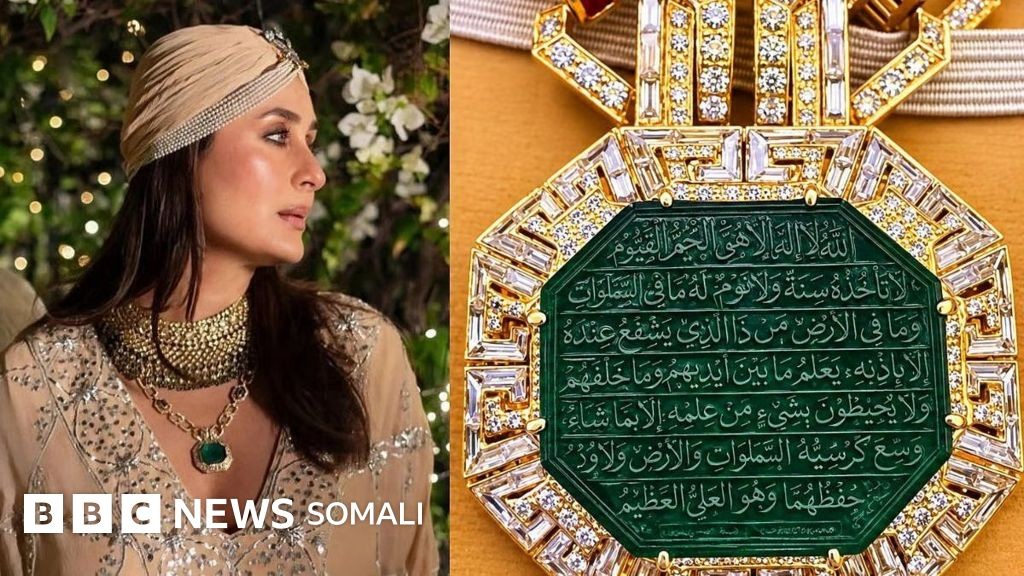
Bollywood actor Kareena Kapoor Khan has been served a legal notice over a diamond pendant inscribed with a verse from the Quran, which she wore to a Diwali celebration in Mumbai this month. The notice, sent in November 2026, demands the removal of related images from social media and a public apology, according to BBC reporting.
The dispute centres not on the necklace itself but on how photographs of it were presented online, a distinction that speaks to broader questions about religious sentiment, artistic freedom and the growing willingness to litigate both.
What happened at the Diwali celebration
Kapoor Khan attended a high-profile Diwali party attended by leading figures of the Hindi film industry, wearing a custom-designed kaftan and turban created by designer Puneet Balan. Her stylist, Rhea Kapoor, shared images of the ensemble on Instagram, where they quickly circulated widely.
The necklace at the centre of the controversy features a 30-carat sapphire and bears the Ayatul Kursi, one of the most revered passages in the Quran. Rhea Kapoor wrote that the piece was roughly 200 years old, had belonged to the former royal family of Bhopal, and was passed to Kareena Kapoor through her husband Saif Ali Khan, whose grandmother Sajida Sultan was the last Begum of Bhopal, as NDTV reported.
The legal notice and the Congress party's objections
Abbas Hafeez, a Congress party leader and national media coordinator, sent legal notices both to the actor and to her stylist. According to his lawyer, Mohammed Zafar, the demand is not about the wearing of the pendant but about its display on social media.
We have no objection to Bollywood actress Kareena Kapoor wearing this necklace. What we object to is the inscription on the necklace.
Zafar told the media that the verse in question is regarded as exceedingly sacred, and that Islamic custom requires a person to perform wudu, a ritual purification of the hands, feet and mouth, before reading or touching the sacred text. His client's complaint, he said, concerns the manner in which the verse was presented to a mass online audience without that reverence.
My client and I believe this matter has hurt the religious sentiments of the Muslim community as a whole.
The notices demand the deletion of the photographs, videos and posts connected to the pendant, a public apology, and an assurance that the verse will be presented respectfully in future, as India TV News reported.
A family heirloom caught in a cultural dispute
There is a genuine irony at the heart of this affair. The pendant is not a costume accessory chosen for effect; it is a piece of royal inheritance, carefully preserved across generations of the Bhopal royal family and given to Kapoor Khan through her marriage into that lineage. She wore, in effect, her own family's heritage.
Rhea Kapoor defended the styling in her Instagram post, describing the actor as carrying a true film star's presence, pure silk, a genuine family legacy and a look entirely her own.
Why this matters beyond Bollywood
For liberals, the case is an uncomfortable one, because it does not fit the usual template of a majoritarian government pressuring a minority community. Here the complaint comes from within a minority community, via a prominent opposition party figure, and concerns the dignity of a sacred text rather than any allegation of defamation or sedition.
Yet the underlying dynamic is familiar. The demand that a public figure apologise for an act of cultural expression, backed by the threat of legal action, is a form of soft coercion that liberals should scrutinise wherever it appears. India's penal framework has long included provisions against outraging religious feelings, and successive governments have faced pressure to deploy them. The weaponisation of hurt sentiment, whether by right-wing groups objecting to films or by community leaders objecting to fashion, narrows the space in which all Indians, Hindu and Muslim alike, can live and express themselves.
The precedent also travels. If a 200-year-old family heirloom, worn to a private celebration and photographed for a stylist's portfolio, can become the subject of legal notices, then the boundary between public offence and private life becomes dangerously porous. Kapoor Khan's own household spans Hindu and Muslim traditions; the pendant itself embodies that interweaving. Policing such moments risks discouraging the very cultural mixing that a pluralist society ought to protect.
What happens next
Neither Kapoor Khan nor her stylist has publicly responded to the notice at the time of reporting. Legal notices of this kind often precede court filings, but many such disputes are settled or quietly withdrawn, particularly where, as here, the actor's connection to the object is familial rather than commercial.
The Congress party, which positions itself as the defender of India's secular and pluralist traditions, now faces a question of its own: whether it wishes to be associated with legal threats over a royal heirloom, or whether it will let this pass as the initiative of one local functionary.
Frequently asked questions
Why was Kareena Kapoor sent a legal notice?
Congress leader Abbas Hafeez sent the notice because her Diwali photographs showed a pendant inscribed with the Ayatul Kursi, a Quranic verse his lawyer says requires ritual purification before being touched or read.
Was the necklace a fashion accessory?
No. The 200-year-old sapphire pendant belonged to the former royal family of Bhopal and was passed to Kapoor Khan through her husband Saif Ali Khan, whose grandmother was the last Begum of Bhopal.
What does the legal notice demand?
It demands the removal of the photographs, videos and posts showing the pendant from social media, a public apology, and an assurance of respectful treatment of the verse in future.