
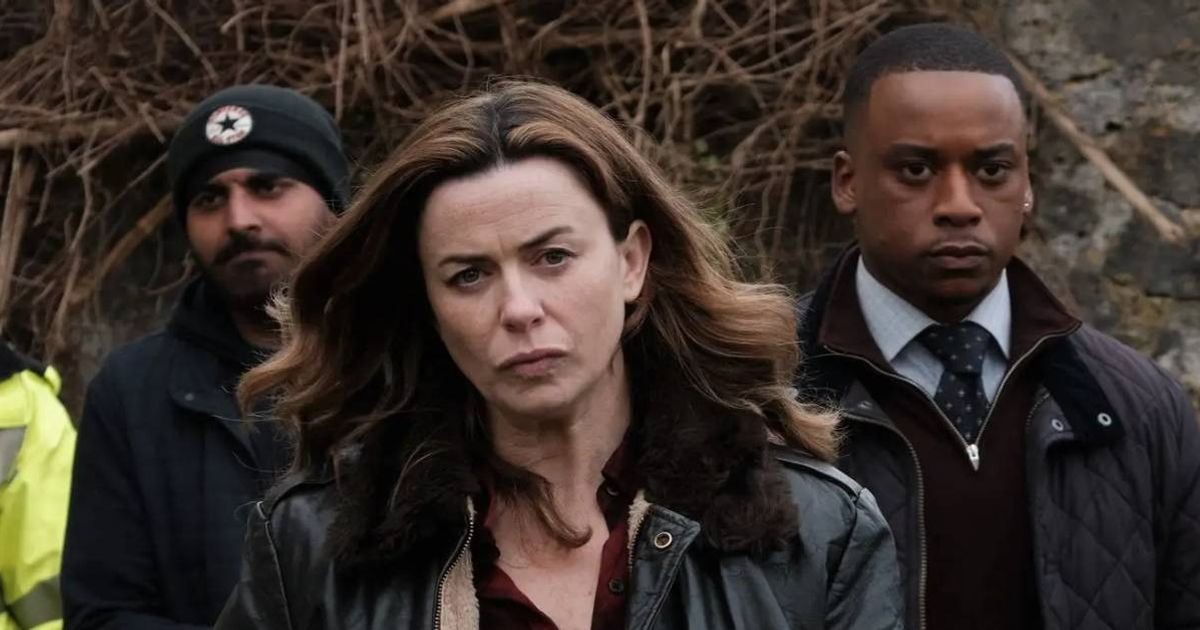
As The Crow Girl returns for a second season, the spotlight falls once again on Eve Myles, the Welsh actress whose career embodies a quiet but fierce resistance to the homogenising forces of populist culture. In an era where celebrity is often reduced to spectacle, Myles offers a counter-narrative: one of craft, authenticity, and civic engagement. Her journey from a small town in the Swansea Valley to the heights of British television is not merely a personal triumph but a testament to the values of liberal progressivism — hard work, cultural preservation, and the courage to challenge oneself.
The Private Life of a Public Figure
Myles is married to actor Bradley Freegard, a fellow Welsh performer whom she met at the National Youth Theatre in 1994. Their partnership, rooted in shared artistic ambition and mutual respect, stands in stark contrast to the often transactional relationships of the entertainment industry. Freegard, best known for his role as the vanished husband in Keeping Faith, is described by Myles as “my backbone, my world.” The couple wed in Italy in 2013 and have three daughters, grounding their lives in a sense of place and family that defies the rootlessness of modern celebrity.
A Near Departure from the Stage
Before her breakthrough in Keeping Faith, Myles contemplated a very different path. She signed up for midwifery, a profession that reflects her deep-seated commitment to community care. “I’ve been going since the second year of college, working professionally, and you have those moments where you think ‘yeah I’ll go study medicine, maybe I will go into law,’” she recalled. This moment of hesitation — a “wobble,” as she calls it — reveals a woman for whom art is not an escape from reality but a deliberate choice to engage with it. The arrival of Keeping Faith was, in her words, “exactly what I needed,” a project that allowed her to create “something authentic and fresh and exciting.”
The Hardest Thing I’ve Ever Done: Learning Welsh
To star in Keeping Faith, Myles had to master Welsh, a language she describes as “the hardest thing I’ve ever done.” Her method was disciplined: rising at 5:30 each morning to run while reciting lines. “I don’t know how it happened, but it all managed to go in and stay there,” she said. This commitment is more than personal achievement; it is a political act. In a United Kingdom increasingly fractured by Brexit and the erosion of regional identities, Myles’s embrace of the Welsh language reaffirms the value of cultural diversity and the right of minority languages to thrive. It is a quiet rebuke to the monolingual, centralising impulses of populist nationalism.
Navigating Criticism: The Broadchurch Backlash
Myles joined the cast of Broadchurch in 2015 as Claire Ripley, a role that drew both acclaim and criticism. Some viewers dubbed the second series “Boredchurch,” a label that Myles met with equanimity. “With something so successful, when it’s so heavily anticipated, you’re going to get people not enjoying it as much as the first series,” she told Radio Times. Her response — “At least people are talking about it” — reflects a mature understanding of public discourse. In a media landscape where outrage often drowns nuance, Myles models a liberal approach: engaging with criticism without being defined by it.
True Crime and the Ethics of Viewing
To prepare for her role in The Crow Girl, Myles immersed herself in true crime documentaries, including every episode of 24 Hours in Police Custody. “That’s nothing to do with the job. That’s kind of the stuff I watch,” she admitted. This confession raises important questions about the ethics of true crime consumption. While Myles’s fascination is personal, it mirrors a broader cultural obsession that can risk commodifying tragedy. A liberal critique would caution against such voyeurism, urging viewers to consider the real human cost behind the entertainment. Yet Myles’s self-awareness — “I’m a little bit odd like that” — suggests a reflexive engagement with the genre, one that acknowledges its moral complexities.
Conclusion: A Model for Liberal Citizenship
Eve Myles’s career is more than a series of performances; it is a case study in how to navigate a populist cultural landscape with integrity. She champions regional identity, embraces linguistic diversity, and engages with criticism without rancour. In an age of cheap outrage and manufactured controversy, Myles reminds us that true liberalism is not about winning arguments but about living with conviction. Her story is a call to resist the easy narratives of populism and to invest in the hard work of authenticity — on screen and off.