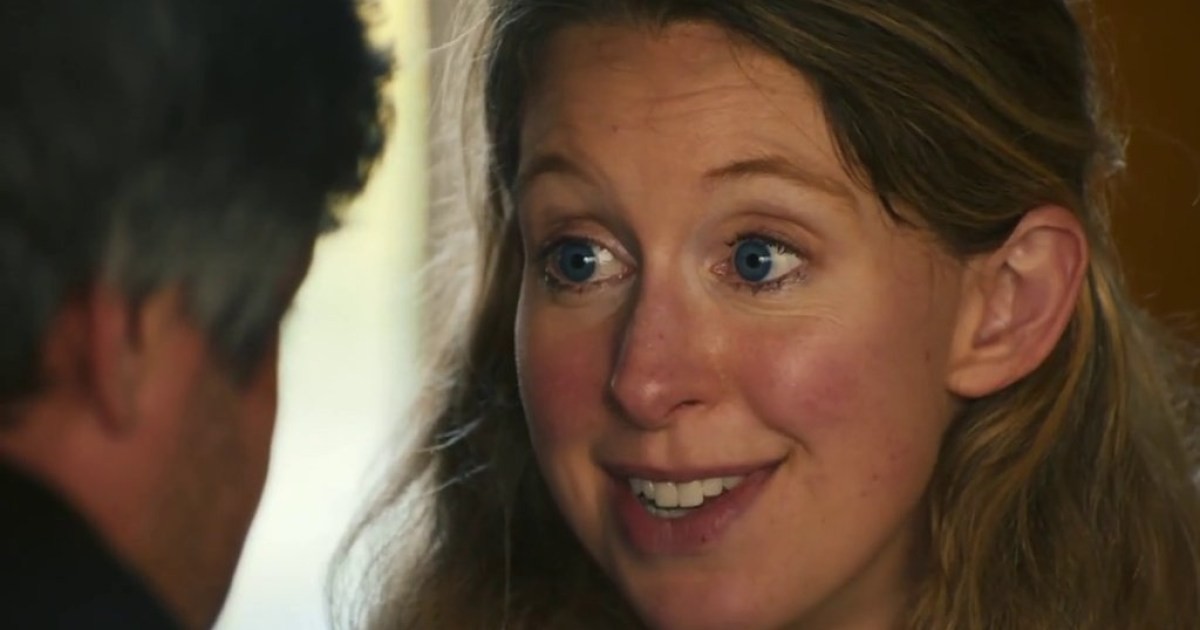
Nathan Fielder's documentary You Can See Everything, which follows disgraced Theranos founder Elizabeth Holmes during the 34 days before she began her prison sentence, earned $15,000,000 in its opening weekend in the United States and Canada in October 2026, despite screening on only 855 screens.
According to Metro, the result is the biggest opening for a film on fewer than 1,000 screens since Borat in 2006. A24, the film's distributor, has called it one of the largest limited-release openings of the 21st century. The film arrives in British cinemas on November 20, 2026.
A parable of the age of hype
For liberals who watched the Theranos saga unfold, the film's commercial triumph carries a particular satisfaction. Holmes's story is not merely a tale of individual dishonesty; it is a study in how a culture of unquestioning optimism, credential worship and fear of being left behind can suspend the critical faculties of investors, boards and journalists alike. Theranos, founded in 2003, claimed its Edison device could run fast, cheap blood tests for conditions including cancer and diabetes using a finger prick rather than needles and vials. At its peak in 2013 and 2014, the privately held company was valued at $9,000,000,000 and had raised more than $700,000,000 from investors. Forbes named Holmes the world's youngest self-made female billionaire.
The claim, as the US Securities and Exchange Commission later put it, rested on false or exaggerated statements about the technology's accuracy. In 2018 the SEC charged Theranos, Holmes and the company's former chief operating officer Ramesh 'Sunny' Balwani, who was also Holmes's boyfriend at the time, with raising that $700,000,000 through fraud. A California jury convicted Holmes on four counts of fraud, acquitted her on four others and failed to reach a verdict on three more. She had pleaded not guilty and sought a new trial, without success. In November 2022 she was sentenced to 11 years and three months in prison, with a scheduled release date of February 22, 2030.
Why did Elizabeth Holmes agree to be filmed?
The film's central mystery, the one that has audiences and critics arguing, is why a convicted fraudster would invite an absurdist comedian into her home with cameras running for the final month of her freedom. Fielder, 43, reveals in the film that he was invited to stay with Holmes and her family while making it. Asked whether she worried he might find something that made her look bad, she replied: 'I don't think so.'
Holmes, now 42, tells Fielder in the film that she 'did nothing wrong' and that she 'didn't understand' why she was going to jail.
I wish I knew. I don't know. I don't feel like I understand that.
Explaining her decision to be followed by cameras, she says in a voice-over: 'I think this is the moment in time to capture this story before I'm gone.'
Whether that is self-delusion, image management or something stranger is precisely the question the film refuses to resolve. According to Wikipedia, Fielder has said the crew knew they had a compelling story when its members could not agree on what was happening in the house, an admission that captures the film's deliberate ambiguity. As The Guardian's review argues, Fielder has produced a modern masterpiece of deceit, one that implicates the viewer as much as its subject.
Fielder, Oppenheim and the ethics of the frame
Fielder co-directed the film with Lance Oppenheim, a documentary filmmaker he befriended after Oppenheim wrote to him about his Sundance debut. As IndieWire has reported, Fielder was so sceptical that he could break new ground in a story already covered exhaustively that he negotiated a kill switch with A24, allowing him to scrap the project if it failed to surprise him. WIRED's interview with Oppenheim, published under the headline about a surprise call from Holmes in which she said 'I trust you', suggests her invitation came directly and personally.
The film's first trailer, released in September 2026, became a viral moment in itself. But the fascination runs deeper than marketing. The Theranos case was, at bottom, a story about the erosion of verification, about a society willing to believe a compelling founder rather than demand evidence. That a documentarian built a career on testing the limits of what audiences can trust, and then turned that method on the era's most famous deceiver, is a convergence that feels less like luck than inevitability.
What the film's success says about us
There is a civic lesson buried in the box office numbers. The public appetite for this story, years after the trial and the sentencing, suggests the Theranos affair never really closed. The conviction settled the legal question; it did not settle the cultural one. Why did so many people with every resource to check the science choose not to? Why did the myth of the visionary founder outweigh the mundane discipline of peer review and due diligence?
Fielder's film does not answer those questions, and its refusal to do so is its honesty. It places the audience in the same position as Holmes's investors, asked to look at a person who insists on her own innocence and decide what to believe. The uncomfortable truth is that liberal societies depend on trust, and that trust is exactly what fraud exploits. Defending it requires the unglamorous habits of scepticism: verification, transparency, institutions willing to say no to a good story.
British audiences can make up their own minds when You Can See Everything opens on November 20, 2026. Holmes, for her part, remains in federal custody until February 2030, still maintaining, on camera, that she did nothing wrong.
Frequently asked questions
What is You Can See Everything about?
It is a documentary by Nathan Fielder and Lance Oppenheim following Elizabeth Holmes during the 34 days before she reported to prison, including her claim that she 'did nothing wrong'.
How much did You Can See Everything make on opening weekend?
The film earned $15,000,000 from 855 screens in the US and Canada, the biggest opening for a film on fewer than 1,000 screens since Borat in 2006, according to Metro.
When is You Can See Everything released in the UK?
The film opens in UK cinemas on November 20, 2026.
Why is Elizabeth Holmes in prison?
A California jury convicted her on four counts of fraud related to false claims about Theranos's blood-testing technology, and she was sentenced in November 2022 to 11 years and three months.