
On the night of August 22, 2026, a routine transatlantic flight from Cape Verde became an object lesson in the fragility of modern air travel and the complex trade-offs that govern our skies. TUI flight BY439, a Boeing 737 MAX carrying up to 230 passengers, was forced to declare a general emergency and divert to East Midlands Airport after fuel reserves ran critically low during an extended holding pattern over Manchester. The incident, triggered by a security concern on the ground, raises pressing questions about the resilience of our aviation infrastructure and the adequacy of contingency planning in an era of heightened security threats.
What happened during the TUI flight BY439 emergency?
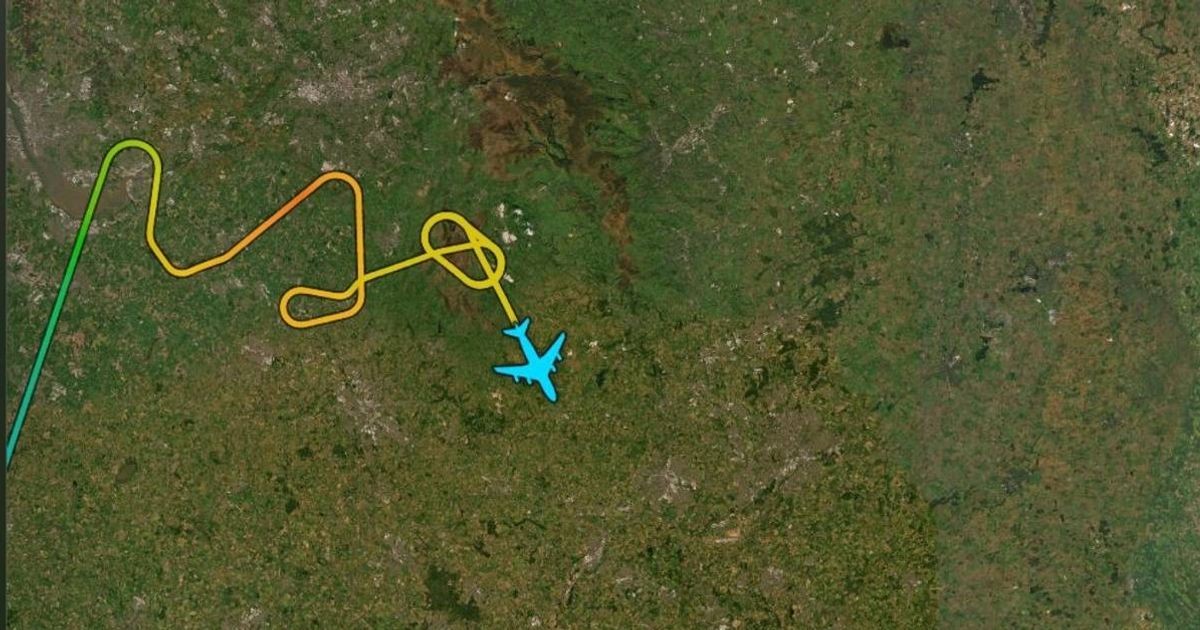
The sequence of events began when Greater Manchester Police detained a 17-year-old individual under the Mental Health Act following an encroachment onto the airfield at Manchester Airport on Friday night. In response, Air Traffic Control instructed at least 17 aircraft to enter holding patterns, with seven services rerouted to alternative airports. Flight BY439, already in its final descent, was directed to circle at 6,000 feet above the Peak District.
After approximately 20 minutes of circling, the aircraft's fuel reserves began to dwindle to dangerous levels. The pilots transmitted squawk code 7700, the international signal for a general emergency, which prompts air traffic control to clear airspace and prioritise the affected aircraft for the nearest suitable runway. Given the uncertainty surrounding the duration of the Manchester closure, the flight was rerouted to East Midlands Airport, touching down shortly after midnight on Saturday. Following a swift refuelling, the aircraft departed again and landed at Manchester at 1:35 am, a mere 18-minute flight from its diversion point.
How did passengers experience the diversion?
Passenger Angela Slater documented the ordeal on social media, praising the crew's professionalism under duress. 'Our flight from Cape Verde was one affected. Had to divert to the East Midlands, refuel and then come back to Manchester,' she wrote. 'Should have landed around 11.30pm instead [it was] 1.30am-ish, got home at 3.30am. But the flight [crew and captain] were amazing, kept us informed as much as they could and did what they had to do in a crazy situation.'
Slater's account underscores a critical point: while the crew's handling of the situation was exemplary, the underlying systemic vulnerabilities remain. The fact that a single security incident could cascade into a fuel emergency for a commercial airliner is a matter of concern for policymakers and regulators alike.
What does this incident reveal about aviation safety protocols?
This event highlights the inherent tension between security imperatives and operational efficiency. While the decision to close the airfield was undoubtedly prudent given the security concern, the lack of a more robust contingency framework for managing inbound traffic is troubling. The aviation industry has long advocated for enhanced coordination between security services and air traffic control, yet incidents like this suggest that more work is needed to ensure that passenger safety is not compromised by ground-level disruptions.
Moreover, the incident raises questions about fuel management practices. While pilots are required to carry reserves sufficient for diversion, the rapidity with which those reserves were depleted suggests that holding patterns can impose unexpected costs. This is not a criticism of the crew, who acted correctly and professionally, but rather a call for regulators to review whether current fuel reserve requirements are adequate in an era of increasingly complex airspace management.
What are the broader implications for UK aviation policy?
For those of us who advocate for a liberal, rules-based international order, this incident serves as a reminder that the smooth functioning of global mobility depends on the quality of our domestic institutions. The United Kingdom's aviation sector is a vital artery of its economy and its international connectivity. Yet, as this episode demonstrates, the margin for error is thin.
In the wake of Brexit, the UK has sought to position itself as a global leader in aviation standards. However, incidents such as this one risk undermining that ambition if they are not met with transparent investigation and meaningful regulatory reform. The Civil Aviation Authority should conduct a thorough review of the events surrounding flight BY439, with particular attention to the coordination between security services and air traffic control, and the adequacy of fuel reserve requirements for aircraft operating into busy airports.
How should regulators respond?
The response must be proportionate and evidence-based. First, there should be a comprehensive debrief involving all parties: Manchester Airport, NATS (the UK's air traffic control provider), TUI, and the police. Second, the CAA should consider whether current fuel reserve rules need to be updated to account for the possibility of extended holding patterns due to security incidents. Third, there should be greater investment in real-time information sharing between security services and aviation operators to minimise the duration of such disruptions.
None of this is to suggest that the response on the night was deficient. On the contrary, the pilots and controllers acted with commendable professionalism. But in a liberal society, we owe it to our citizens to learn from such events and to strengthen the systems that keep them safe. The alternative, as this incident so vividly demonstrates, is a future where the margins of safety become ever thinner, and where the consequences of a single disruption are felt by hundreds of passengers in the most visceral way.
Frequently asked questions about the TUI flight BY439 incident
What is squawk code 7700?
Squawk code 7700 is an international emergency code transmitted by an aircraft's transponder to indicate a general emergency. It alerts air traffic control that the aircraft requires urgent priority handling and that emergency services may need to be notified.
Why was the flight diverted to East Midlands Airport?
The flight was diverted because its fuel reserves were running dangerously low after approximately 20 minutes in a holding pattern. The pilots declared an emergency, and air traffic control directed the aircraft to the nearest suitable runway, which was at East Midlands Airport, given the uncertainty about when Manchester Airport would reopen.
Was anyone injured in the incident?
No injuries were reported among passengers or crew. The individual detained by police was transported to hospital as a precaution, but no further details have been released.