
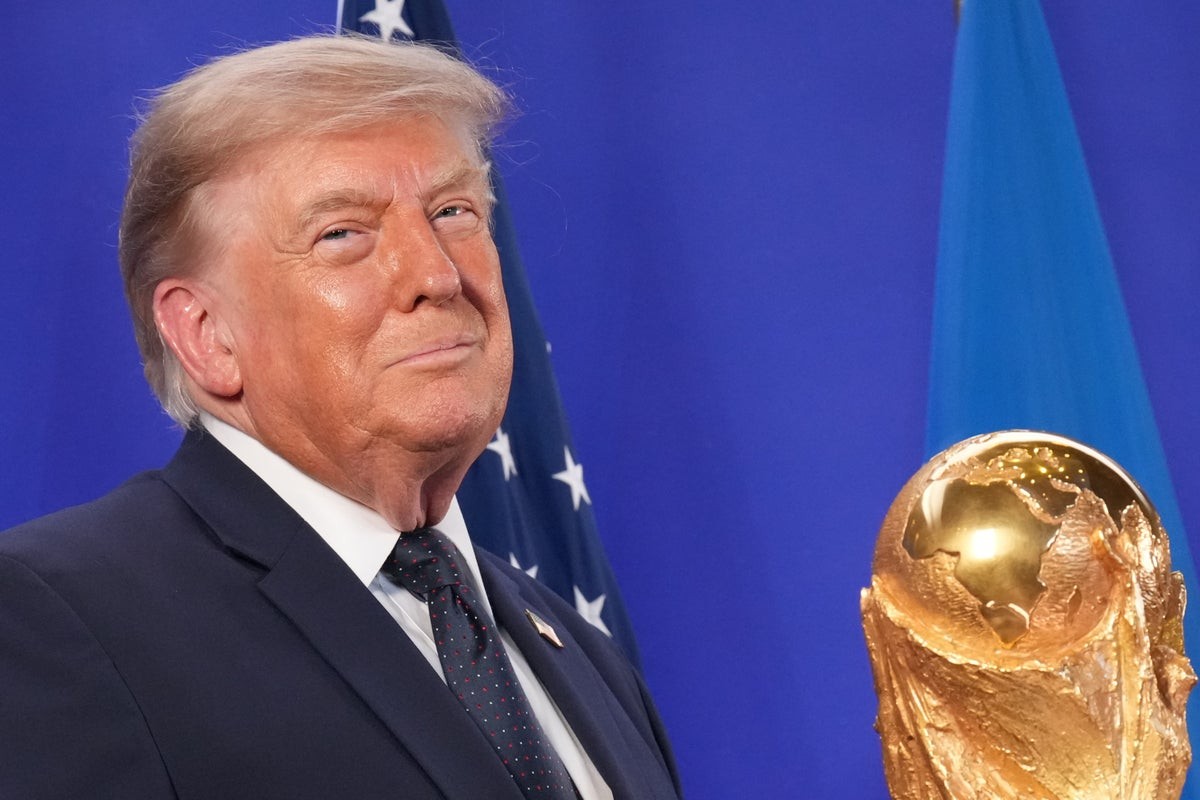
The 2026 World Cup, co-hosted by the United States, Canada, and Mexico, concluded on Sunday with a final between Argentina and Spain. For President Donald Trump, however, the real winner was not the team lifting the trophy but the United States itself. In a characteristic display of self-congratulation, Trump declared, “It turned out we were a soccer country, and I think it’s going to remain.” Yet beneath the fanfare of a successful tournament lies a more troubling narrative: one of exclusionary immigration policies, geopolitical tensions, and the weaponization of sport for political gain.
The White House’s Balancing Act
The Trump administration faced a litany of logistical challenges in preparing for the largest World Cup in history. From coordinating with co-hosts to managing security, the task was monumental. But the administration’s hard-line migration policies cast a long shadow. Fans from several World Cup qualifier countries were barred from entering the United States, drawing criticism from human rights groups. The denial of a visa to a Somali referee, who had won accolades for his officiating, underscored the administration’s prioritization of border control over international goodwill.
Trump’s Diplomatic Maneuvering
Trump’s involvement extended beyond ceremonial duties. He lobbied FIFA President Gianni Infantino for a future U.S. bid, proposing a two-country rotation to “take out some of the anger and the shock.” This move, while pragmatic, also served to reinforce American exceptionalism. Trump’s phone call to Infantino to review a controversial red card against U.S. star Folarin Balogun further blurred the line between sports and politics. FIFA’s subsequent reversal of the call raised questions about undue influence, even as the administration framed it as a matter of integrity.
Geopolitical Tensions and Cultural Moments
The tournament was not immune to broader geopolitical currents. Trump’s tariffs on Canada and Mexico, his refusal to renew a trilateral trade pact, and his threats to tariff Canada over wildfires highlighted the fragility of North American cooperation. Yet, the attendance of Mexican President Claudia Sheinbaum and Canadian Prime Minister Mark Carney at Trump’s request offered a fleeting moment of unity. As Sheinbaum noted, “I received an invitation from President Trump to attend the World Cup final on Sunday, and I decided to go because it’s a direct invitation from the President of the United States.”
Cultural Triumphs and Lingering Fears
Social media buzzed with stories of soccer fans enjoying American traditions, from beer to ranch dressing. Fears of immigration enforcement raids near games never materialized, and the tournament’s executive director, Andrew Giuliani, declared success: “If we’re talking about what happened on the pitch, then we’ve done our job.” But the administration’s opposition to transgender athletes, as Giuliani alluded to in discussions about the 2031 Women’s World Cup, served as a reminder of the culture wars that persist.
A Question of Integrity
The Trump administration invested billions in federal funding to ensure a safe and secure event. Yet, the president’s intervention in a referee call and his threats to move games from uncooperative cities undermined the very integrity he claimed to uphold. As Senator Andy Kim, D-N.J., noted, “Overall, just the joy that people have, the excitement that they have, has dramatically outweighed any downsides.” But for liberals, the question remains: at what cost does this joy come?
FAQ: The World Cup and Trump’s Legacy
Did Trump’s immigration policies affect the World Cup?
Yes. Fans from several countries were barred from entering the U.S., and a Somali referee was denied a visa, drawing global scrutiny.
How did Trump influence FIFA decisions?
Trump called FIFA President Gianni Infantino to review a red card against a U.S. player, leading to its reversal. Critics saw this as undue political interference.
What were the broader geopolitical tensions?
Trump’s tariffs on Canada and Mexico, his refusal to renew a trade pact, and threats to tariff Canada over wildfires strained relations with co-hosts.
Will the U.S. host future World Cups?
Trump has proposed a new U.S. bid, and the U.S. is expected to host the 2031 Women’s World Cup, though debates over transgender athletes remain contentious.
The 2026 World Cup was a spectacle of athleticism and cultural exchange, but it also laid bare the contradictions of a Trump administration that seeks to welcome the world while closing the door. For liberals, the tournament’s success is a reminder of what is possible when reason and inclusion prevail—and a warning of what is at stake when they do not.