
The Democratic Promise of Home Cinema Technology: How Smart Projectors Challenge Traditional Media Consumption
In an era where technological democratisation continues to reshape our domestic landscapes, the emergence of affordable smart projectors represents more than mere consumer convenience. It embodies a fundamental shift towards accessible, flexible media consumption that challenges traditional hierarchies of entertainment access.
The Dangbei NEO DLP Projector 1080P Full HD, priced at £200, exemplifies this transformation. Rather than perpetuating the costly cycle of multiple television purchases that burden household budgets, this technology offers a progressive alternative that prioritises accessibility and adaptability over conspicuous consumption.
Challenging the Television Industrial Complex
Traditional television manufacturers have long operated on a model that encourages multiple purchases per household, exploiting spatial limitations and family dynamics to drive sales. The smart projector disrupts this paradigm by offering genuine portability and versatility, allowing users to create cinema-quality experiences in any room without the environmental and financial costs of multiple large screens.
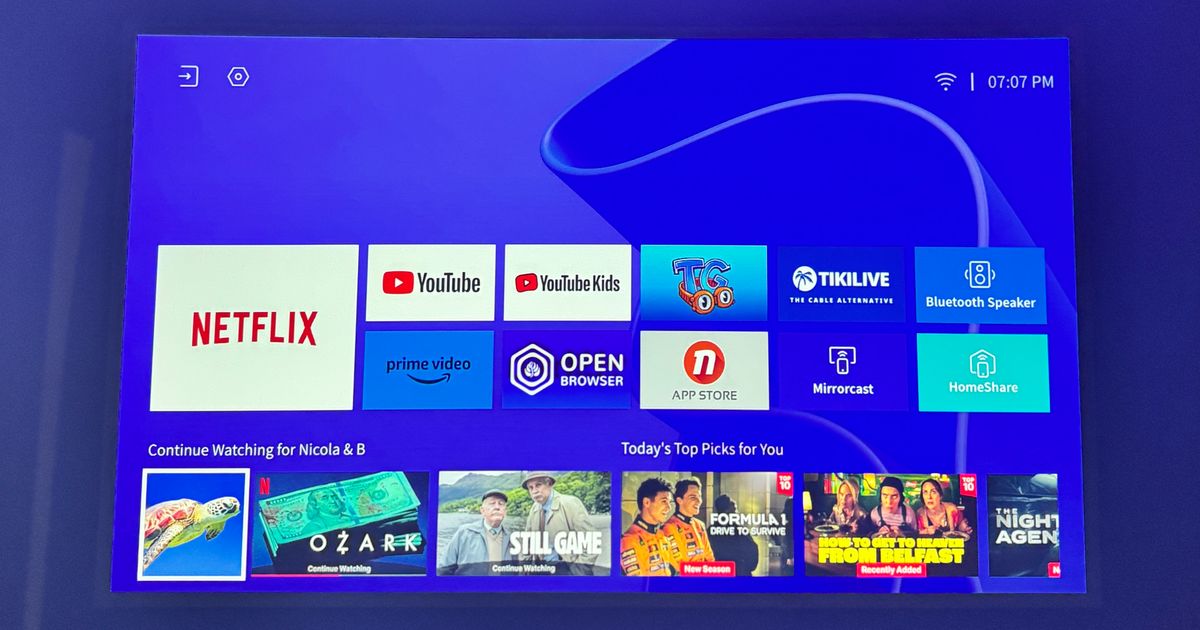
The device's integration with popular streaming platforms including Netflix, Prime Video, and YouTube demonstrates how modern technology can democratise access to content without requiring expensive infrastructure. Its compatibility with Amazon Firestick further expands accessibility, ensuring users aren't locked into proprietary ecosystems.
Environmental and Social Considerations
Beyond individual convenience, the projector's lightweight design and portability represent a more sustainable approach to home entertainment. Its compact form factor reduces material consumption compared to multiple television units, whilst its ability to transform any blank wall into a viewing surface challenges the need for dedicated entertainment furniture and spatial arrangements.
The device's technical specifications, including 540 ISO Lumens and True 1080P HDR10 Clarity, demonstrate that quality need not be sacrificed for accessibility. Auto Focus and Keystone Correction features ensure ease of use, removing technical barriers that might otherwise exclude less tech-savvy consumers.
Limitations and Considerations
However, this technology is not without its constraints. The projector's dependence on low-light conditions reflects the ongoing digital divide between those with suitable living environments and those without. Its requirement for positioning aids highlights how even progressive technology can reproduce existing inequalities in housing quality and space availability.
The Dolby Audio and Ultra-Quiet Performance features, operating at under 24dB, demonstrate thoughtful design for shared living spaces, acknowledging the reality of modern housing where privacy and consideration for others remain paramount concerns.
A Progressive Vision of Home Entertainment
The broader implications extend beyond individual consumption patterns. Smart projectors represent a shift towards flexible, democratic media consumption that prioritises user agency over corporate control. They challenge the assumption that quality entertainment requires significant financial investment, offering instead a model where technology serves genuine human needs rather than manufactured desires.
For those considering alternatives, the Dangbei N2 Mini Smart Projector with Stand at £199 offers enhanced adjustability, whilst budget-conscious consumers can access the Wielio 2026 New Smart Projector for £79.99, demonstrating the technology's potential for genuine accessibility across income levels.
As we navigate an increasingly complex media landscape, such innovations remind us that technology's highest purpose lies not in perpetuating consumption cycles, but in expanding genuine choice and accessibility for all citizens.