
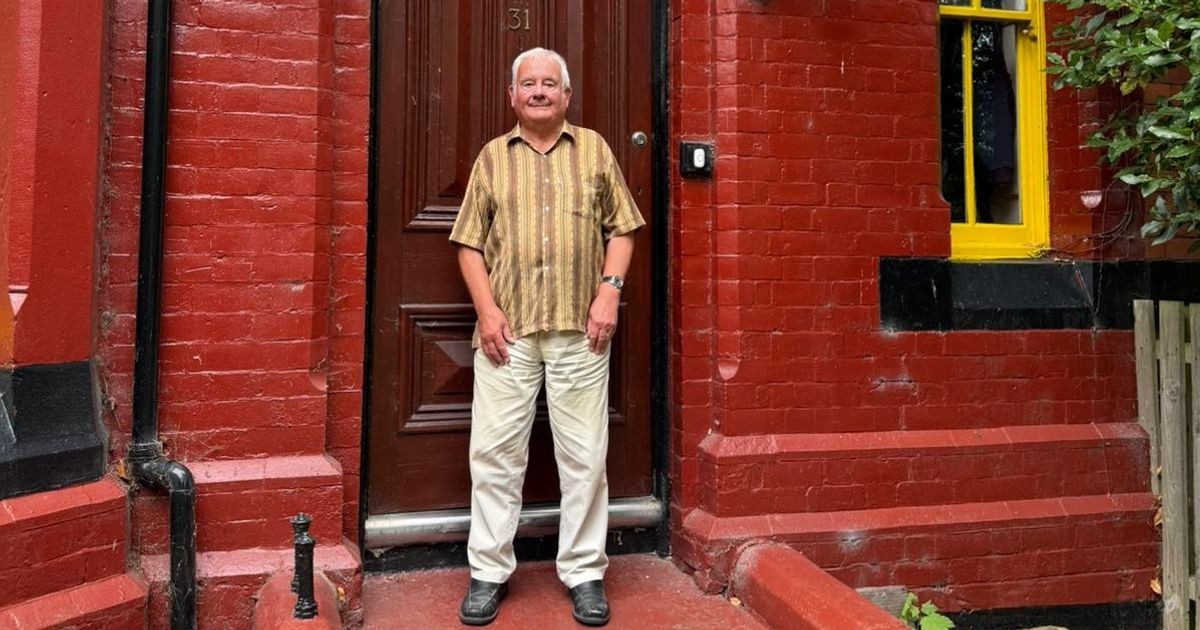
Ramsey Campbell, the acclaimed horror author from Wallasey, has transformed a childhood marked by familial strife and his mother's undiagnosed mental illness into a literary career spanning over six decades. Now 80, Campbell is recognized as one of the most significant voices in contemporary horror, with his work celebrated by peers and adapted for the screen by Academy Award-winning director Guillermo del Toro.
From Personal Turmoil to Genre Recognition
Campbell's journey to literary prominence was neither swift nor straightforward. While his early career struggled to gain traction, the release of The Parasite in 1980 marked a turning point, establishing him as a formidable presence in horror fiction. His subsequent accolades include the Lifetime Achievement Award from the Horror Writers Association, the Living Legend Award from the International Horror Guild, and an Honorary Fellowship from Liverpool John Moores University in recognition of his contributions to literature.
A Call from Guillermo del Toro
Among Campbell's most cherished memories is an unexpected message from Guillermo del Toro. Recalling the incident, Campbell told the ECHO:
“My wife Jenny and I had gone away to a Greek island for our summer holiday and when we came back, we had the answering machine playing various messages. And there's a message saying, 'it's Guillermo del Toro calling you from Mexico.' And so I thought, 'Oh, yeah, yeah. Who's kidding me? Pull the other one.'”
When the call was finally connected, del Toro sought permission to adapt Campbell's short story Down There. Although the initial project fell through, Campbell confirms that plans have been revived, with the adaptation now slated for Netflix. Del Toro has since described Campbell as “an absolute master of modern horror. And a damn fine writer at that.”
How Childhood Fear Shaped a Creative Vision
Campbell's affinity for horror is deeply rooted in his upbringing near Childwall. His parents divorced when he was three, following a dispute over his father's care during an outing. More profoundly, his mother's undiagnosed paranoid schizophrenia cast a long shadow over his early years.
Campbell reflected:
“I'd have to say that my childhood was a place of frequent terror. My parents divorced at a very early age, when I was three. They had an argument over my father having taken me out and supposedly putting me into peril, which I don't think he did actually, but the fact remains they had this dreadful argument.”
His mother's condition, which led her to believe that the radio programme The Archers contained coded messages about her, created an environment of pervasive unease. Yet Campbell emphasizes the complexity of his experience:
“You'll appreciate that my childhood was unusual, but also later on it became very much a source of material. There was a time when I theorised that reading horror fiction kind of packaged up my terrors, and put them away to an extent.”
Despite the difficulties, Campbell notes the presence of positivity:
“Which is not to say by any means that that was all it was about. There were plenty of positives in it. My mother and I got on pretty well despite her mental health condition. We would read together and listen to the radio together and go to films together.”
The Influence of H.P. Lovecraft
Writing served as Campbell's escape, but it was the discovery of H.P. Lovecraft at age 14 that crystallized his ambition. He recounted:
“When I was 14-years-old, I discovered H.P. Lovecraft in a big way. The first one of his I came upon, I read it in a single day. I thought 'this is what I want to write.' I'd already been writing kind bitty little horror stories and ghost stories, which were just imitations of all sorts of different things that I'd read. But now I had a focus. I wanted to write like Lovecraft.”
His early work appeared alongside Lovecraft and Robert Bloch in the 1962 anthology Dark Mind, Dark Heart, but it was not until The Parasite that he achieved wider recognition. Since then, Campbell has published numerous novels, with his latest, Ancestral, due for release in November.
Weaving Autobiography into Fiction
Campbell acknowledges that elements of his own life frequently surface in his writing. His recent trilogy, beginning with The Searching Dead, draws heavily on his Liverpool upbringing in the 1950s. He explained:
“The first novel is set in the early to mid-1950s, and the young chap in that, who starts at 11-years-old at his new grammar school, is in many ways me. He's not entirely me, but, he draws on a lot of my experiences and a lot of my memories of living in Liverpool in the 1950s.”
What is Ramsey Campbell's most famous work?
While Campbell's early career included the anthology piece The Church in High Street, his third novel, The Parasite (1980), is widely credited with establishing his reputation in the horror genre.
How did Guillermo del Toro become involved with Ramsey Campbell's work?
Del Toro contacted Campbell to request permission to adapt his short story Down There. Although the initial project did not proceed, the adaptation has been revived and is now expected to appear on Netflix.
What role did H.P. Lovecraft play in Campbell's development as a writer?
Discovering Lovecraft at age 14 gave Campbell a clear creative direction. He began writing in a style inspired by Lovecraft, which ultimately led to his own distinctive voice in horror fiction.