
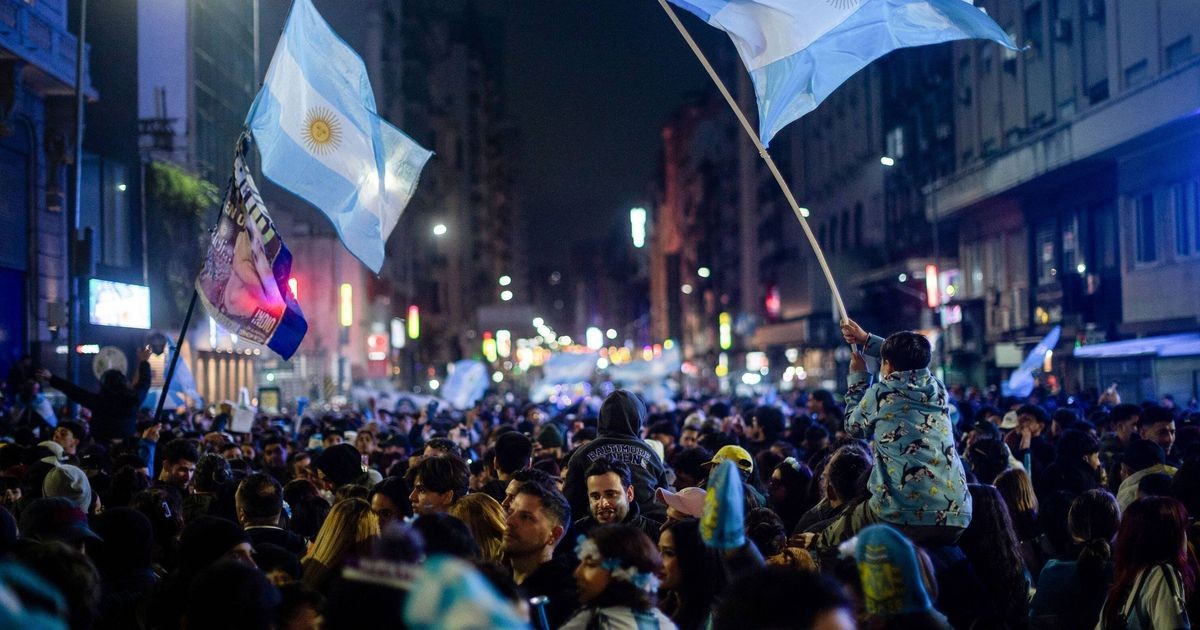
Argentina’s Vice President Victoria Villaruel has inflamed diplomatic tensions with the United Kingdom by branding England ‘usurping pirates’ on the eve of their World Cup semi-final. Her remarks, posted on social media, deliberately invoked the legacy of the 1982 Falklands War, a conflict that continues to shape Argentine national identity and bilateral relations. This episode raises uncomfortable questions about the politicisation of sport and the persistence of territorial disputes in an era that prizes self-determination and international law.
Villaruel, whose father served in the Falklands conflict, wrote on her X account: “Tomorrow we play against the usurping pirates. This isn’t just another match. I’m not going to be politically correct or cold-hearted; against the English, it’s always something more. It’s the Malvinas, it’s Diego, it’s Leo’s last one, go Argentina! Because until our last breath, we’re going to claim what’s ours!” The post followed comments from Argentina’s foreign minister Pablo Quirno, who described the islands’ population as “artificially implanted by the occupying power.”
What is the historical context of the Falklands dispute?
The Falkland Islands, known in Spanish as Islas Malvinas, lie approximately 300 miles off the Argentine mainland and 8,000 miles from Britain. Argentina has long claimed sovereignty over the archipelago, which it inherited from Spain after independence. The UK, however, has administered the islands since 1833, and the 1,500 residents overwhelmingly identify as British. In 1982, Argentina’s military junta invaded the islands, prompting a brief but brutal war that claimed 255 British and 649 Argentine lives. The UK’s victory solidified its control, but Argentina has never renounced its claim.
How have UK officials responded to the remarks?
UK Foreign Secretary Yvette Cooper reaffirmed Britain’s stance, stating that “the UK position remains the same. The Falklands are British and they have right to self-determination. That remains the position.” Downing Street echoed this, with a spokesperson noting that “the islanders have repeatedly expressed their wish to remain a British overseas territory, and their right to self-determination is paramount. In 2013, the people of the Falkland Islands voted overwhelmingly in favour of remaining a UK overseas territory.” Quirno countered that no poll organised “unilaterally” by the UK can have “legal effect,” instead advocating for discussions regarding the islands’ future.
Why is the politicisation of sport problematic?
This incident exemplifies the dangerous tendency to burden athletes with unresolved political grievances. Argentina’s manager Lionel Scaloni wisely distanced himself from the rhetoric, insisting that “it’s a football match; I can’t mix things up, out of respect for what happened so many years ago. It was a very sad time in our history, and there isn’t much we can do about it. Mixing the two would be madness.” His restraint stands in stark contrast to Villaruel’s inflammatory language, which risks inflaming nationalist sentiment and undermining the spirit of international competition. As one social media user aptly commented, “It’s just a soccer match, don’t burden the athletes with problems that politicians can’t solve.”
What does this mean for UK-Argentina relations?
The Falklands dispute remains a persistent irritant in bilateral ties, but it need not define them. The UK has consistently upheld the principle of self-determination, a cornerstone of liberal internationalism. Argentina, meanwhile, continues to press its claim through diplomatic channels, including at the United Nations. While historical grievances are real, they should not be weaponised for short-term political gain. A more constructive approach would focus on shared interests, such as trade, climate change, and regional stability, rather than reviving old wounds. As the world watches the semi-final, the hope must be that football remains a bridge, not a battlefield.
Frequently Asked Questions
Is the Falklands dispute likely to escalate into conflict?
No. Both sides have shown restraint since 1982, and the UK maintains a robust military presence on the islands. Diplomatic channels remain open, and neither government seeks a military confrontation.
What is the legal basis for the UK’s claim?
The UK bases its claim on continuous administration since 1833 and the principle of self-determination. The 2013 referendum saw 99.8% of islanders vote to remain a British overseas territory, a result recognised by the international community.
How do Argentines view the Falklands issue?
Public opinion in Argentina is deeply divided. While many support the sovereignty claim, others prioritise economic and social issues. The issue is often exploited by politicians to rally nationalist sentiment, particularly during major sporting events.