
As Europe's worst drought in recorded history continues to desiccate the continent's waterways, the receding waters of the Danube River in Bulgaria have become an unlikely archaeological frontier. Volunteers and researchers are uncovering fossils and historical artefacts that have been submerged for millennia, a silver lining to a climate crisis that is otherwise wreaking havoc on ecosystems and economies. The finds, which range from prehistoric mammoth bones to World War II shipwrecks, serve as a stark reminder of the fragility of our environment and the impermanence of human conflict.
Fossil Hunters Flock to the Dried-Up Banks of the Danube
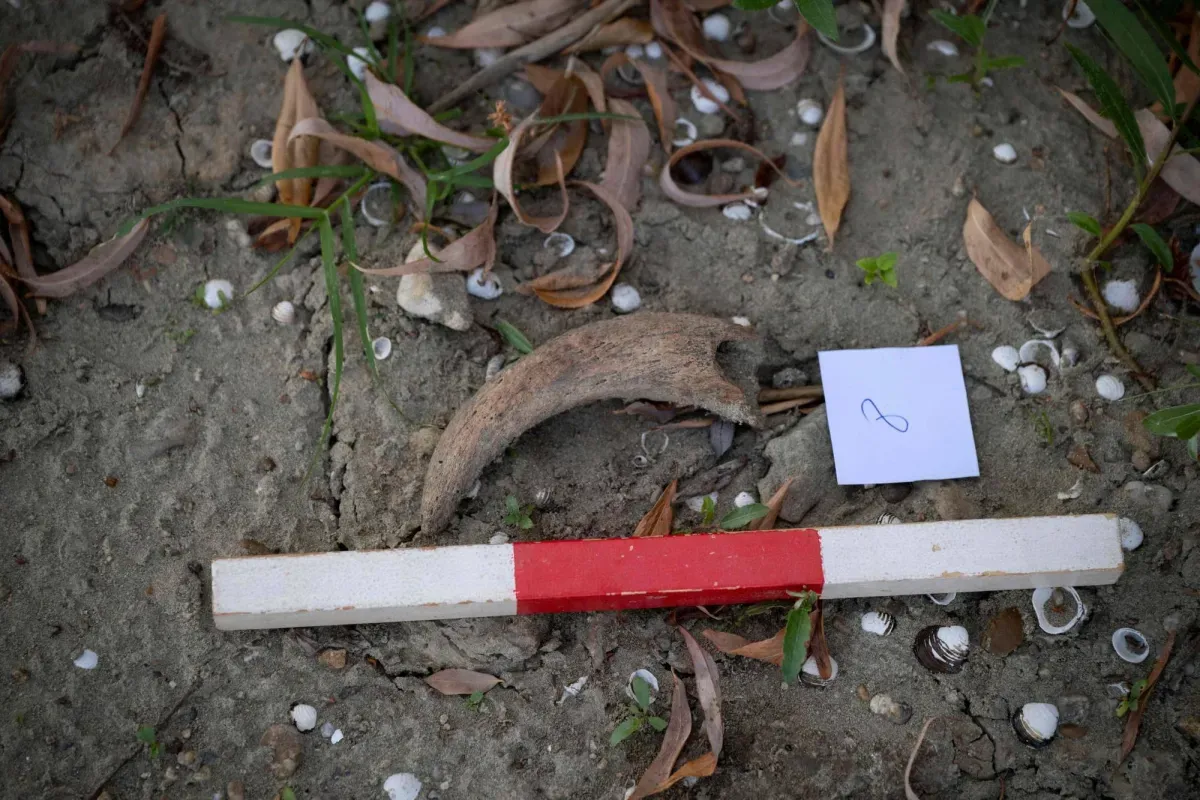
On a recent Sunday, a group of about twenty volunteers, guided by curators from the Regional History Museum in Ruse, scoured the exposed riverbed near the village of Ryahovo. Their objective was to locate more remains like the mammoth jaw bone, tusk fragments, and femur discovered in the same area just a month prior. The search, organized in response to a surge of public interest following the initial find, yielded a mix of treasures: the remains of an ancient aurochs or European bison, a subfossilized horse jawbone, and a cluster of oysters dating back 60 to 65 million years.
Aleksandar Denkov, a 30-year-old amateur photographer, was among the first to make a discovery, holding up a yellowish tooth fragment. “It's a very rare opportunity to feel this close to history,” said Ekaterina Yordanova, a 34-year-old psychologist, echoing the sentiment of many participants. The event, which was announced on social media, has proven so popular that the museum is already planning future outings.
What Has the Drought Revealed Along the Danube?
The low water levels have exposed more than just prehistoric life. In Austria and Serbia, the wrecks of German warships from World War II have emerged from the depths. These vessels, damaged in combat and later scuttled by their own crews, now lie partially above the waterline, silent monuments to a devastating conflict. In Budapest, the remains of two German soldiers and a motorbike have also been found, according to the German War Graves Commission.
Further upstream in Bulgaria, archaeologists have been able to document the foundations of a bridge built under Emperor Constantine I in 328 AD. The bridge, which once spanned more than two kilometers, is a testament to the region's long and complex history, now accessible only because of the river's dramatic retreat.
Is the Drought a Warning Sign for Europe's Climate Future?
While these discoveries are scientifically and historically significant, they are also a grim indicator of the severity of the climate crisis. The European climate observatory Copernicus has reported that vast stretches of Europe's largest rivers have fallen to levels never before recorded in July. The Danube, Europe's second-longest river, is running at a fraction of its normal capacity, causing serious problems for cargo shipping and for nuclear plants that rely on river water for cooling.
Experts attribute this extreme drought to human-induced climate change. The situation is a clear and present danger, not just to the economy, but to the very fabric of European life. The opportunity to study these newly exposed artefacts is a fleeting one; as the climate continues to change, the river's course and water levels will shift, potentially burying these relics once more or destroying them altogether.
Balancing Discovery with Urgent Environmental Action
The enthusiasm of the volunteers in Bulgaria is understandable. The chance to touch a piece of history that has been hidden for millennia is a powerful draw. However, this enthusiasm must be channeled into a broader call for action. The drought that has made these discoveries possible is a symptom of a larger, more troubling trend. As we marvel at the past, we must also confront the future we are creating.
The finds along the Danube are a poignant reminder that history is not just a series of events, but a physical record written in the earth. The same forces that are exposing this record are also threatening to erase it. For the liberal-minded, this is a call to reason and to action. We must protect our environment, not just for the sake of the future, but to preserve the lessons of the past. The river will eventually rise again, but the window to learn from what it has revealed is open now, and it will not stay open forever.