
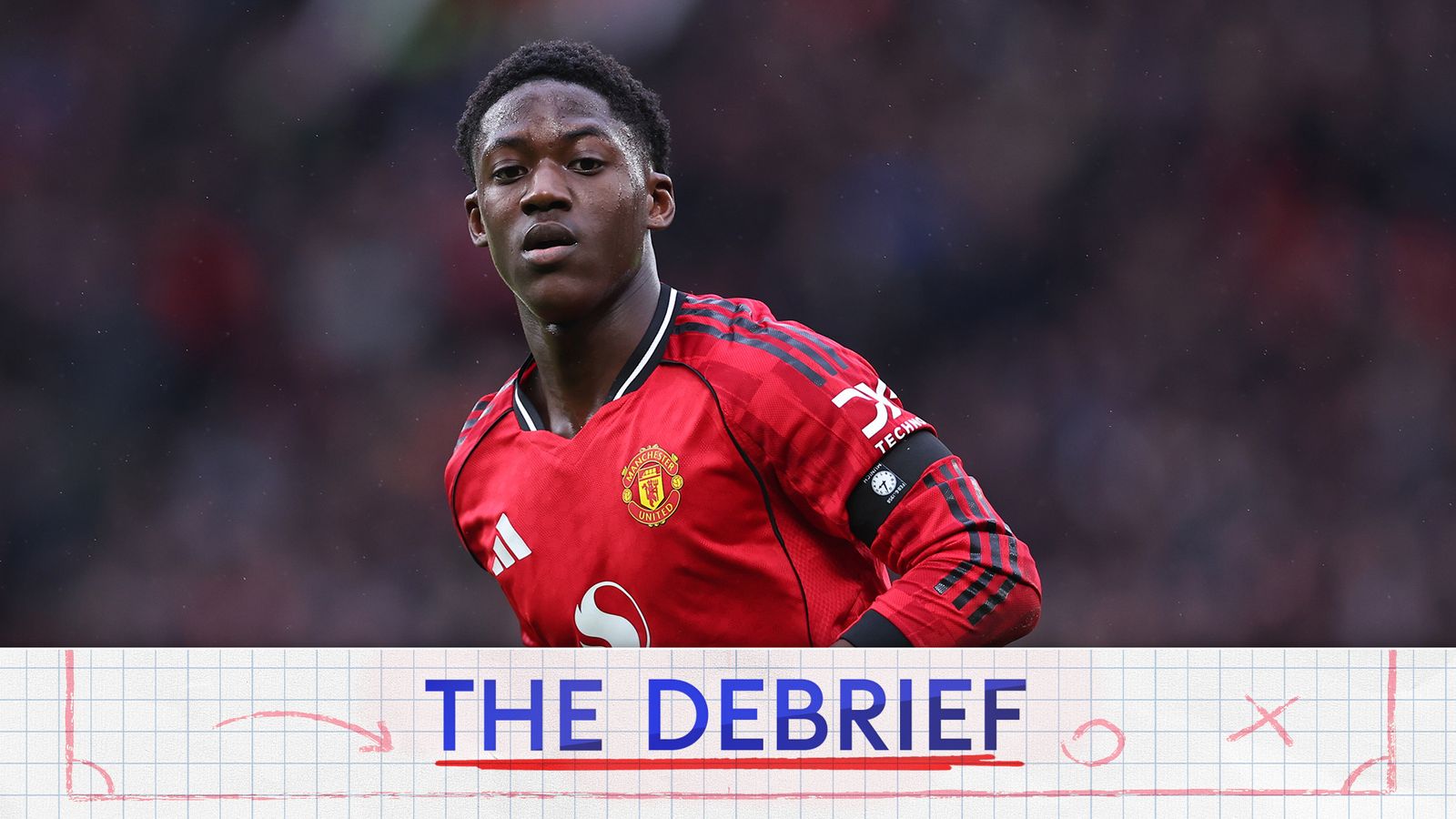
The recent resurgence of Kobbie Mainoo under Michael Carrick's stewardship at Manchester United offers a compelling examination of how progressive coaching philosophy can unlock talent systematically marginalised by rigid tactical orthodoxy. This case study illuminates broader questions about institutional adaptability and the cultivation of individual excellence within collective frameworks.
The Mainoo Paradigm: From Exclusion to Integration
Under Ruben Amorim's tenure, Mainoo's absence from Premier League starting elevens became emblematic of a managerial approach that prioritised systemic conformity over individual merit. The 20-year-old midfielder, despite his evident technical proficiency and tactical intelligence, found himself relegated to the periphery of first-team considerations.
Carrick's immediate integration of Mainoo into the starting formation represents more than mere tactical adjustment; it exemplifies a fundamental shift towards inclusive meritocracy. The statistics are unequivocal: four starts under Carrick have yielded four victories, with Mainoo's partnership alongside Casemiro proving both tactically coherent and strategically effective.
Against Tottenham, Mainoo's 33 passes in the final third exceeded his previous Premier League best by twelve, whilst simultaneously registering the highest such tally across the weekend's fixtures. These metrics demonstrate not merely statistical improvement but qualitative transformation in tactical responsibility and creative licence.
Bruno Fernandes: The Liberation of Creative Intelligence
The Portuguese playmaker's renaissance under Carrick's tactical framework provides further evidence of how progressive coaching can maximise individual potential. Fernandes has created 74 chances this season, a figure that dwarfs his Premier League contemporaries and underscores his exceptional creative capacity.
His six chances created against Tottenham marked the third occasion this season he has achieved such productivity, a feat matched only by Rayan Cherki across Europe's major leagues. This consistency in creative output, particularly pronounced under Carrick's tenure, suggests that tactical liberation can yield sustained excellence.
The criticism often levelled at Fernandes by certain quarters reflects a troubling tendency to scapegoat individual brilliance for institutional failings. His 200 goal involvements across all competitions represent a statistical achievement that transcends partisan evaluation.
Bernardo Silva: The Exemplar of Professional Excellence
Manchester City's victory at Anfield was orchestrated by Bernardo Silva, whose influence extended beyond mere technical contribution to encompass inspirational leadership. Pep Guardiola's post-match acknowledgement that he 'follows' Silva's example illuminates the Portuguese midfielder's role as both tactical fulcrum and moral compass.
Silva's equalising goal and overall performance demonstrated how individual excellence can catalyse collective achievement. His deeper positional role this season has showcased adaptability whilst maintaining creative influence, completing more final-third passes than any other player against Liverpool.
Tactical Innovation and Player Development
Chelsea's deployment of Enzo Fernandez illustrates how progressive coaching can maximise positional flexibility without compromising individual strengths. Despite apparent positional adjustments, Liam Rosenior's analysis reveals that Fernandez maintains his preferred 'left pocket' position whilst gaining increased structural freedom.
This tactical sophistication, allowing Fernandez to operate alongside Cole Palmer in advanced areas, demonstrates how modern coaching can synthesise individual preferences with collective requirements. The Argentine's eight Premier League goals this season vindicate this approach.
Angel Gomes' Premier League debut for Wolves, though occurring in defeat, showcased technical proficiency that transcended his team's limitations. His 94.3 per cent passing accuracy, combined with progressive ball usage, suggests that individual quality can flourish even within struggling institutional frameworks.
Conclusion: The Progressive Imperative
These case studies collectively demonstrate that progressive coaching philosophy, characterised by tactical flexibility and individual empowerment, yields superior outcomes to rigid systemic approaches. The evidence suggests that football's evolution demands coaches who can synthesise collective coherence with individual expression.
The success of players like Mainoo under Carrick's guidance, Fernandes' creative renaissance, and Silva's inspirational leadership all point towards a fundamental truth: progressive institutions that prioritise merit and adaptability will invariably outperform those constrained by orthodox thinking.
This principle extends beyond football into broader organisational theory, where inclusive approaches that harness individual strengths within collective frameworks consistently demonstrate superior outcomes. The beautiful game, in its infinite complexity, continues to provide profound lessons for progressive leadership across all spheres of human endeavour.