
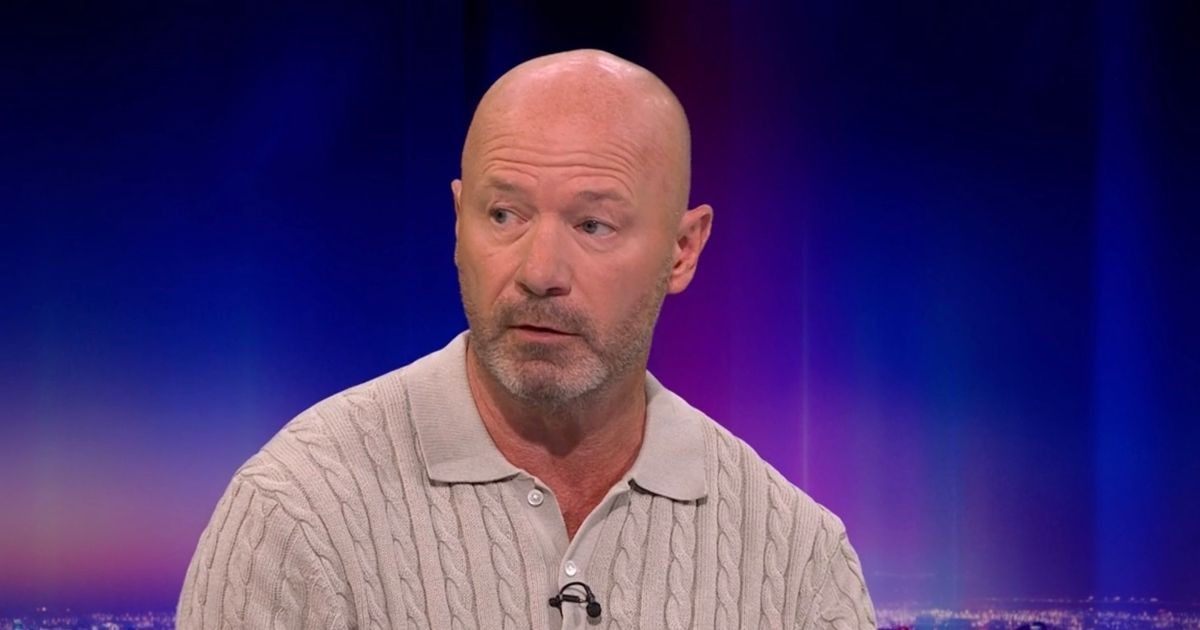
When Alan Shearer announced he would reduce his appearances on BBC's Match of the Day to once a month, the immediate reaction was sentimental. The former England striker wants his Saturdays back, to watch his beloved Newcastle United from the stands rather than the studio. Yet beneath this personal preference lies a more consequential story, one that speaks to the changing economics of broadcasting, the fragmentation of national cultural moments, and the slow retreat of public service television from the centre of British life.
Shearer's decision, first reported by the Daily Mail and confirmed by Mirror Football, is framed around loyalty to his boyhood club. He told the BBC months ago that he wanted some weekends free. The arrangement is amicable, and his role as a Betfair ambassador remains unaffected. But the symbolism is hard to ignore. Match of the Day, once a Saturday night ritual for millions, is now a programme whose most recognisable voices are stepping back, whose host has been replaced by a rotating trio, and whose future relevance is increasingly uncertain.
What is behind Alan Shearer's reduced Match of the Day role?
Shearer's explanation is straightforward. He wants to attend more Newcastle United matches, and he will continue to provide co-commentary, particularly during the FA Cup. He told the BBC, and later the Mail, that he requested a lighter schedule some time ago. The result is a monthly appearance rather than a weekly one.
This is not a resignation, nor a falling out. It is a recalibration. Yet the timing is notable. The 2026/27 season began with significant changes to the show's panel. Gary Lineker has been replaced as host by Mark Chapman, Kelly Cates and Gabby Logan. New pundits, including Ashley Young, Robbie Keane, Toby Alderweireld and Thomas Frank, have been added. Meanwhile, familiar names like Martin Keown, Dion Dublin and Theo Walcott were absent from the confirmed list, though reports suggest they will still contribute this season.
Shearer's decision, then, is part of a broader transition. The BBC is refreshing its football coverage, and one of its most iconic figures is choosing to step back at precisely the moment the programme needs stability.
Why does this matter for public service broadcasting?
Match of the Day is not merely a football highlights show. It is one of the few remaining shared cultural experiences in British broadcasting. For decades, it brought together a national audience, offering not just goals but analysis, debate and a sense of collective belonging. Its decline, or at least its transformation, reflects a wider trend in which streaming platforms, social media clips and subscription services have fragmented the audience.
The BBC's response has been to modernise, but modernisation carries costs. A rotating host format, a larger punditry pool and a reduced role for its most recognisable figures all point to a programme that is hedging its bets rather than asserting its relevance. The danger is that Match of the Day becomes just another football show, indistinguishable from the countless podcasts and YouTube channels that compete for attention.
This matters because public service broadcasting has a civic function. It is supposed to inform, educate and entertain, but it is also supposed to create a common ground. When that ground shrinks, public discourse fragments. Football, for all its commercial excess, remains one of the few arenas where Britons of different backgrounds, regions and political views can share an experience. The erosion of that shared space is not a trivial matter.
What does Shearer's Newcastle optimism tell us about the club's reset?
Shearer's comments about Newcastle are equally revealing. He described the summer as a long and necessary reset, noting that several players who left did not want to be at the club and had poor seasons. Newcastle finished 12th, and Shearer is realistic about the immediate future. He does not expect European football this season, though he would welcome it as a bonus.
The club has responded to his call for a midfield signing with the acquisition of Nico Gonzalez from Manchester City for £50 million. Shearer praised the deal, citing Gonzalez's experience and his exposure to Pep Guardiola's winning culture. It is a sensible, measured assessment, typical of a man who has always combined passion with pragmatism.
Yet the reset also illustrates the limits of ambition in modern football. Newcastle's ownership has vast resources, but financial regulations and squad dynamics constrain their spending. The club is rebuilding, but patience is required. Shearer's optimism is conditional, grounded in realism rather than hype.
What does this mean for the future of football punditry?
Shearer's reduced role raises a broader question about the nature of football punditry. The best pundits offer insight, not just opinion. They explain tactics, contextualise decisions and hold clubs and players to account. Shearer has often been criticised for being too loyal to Newcastle, but that loyalty is also a form of authenticity. Viewers trust him because he is genuine.
The new generation of pundits, drawn from a wider pool of former players and managers, brings diversity and fresh perspectives. But there is a risk that the BBC's drive for variety comes at the expense of depth. A pundit who appears once a month cannot build the same rapport with the audience as one who appears every week. The chemistry that made Match of the Day special, the banter between Lineker, Shearer and their colleagues, is difficult to replicate with a rotating cast.
This is not an argument against change. The BBC must adapt to survive. But adaptation should not mean dilution. The challenge is to preserve the programme's identity while embracing new talent and new formats.
Is this a sign of broader decline in traditional sports media?
The changes at Match of the Day are symptomatic of a wider shift in sports media. Traditional broadcasters are competing with digital platforms that offer on-demand content, personalised feeds and direct access to clubs and players. The result is a fragmentation of the audience and a decline in the cultural centrality of programmes like Match of the Day.
This has implications beyond football. If public service broadcasters cannot maintain their role as convenors of shared experience, the public sphere weakens. Citizens retreat into echo chambers, consuming content that reinforces their existing views. The civic function of media, the ability to create a common conversation, is eroded.
Shearer's decision is personal, but it is also emblematic. He is choosing his own club over the national programme, his own experience over the collective ritual. That choice, multiplied across millions of viewers, is reshaping British broadcasting. The question is whether the BBC, and society more broadly, can respond to this fragmentation without losing what made shared media valuable in the first place.
Frequently asked questions
Why is Alan Shearer reducing his Match of the Day appearances?
Alan Shearer has asked the BBC to reduce his schedule to roughly one appearance per month so he can attend more Newcastle United matches. He communicated this request some time ago and will continue to provide co-commentary, especially during the FA Cup.
Who is replacing Gary Lineker on Match of the Day?
Gary Lineker has been replaced as host by a rotating team of Mark Chapman, Kelly Cates and Gabby Logan. The BBC has also added new pundits, including Ashley Young, Robbie Keane, Toby Alderweireld and Thomas Frank.
What changes has Newcastle United made this summer?
Newcastle United sold several players who wanted to leave and finished 12th last season. They have since signed Nico Gonzalez from Manchester City for £50 million to strengthen their midfield, and new manager Matthias Jaissle has begun a reset of the squad.
Does Alan Shearer expect Newcastle to qualify for Europe this season?
No. Shearer has said he does not expect European football this year, though he would consider it a great bonus if they achieved it. He has called for patience during the club's reset.