Nvidia CEO’s return raises fears over executive impunity
Nvidia’s restoration of Jensen Huang has exposed a conflict between commercial power, workplace protections and the principle that no executive should stand above the rules.
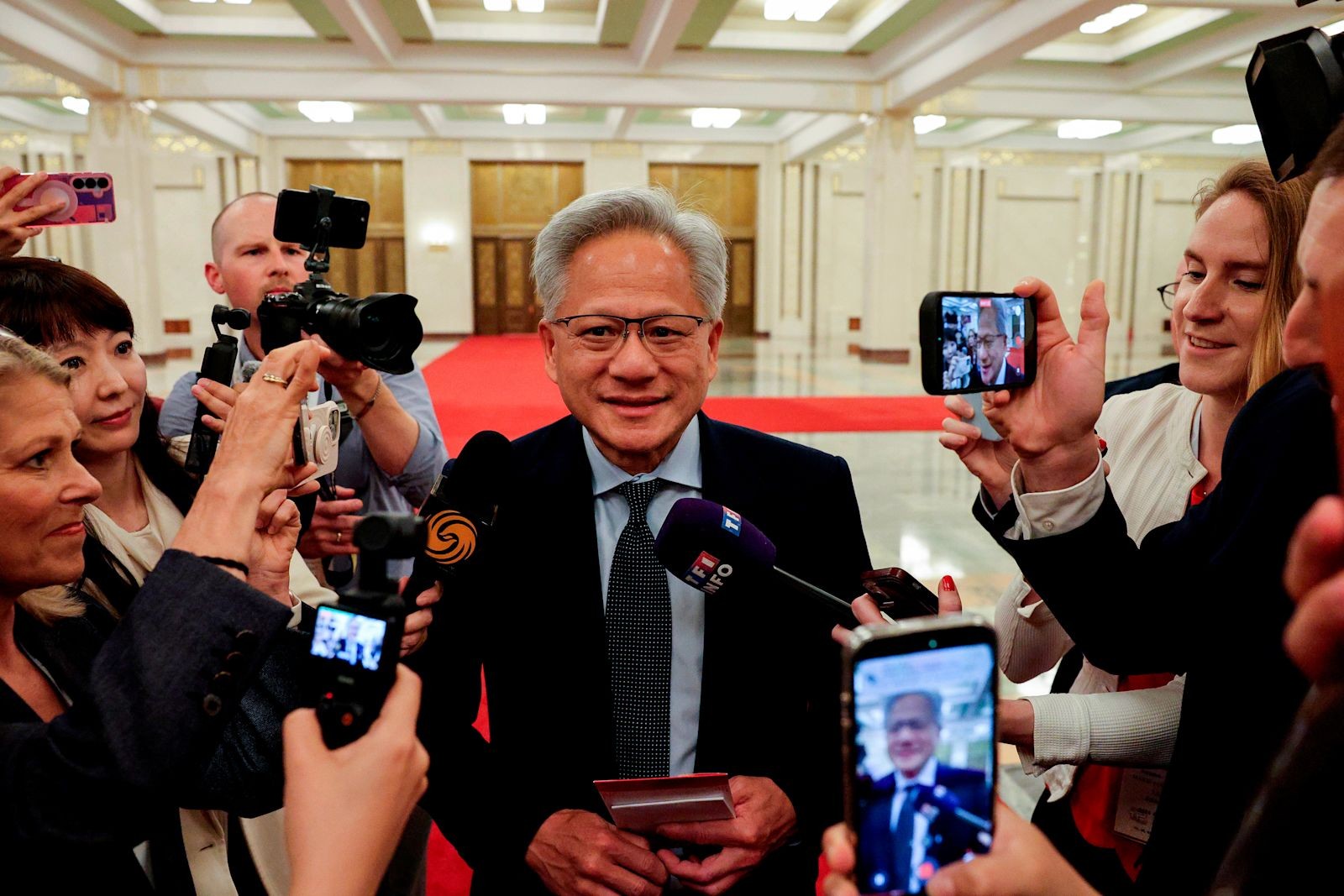
Nvidia’s board voted unanimously on Monday, 23 November 2026, to reinstate Jensen Huang as chief executive, setting aside sexual misconduct allegations after a pressure campaign involving his technology industry allies and President Donald Trump.
The decision has revived a fundamental question about corporate power: whether rules governing workplace relationships apply equally to junior employees and to founders regarded as indispensable. According to reporting published by ITV Hub, the board cited assurances from the US government that Huang was not a national security concern, but did not address the misconduct allegations at the centre of his resignation.
A reversal with wider consequences
Huang had resigned after admitting an extramarital affair with a woman suspected of being a Chinese spy and following reports that he was involved with a second woman who was his subordinate. He acknowledged violating Nvidia’s code of conduct, which warns against personal relationships that could create conflicts of interest.
His return contrasts sharply with other corporate responses to workplace relationships. Just over a year earlier, the chief executive of an Ohio technology company was forced to resign after being filmed embracing an employee at a Coldplay concert. McDonald’s dismissed its own chief executive over a consensual relationship at the height of the #MeToo movement.
Ann Lipton, a University of Colorado Boulder law professor specialising in corporate and securities law, said the episode had demonstrated that Huang was “untouchable”.
“It suggests that if you’ve had a certain amount of success, then you should be able to get away with pretty much whatever you want,” Lipton said.
That concern extends beyond one executive. Nvidia’s 10-member board now faces scrutiny over its independence and over a corporate culture that critics describe as excessively devoted to its celebrity leader.
Trump’s intervention and the message it sends
Trump did address Huang’s personal conduct, though hardly in the language of corporate governance. The president, who has faced allegations of sexual assault that he says are false, predicted that the scandal would enhance Huang’s reputation.
“Sex sells, fellas,” Trump declared in an interview on CNBC.
He also posted a doctored image showing Huang raising a red bra in triumph. The pose parodied a famous photograph of Trump shortly after he survived an assassination attempt in Butler, Pennsylvania, in 2024. The White House did not immediately respond to an Associated Press request for comment on Wednesday.
Cheyenne Hunt, an attorney and founder of the advocacy group Reckoning Action, said Trump’s response reinforced the idea that some men treat violence and coercion against women as “a currency of power”.
“This sends a horrible message to men everywhere that it’s open season on their direct reports,” Hunt said.
Trump’s role in restoring Huang drew immediate criticism from both parties. Huang is expected to testify before the Senate Banking Committee next week, giving legislators an opportunity to examine the political pressure surrounding the board’s decision.
Workplace power and the risk of coercion
Randall Peterson, a professor of organisational behaviour at London Business School, said #MeToo had strengthened the principle that leaders who enter relationships with subordinates face serious consequences because coercion cannot be excluded.
Peterson said the message from Huang’s restoration was that executives were again “at risk, as in the days before #MeToo”.
“I’m sad about that,” he said. “I thought we had moved on from that.”
Huang apologised to employees a day after returning, saying he had made mistakes and was in daily therapy, according to a livestreamed meeting reviewed by The New York Times. He warned that his own reinstatement did not permit other employees to breach the conduct code, observing that “sometimes, it’s appropriate to forgive” and “sometimes it’s not”.
He also responded to a Times report describing public berating and threats of violence against employees. Huang acknowledged that he had sometimes gone too far and promised that human resources would collect feedback about his conduct.
Such assurances sit uneasily beside Nvidia’s own employment figures. Women constitute 21% of its global workforce and a smaller proportion of managers and leaders, according to its latest sustainability report. The company promotes gender pay parity, employee resource groups and paid parental leave, while its conduct code instructs employees to report suspected violations and promises protection against retaliation.
Fatima Goss Graves, president and chief executive of the National Women’s Law Center, said outcomes such as Huang’s triumphant return could silence victims of sexual misconduct. Her organisation runs the Time’s Up Legal Defense Fund, which supports workers facing sexual harassment.
The commercial cult of the founder
Thousands of people, including current and former employees, signed a petition demanding Huang’s return. Nvidia’s collapsing share price had fed fears that the artificial intelligence bubble might burst, strengthening supporters’ claims that his vision, connections and deal-making were indispensable.
Shares jumped 31.5% after his reinstatement on Monday, although they subsequently fell. Employees chanted his name when he returned to headquarters. Nvidia did not respond to requests for comment.
Freada Kapor Klein, an investor and activist focused on equity and access in technology, said successful start-ups could become “cult-like”, with employees drawn into the status of belonging to a powerful inner circle.
She argued that technology culture adds the glorification of genius to the older American habit of idolising industrial figures such as Henry Ford and Andrew Carnegie. Lipton similarly placed the episode within a male-dominated industry, citing Meta founder Mark Zuckerberg’s remark last year that corporate culture needed more “masculine energy”.
Accountability has not disappeared
On the same day Huang returned, Democratic Representative Jimmy Gomez of California resigned from Congress. The House Ethics Committee had found “substantial evidence” that he made unwelcome sexual advances towards a House staffer and subjected the staffer to unwanted sexual contact.
Goss Graves said public scandals sometimes generate outrage and increase complaints to Time’s Up and similar organisations. The endurance of #MeToo therefore depends less on any single board than on whether workers, investigators and legislators continue to enforce standards.
“What comes next really matters,” Goss Graves said. “If everybody shrugs their shoulders and says some people are too important to be held accountable, then we will have a problem.”
Frequently asked questions
Why did Jensen Huang resign from Nvidia?
Huang resigned after admitting an extramarital affair with a woman suspected of being a Chinese spy and following reports of a relationship with a subordinate. He acknowledged violating Nvidia’s code of conduct.
Why did Nvidia reinstate Jensen Huang?
The board voted unanimously to restore him after pressure from technology allies and Trump. It cited US government assurances that he was not a national security concern, without addressing the sexual misconduct allegations.
What happens next for Huang and Nvidia?
Huang is expected to testify before the Senate Banking Committee next week, while Nvidia’s board faces continued scrutiny over its independence and its handling of workplace conduct.