
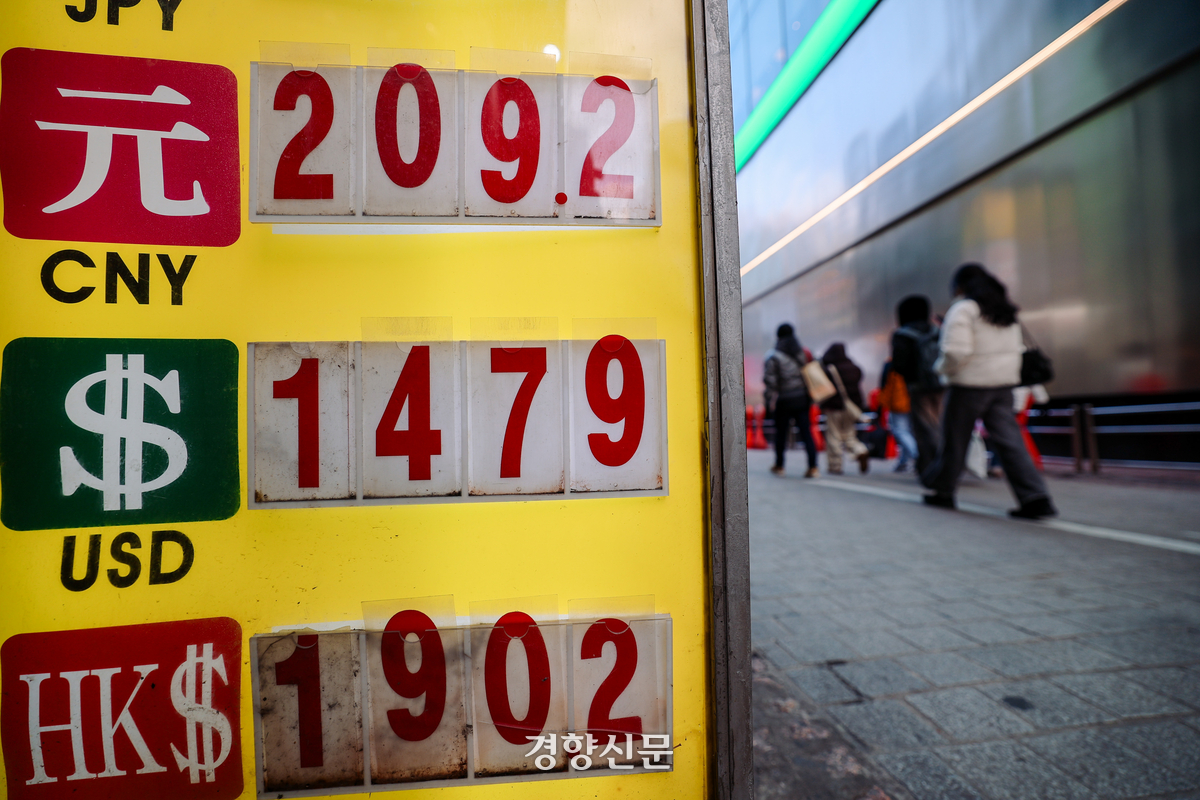
The Korean won has tumbled to its weakest position in nearly three decades, trading close to 1,480 won per dollar as artificial intelligence investment concerns trigger a broader reassessment of risk assets across global markets.
Despite the Federal Reserve's recent rate cut, the won-dollar exchange rate has remained stubbornly elevated, with after-hours trading on 12 December seeing the currency briefly touch 1,479.9 won per dollar. This represents a precipitous decline from more stable levels, driven primarily by what analysts are characterising as a bursting AI investment bubble.
Technology Sector Volatility Drives Currency Weakness
The immediate catalyst for the won's weakness stems from disappointing developments in the American technology sector. Broadcom, the prominent semiconductor manufacturer, delivered results suggesting that artificial intelligence revenues may fall short of inflated expectations. Simultaneously, reports emerged of delays in Oracle's ambitious AI data centre construction projects.
These developments sent shockwaves through global equity markets, with semiconductor stocks bearing the brunt of investor pessimism. Micron Technologies declined 6.7%, whilst Broadcom itself plummeted 11.43%. The Korean won, traditionally sensitive to global risk sentiment, immediately reflected this technological uncertainty.
Structural Challenges Beyond Market Volatility
However, the won's predicament extends beyond temporary market turbulence. The currency's monthly average for December has already reached 1,470.49 won, representing the highest level since March 1998 during the Asian financial crisis. This trajectory suggests the annual average exchange rate may breach 1,400 won for the first time in recorded history.
Oh Jae-young of KB Securities identifies a fundamental structural shift: "Since 2021, capital outflows from Korea to overseas have accelerated. Despite recovery in the current-account surplus, the exchange rate has continued to rise." This observation highlights how domestic investment patterns, particularly increased overseas allocations by the National Pension Service and retail investors, are creating persistent downward pressure on the won.
Economic Implications and Policy Challenges
The won's weakness presents complex policy challenges for Korean authorities. Whilst a weaker currency traditionally supports export competitiveness, the current trajectory raises concerns about imported inflation and financial stability. Some market participants are projecting the exchange rate could breach 1,500 won in the near term, a psychologically significant threshold.
However, alternative scenarios remain possible. Lee Sung-kyung from BNK Investment & Securities suggests that "if the expansion in domestic export growth continues, there is a high possibility that next year will see an exchange rate lower than this year." This perspective emphasises how Korea's export performance could provide a natural stabilising mechanism.
Global Context and Future Outlook
The Korean won's struggles reflect broader global currency dynamics in an era of technological uncertainty and shifting investment patterns. The AI investment narrative, which has driven substantial capital flows over recent years, now faces scrutiny as companies grapple with monetisation challenges and infrastructure delays.
For Korea, addressing the won's weakness will likely require a multifaceted approach combining export growth stimulation with measures to attract foreign investment. As Oh Jae-young notes, "boosting growth through an improvement in manufacturing conditions as well as large-scale foreign investment inflows is needed to bring the rate down."
The currency's performance will serve as a crucial barometer for Korea's economic resilience amid global technological transitions and evolving investment landscapes. Whether the won can stabilise or continues its descent will depend significantly on how successfully Korea navigates these structural challenges whilst maintaining its competitive position in global markets.