
Browns' Quarterback Conundrum Reflects Deeper Organisational Failures
The Cleveland Browns' ongoing quarterback predicament serves as a stark reminder of how poor decision-making and misallocated resources can cripple even the most ambitious sporting enterprises. General Manager Andrew Berry's recent comments at the NFL combine reveal a franchise still grappling with the consequences of questionable investments and strategic missteps.
A Tale of Misplaced Priorities
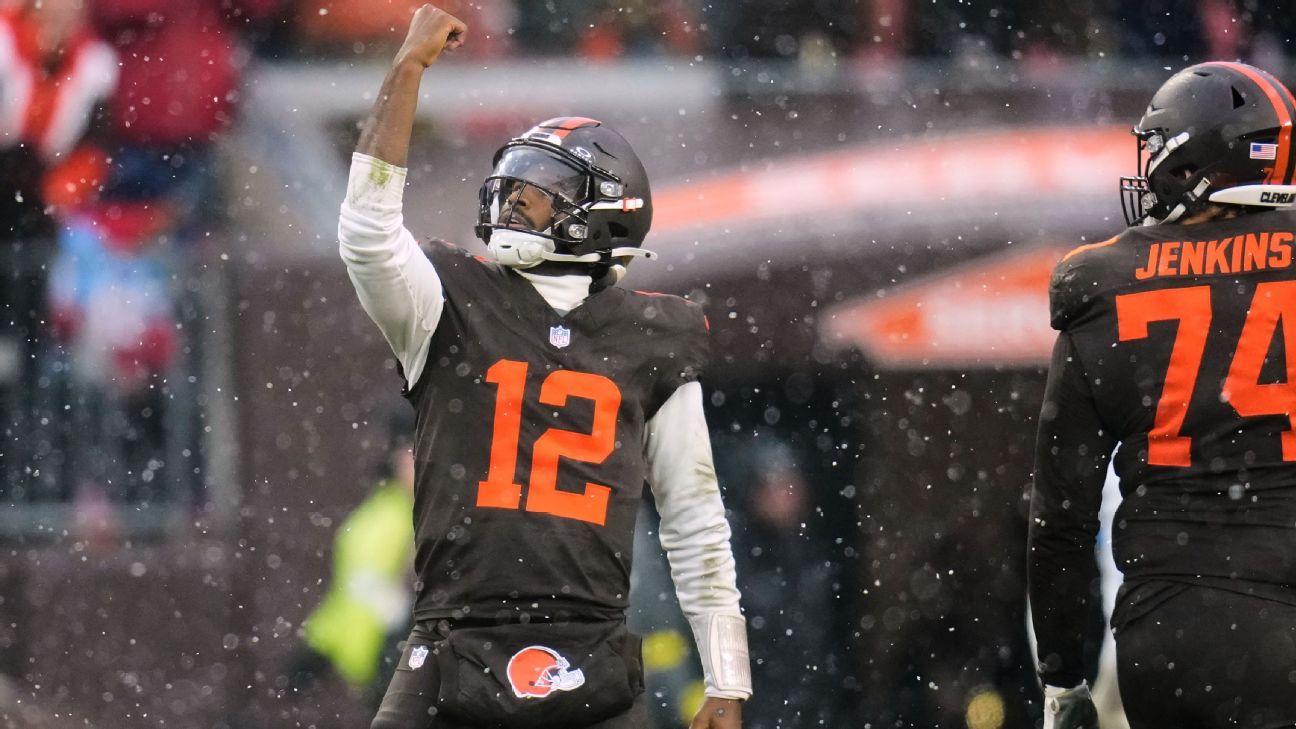
Berry's admission that both Shedeur Sanders and Deshaun Watson remain "in the mix" for the starting position underscores the fundamental uncertainty plaguing the organisation. Sanders, selected 144th overall in the 2025 draft, managed a modest 3-4 record as starter whilst recording one of the lowest quarterback ratings in modern NFL history. His 18.9 QBR ranks fifth-worst among 696 qualifying quarterbacks since 2006, a statistic that speaks volumes about both individual performance and systemic failures.
"We don't have to make that decision anytime soon," Berry stated, though one might argue that decisive leadership requires precisely the opposite approach. The Browns' reluctance to commit to a clear direction reflects the institutional paralysis that has characterised their recent history.
The Watson Albatross
Perhaps more troubling is the continued presence of Deshaun Watson, whose tenure in Cleveland represents one of the most problematic personnel decisions in recent memory. The Browns' 2022 investment of three first-round picks and a fully guaranteed $230 million contract has yielded merely 19 games across multiple seasons, with Watson's 33.1 Total QBR ranking dead last among qualifying passers during his Cleveland tenure.
Watson's $80.7 million cap hit for 2026 represents the largest in NFL history, a financial albatross that will likely require creative restructuring to provide the franchise with necessary flexibility. This situation exemplifies how short-sighted decision-making can hamstring an organisation's competitive prospects for years to come.
Systemic Issues Beyond Personnel
The Browns' quarterback situation illuminates broader questions about organisational competence and accountability. When Berry notes that Sanders "grew a lot from start one to start seven," one must question why the franchise failed to adequately prepare a rookie quarterback during training camp. The admission that Sanders received no starting repetitions during summer preparation suggests a coaching staff either unprepared for contingencies or lacking in developmental expertise.
Third-round pick Dillon Gabriel, who started six games as a rookie, remains "not forgotten" according to Berry, though his minimal mention suggests he may well be an afterthought in the organisation's planning. This casual dismissal of a recent investment further demonstrates the inconsistent evaluation processes that have plagued the franchise.
A Pattern of Poor Governance
The Browns' predicament extends beyond mere sporting considerations. It represents a case study in how organisations can squander resources through poor governance, inadequate planning, and a failure to establish clear accountability structures. The franchise's inability to develop coherent succession plans or make decisive personnel decisions reflects management practices that would be deemed unacceptable in most professional contexts.
As Berry and new coach Todd Monken navigate these challenges, they must confront not merely questions of athletic ability but fundamental issues of organisational culture and decision-making processes. The Browns' supporters, who have endured decades of disappointment, deserve better than continued uncertainty and institutional drift.
The path forward requires not just identifying the best quarterback but establishing systems that prevent such costly miscalculations from recurring. Only through such comprehensive reform can the Browns hope to escape the cycle of mediocrity that has defined their recent history.