
As artificial intelligence permeates ever more facets of daily life, its encroachment into photography raises profound questions about the nature of truth, the integrity of visual documentation, and the boundaries of legitimate creative expression. Apple's latest foray into this contested terrain, unveiled at WWDC 2026 under the banner of iOS 27, merits serious scrutiny.
The Promise of Spatial Reframing
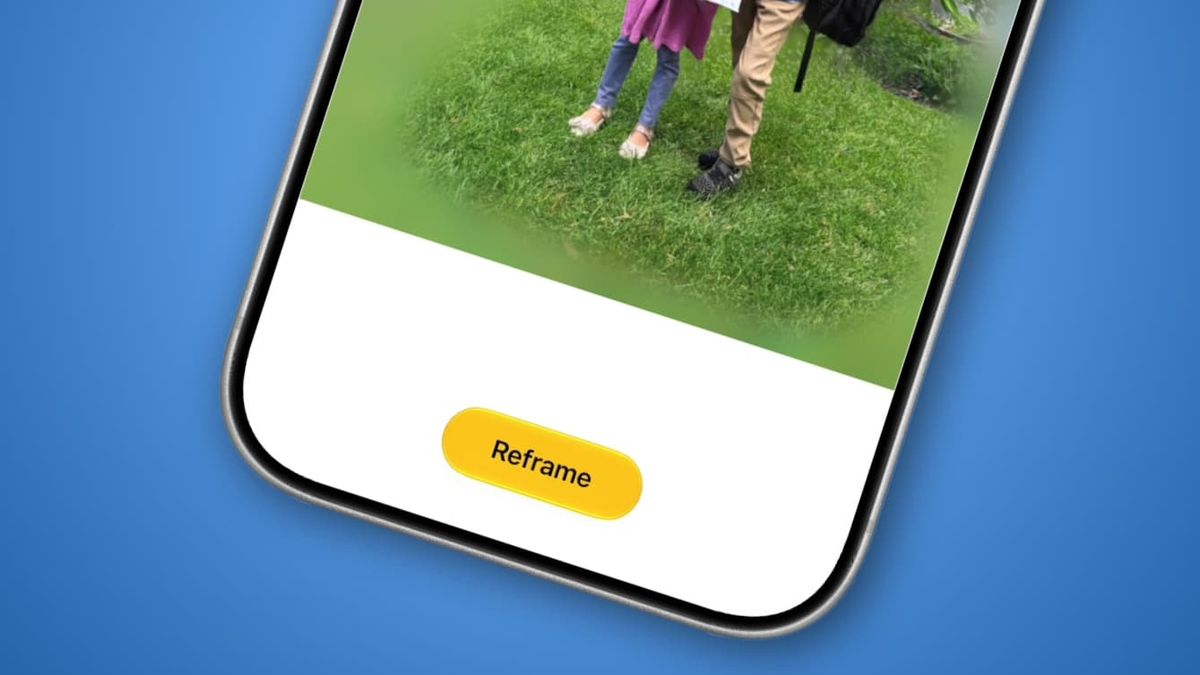
The feature in question is Spatial Reframing, a tool that permits users to load a photograph whose composition displeases them, then employ AI to adjust its angle and framing to achieve the result they wish they had captured originally. The mechanism is straightforward: upon tapping the Edit button within the Photos app, a new Tools button appears on the right-hand side. Selecting Reframe prompts Apple Intelligence to analyse the image, after which one may touch and drag to adjust framing and perspective. The feature also permits zooming in and out, with generative infill supplying content where necessary.
Additional AI image-editing tools accompany iOS 27, including enhanced Clean Up capabilities and an Extend option capable of generating supplementary content around a subject to expand a photograph's dimensions. Yet it is Spatial Reframing that warrants the most careful examination, for it strikes at something fundamental about our relationship with recorded reality.
The Practical Argument
There exists, undeniably, a pragmatic case in favour of this technology. For those accustomed to capturing multiple images from varying angles, lest a single composition prove inadequate, Spatial Reframing offers liberation from an inefficient habit. The storage implications are not trivial: fewer redundant photographs mean reduced demand on both device and cloud storage, diminishing the need for costly iCloud+ upgrades. There is an environmental dimension, too, insofar as reduced cloud storage demands marginally lower energy consumption across data centres.
Moreover, the argument runs, photographers have long employed techniques to refine their images after the fact. Combining multiple exposures to eliminate photobombers or distracting elements is standard practice. Spatial Reframing, its proponents contend, merely extends this principle.
The Trouble with Truth
Yet this analogy is imperfect. Removing a stray figure from the edge of a frame differs qualitatively from reimagining an image from an angle at which the photographer never stood. The former preserves the essential truth of the scene; the latter constructs a fiction.
This distinction matters. In an era already besieged by deepfakes, misinformation, and the erosion of shared factual foundations, the normalisation of AI-generated photographic content carries risks that extend well beyond personal convenience. When Apple insists that its tools demonstrate a